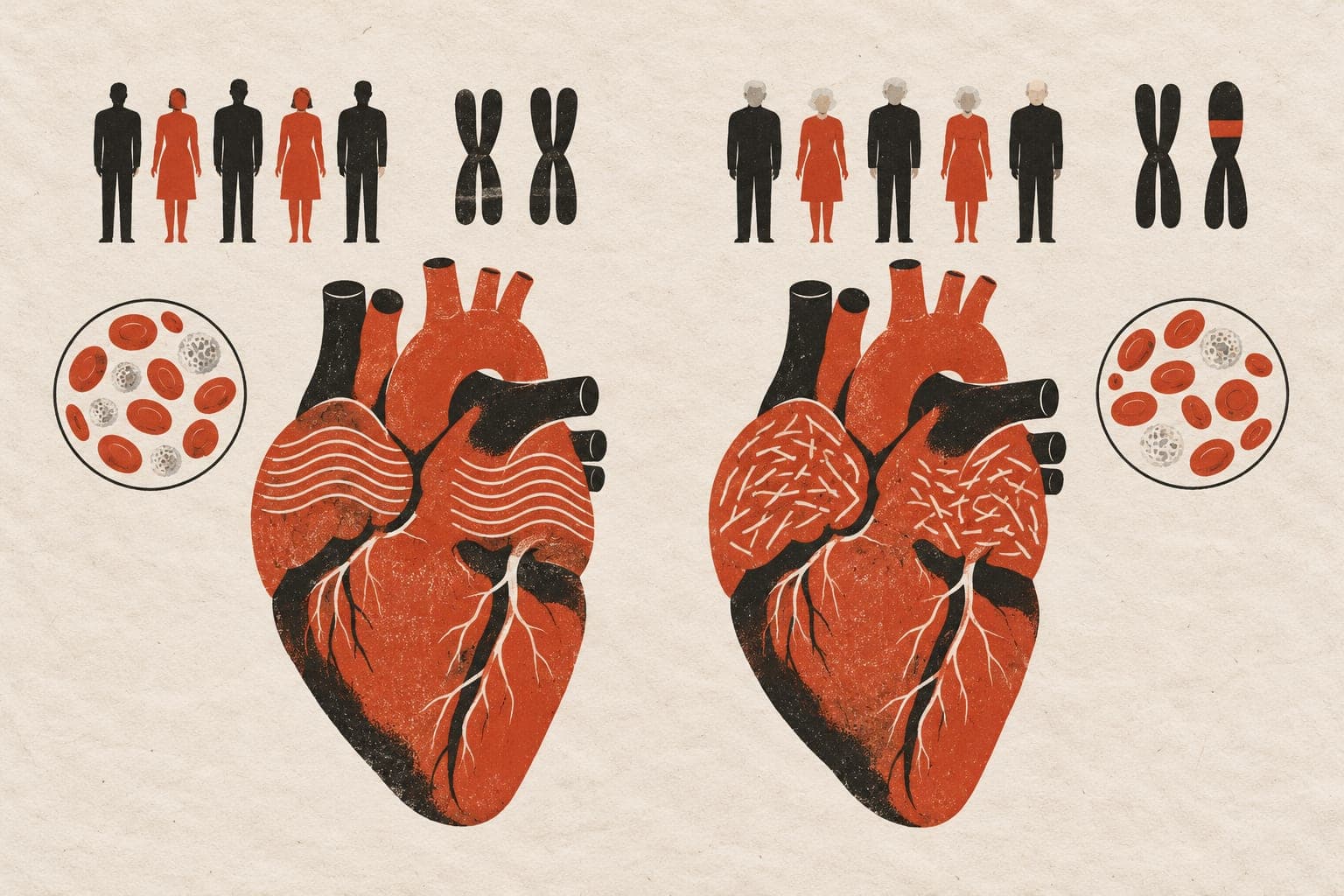
How does genetic susceptibility impact the effectiveness of AF ablation?
Abstract
Atrial fibrillation (AF) is a prevalent cardiac arrhythmia treated increasingly with catheter ablation, yet recurrence rates remain high. Genetic factors contribute to both AF susceptibility and response to therapy. This review summarizes evidence on how common AF-associated variants, polygenic risk scores, and rare monogenic variants influence ablation outcomes. Common single-nucleotide polymorphisms at loci such as 4q25 near PITX2 and 16q22 within ZFHX3 predispose to AF, but their individual effects on ablation success are modest. Polygenic risk scores aggregate small effects across many variants and have been linked to atrial conduction abnormalities and higher post-ablation recurrence, although they are not yet used routinely in clinical practice. In early-onset or familial AF, pathogenic variants in cardiomyopathy genes (eg, TTN) may create an atrial cardiomyopathy yet do not necessarily preclude successful ablation, whereas LMNA mutations are associated with extensive fibrosis and poor outcomes. Genetic variation affects atrial electrical and structural remodeling, ectopic trigger distribution, fibrosis, and autonomic tone, all of which influence ablation efficacy. Current guidelines do not recommend routine genetic testing for most patients; however, genotyping may inform risk stratification and follow-up in selected populations. Future work should integrate polygenic scores with clinical risk factors and explore genotype-guided procedural strategies and adjunctive therapies. We additionally address the relationship between genetic susceptibility and thromboembolic risk; the interplay among obesity, its genetic determinants, and AF perpetuation; and how ablation modalities (radiofrequency, cryoballoon, and pulsed-field ablation) may interact with a genetically determined substrate. A proposed clinical algorithm integrates genetic evaluation into the ablation pathway.
The paper
Onassis Cardiac Surgery Center; National and Kapodistrian University of Athens
Hellenic Journal of Cardiology, 26 Aug 2026