A multi-scale framework to advance experimental models of skin aging
Abstract
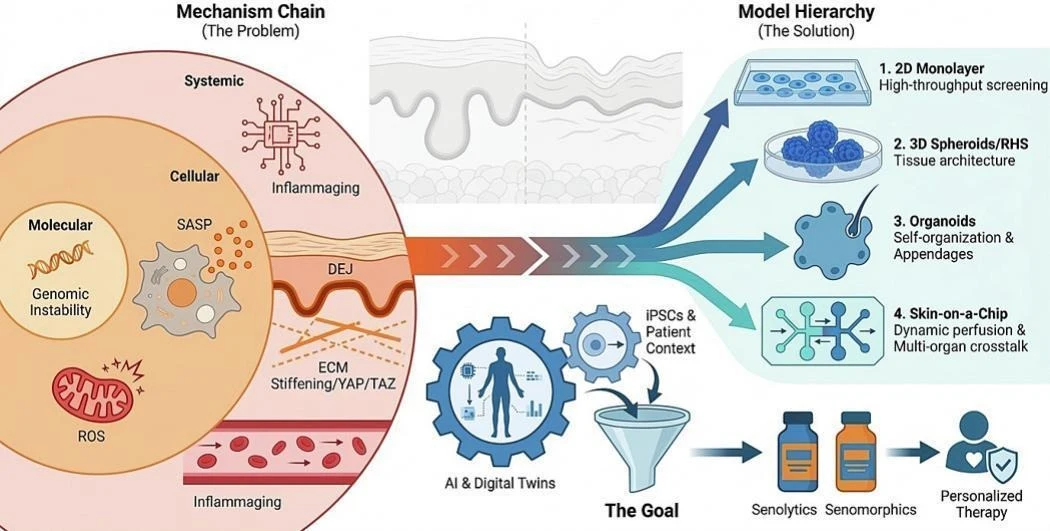
Skin aging is a multifactorial, multiscale process driven by the interplay between intrinsic cellular decline and extrinsic environmental exposures. Increasing evidence positions the skin as a dynamic interface and sensitive "window" reflecting systemic aging. However, research remains fragmented across scales, and existing models fail to capture the full complexity of systemic regulation. In this review, we introduce a hierarchical four-dimension framework of skin aging to systematically benchmark experimental models against core aging hallmarks. This framework integrates: (i) molecular and cellular hallmarks including DNA damage, mitochondrial dysfunction, epigenetic drift, senescence, and senescence-associated secretory phenotype (SASP); (ii) extracellular matrix remodeling and mechanosignaling-driven stiffness changes; (iii) tissue-level deterioration involving stem cell niche disruption and appendage dysfunction; and (iv) systemic neuroendocrine-immune-exposome regulation, where hormonal, inflammatory, and environmental signals converge. Applying this framework, we evaluate current platforms such as 2D cultures, 3D skin equivalents, organoids, and bioengineered models for their strengths and limitations in recapitulating specific aging dimensions. In summary, research into skin aging is undergoing a transformative shift from reductionist 2D monolayers to complex integrated systems. The establishment of multiscale models spanning 2D cell cultures, 3D bioprinting, organoids, and skin-on-a-chip platforms provides superior predictive power for evaluating anti-aging therapeutics. As these platforms move toward regulatory standardization, they hold the potential to mitigate clinical translation risks and overcome the inherent limitations of animal models, ultimately catalyzing the development of precision interventions tailored to individual aging trajectories.
The paper
Zhujiang Hospital; University of Manitoba
Experimental Gerontology, 26 Aug 2026