Flywheel training may help older women switch mental tasks
Reported flexibility-test values rose from 73.0 to 87.5 seconds with flywheel training versus 67.3 to 137.7 seconds with traditional training.
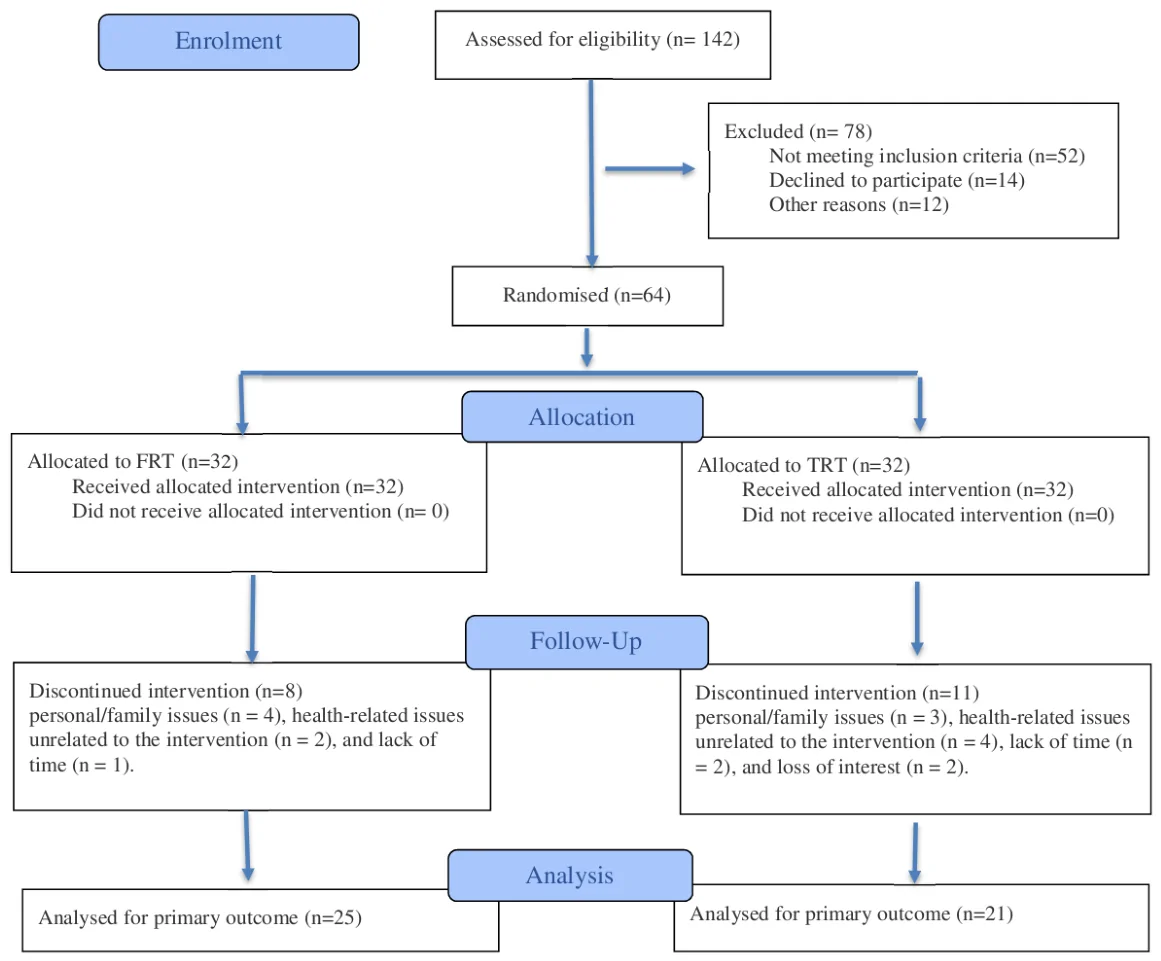
64 older women
Limit: Unmonitored changes in physical activity, diet, and sleep could have influenced cognitive outcomes
Edited by Boris Djordjevic · AgingResearch.News
A randomized trial assigned 64 healthy women aged 60 or older, averaging 66.8 years, to flywheel or traditional strength training. Both groups exercised twice weekly for 36 weeks; 46 women completed the protocol. Participants rated the exercise effort as somewhat hard or hard.
The authors reported greater improvement in cognitive flexibility—the ability to switch between tasks—with flywheel training. Both groups improved on tests of resisting distractions and holding information in mind. Researchers recorded 526 adverse events with flywheel training and 134 with traditional training. Of these, 233 and 18, respectively, were training-related, mainly temporary muscle or joint symptoms in the flywheel group. Seven moderate events in the traditional group were unrelated to training. Neither group had severe adverse events.
Why it matters
Thinking skills that guide behavior decline with age and can affect independence. This trial examined whether the type of strength exercise matters for these skills in older women.
Caveats
The trial had no non-exercising comparison group and included only less-active older women without neurological disease or exercise contraindications. The abstract called the flexibility measure a ratio but reported seconds and described rising values as improvement, making the numerical result difficult to interpret.
From the paper
- Participants
The remaining 64 participants were randomized into the two study groups.
- Who took part
The inclusion criteria were women aged ≥60 years, literate, with normal or corrected-to-normal vision, performing <150 min of moderate-to-vigorous physical exercise per week, and who provided written informed consent.
- Duration
The intervention period lasted 36 weeks.
- Harms
Regarding adverse events (AEs), a total of 526 events were recorded in the FRT and 134 in the TRT.
- Cognitive flexibility
In the Trail Making Tests A and B, there was a group-by-time difference (p = 0.007, ηp² = 0.486; 1 − β = 0.869), with the FRT showing a significantly greater improvement (p = 0.001).
- Inhibitory control
For the Victoria Stroop Test (inhibitory control), a reduction in scores was observed in both groups (p = 0.028, ηp² = 0.38; 1 − β = 0.686), with the TRT showing superior performance compared with the FRT at the second assessment time point (p = 0.015, ηp² = 0.23; 1 − β = 0.754).
- Working memory
Regarding the Digit Span Forward test (working memory), significant differences were observed in both groups (p < 0.001, ηp² = 0.84; 1 − β = 1.000).
- IGF-1
No significant difference was observed for IGF-1.
Quoted word for word from the full text on PubMed Central.
The paper
Universidade Federal de Viçosa
Journal of Functional Morphology and Kinesiology, Aug 21, 2026, Open access