Comparative Cardiovascular Pharmacovigilance of Semaglutide and Tirzepatide: A Food and Drug Administration Adverse Event Reporting System (FAERS) Database Analysis (2022-2026)
Declared no competing interests
Abstract
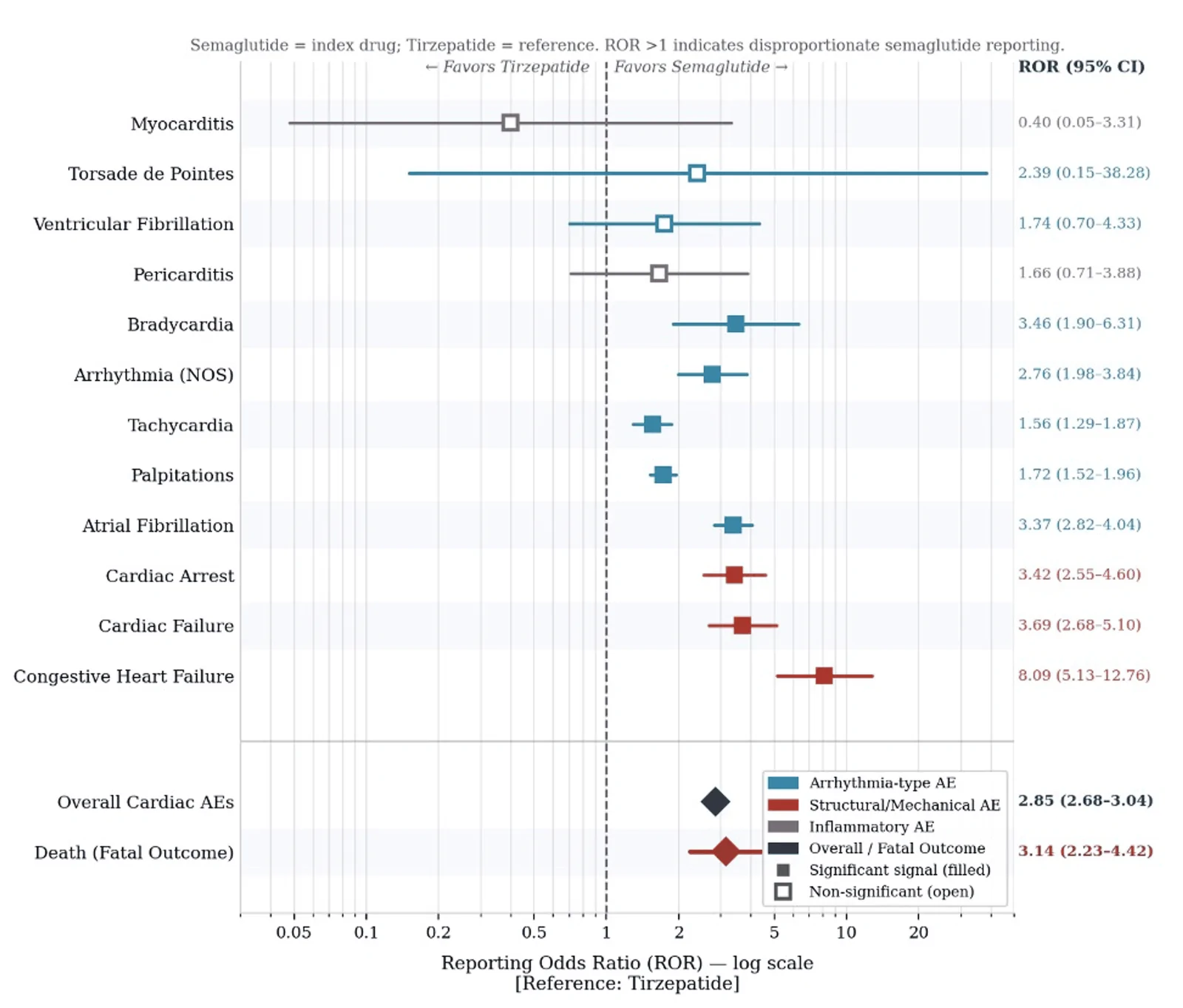
BACKGROUND: Semaglutide and tirzepatide are primary treatments for cardiometabolic disease, yet their comparative real-world cardiovascular safety requires further characterization. OBJECTIVE: This study aimed to conduct a pharmacovigilance disproportionality analysis comparing cardiovascular adverse event (AE) signals between semaglutide and tirzepatide utilizing Food and Drug Administration Adverse Event Reporting System (FAERS) data from January 2022 to March 2026. METHODS: Cardiac AEs for both medications were extracted from the FAERS database. Disproportionality was evaluated using reporting odds ratios (RORs) and proportional reporting ratios (PRRs), utilizing each drug as the other's comparator. Positive signals required an ROR of >1.0 and a lower 95% CI bound of >1.0. RESULTS: Analysis included 56,799 semaglutide and 135,992 tirzepatide reports. Overall, cardiac AE reporting was disproportionately favorable to semaglutide (ROR: 2.85; 95% CI: 2.68-3.04). Semaglutide exhibited significant signals in eight of 12 cardiac categories, notably congestive heart failure (ROR: 8.09), cardiac failure (ROR: 3.69), cardiac arrest (ROR: 3.42), and atrial fibrillation (ROR: 3.37). Fatal outcomes also favored semaglutide (ROR: 3.14). Tirzepatide generated higher raw counts for palpitations and tachycardia, though volume adjustment maintained semaglutide's disproportionality. CONCLUSIONS: Semaglutide demonstrates robust, disproportionate cardiovascular AE signals relative to tirzepatide, particularly for structural events. These findings likely reflect underlying demographic and indication-based risk differences rather than direct toxicity. Prospective, head-to-head cardiovascular trials remain essential.