The role of tendon and ligament vasculature in ageing and injury
Abstract
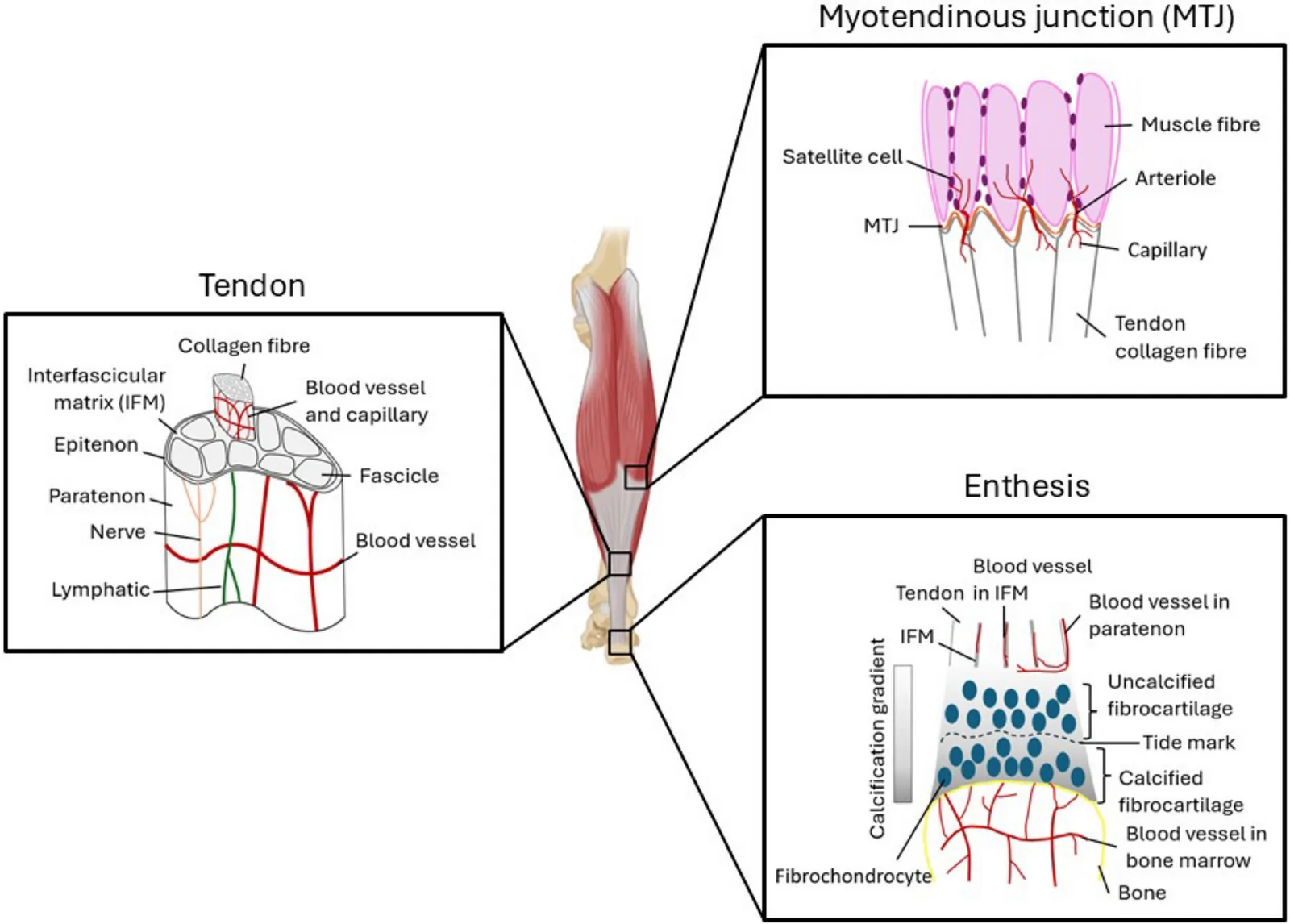
Ageing is a fundamental biological process marked by declining physiological function and the accumulation of stress-induced damage. It contributes to chronic disease and drives widespread alterations across organ systems, including the vasculature. Ageing of the macro- and microvasculature impairs nutrient delivery, promotes tissue degeneration, and reduces repair capacity in many tissues, including those of the musculoskeletal system. Tendons and ligaments become increasingly injury-prone with age, yet the relationship between vascular ageing and tendon and ligament in health and disease remains insufficiently understood. This review critically examines the effects of vascular ageing on tendons and ligaments, including their interfaces with muscle and bone. Emerging evidence indicates that age-related vascular decline contributes to structural and functional impairments in these tissues, accelerating musculoskeletal deterioration. We also discuss therapeutic approaches targeting vascular dysfunction, including growth factor modulation through use of platelet-rich plasma, gene-based strategies, and stem cell therapies, which show potential for mitigating age-related deficits. By synthesizing existing knowledge, this review emphasizes the need for further research into vascular ageing and its implications for tendon and ligament health. A deeper understanding of these processes could inform the development of innovative therapies aimed at preserving vascular function and improving quality of life in the ageing population.
The paper
Royal Veterinary College
Biogerontology, 20 Aug 2026