Program slowed decline in older adults’ balance while moving
In a cluster-randomized trial of 387 low-income older adults, an eight-week exercise and feedback program slowed worsening of balance while moving.
Registered NCT05778604
Limit: Follow-up ended at six months, limiting assessment of longer-term balance changes
Edited by Boris Djordjevic · AgingResearch.News
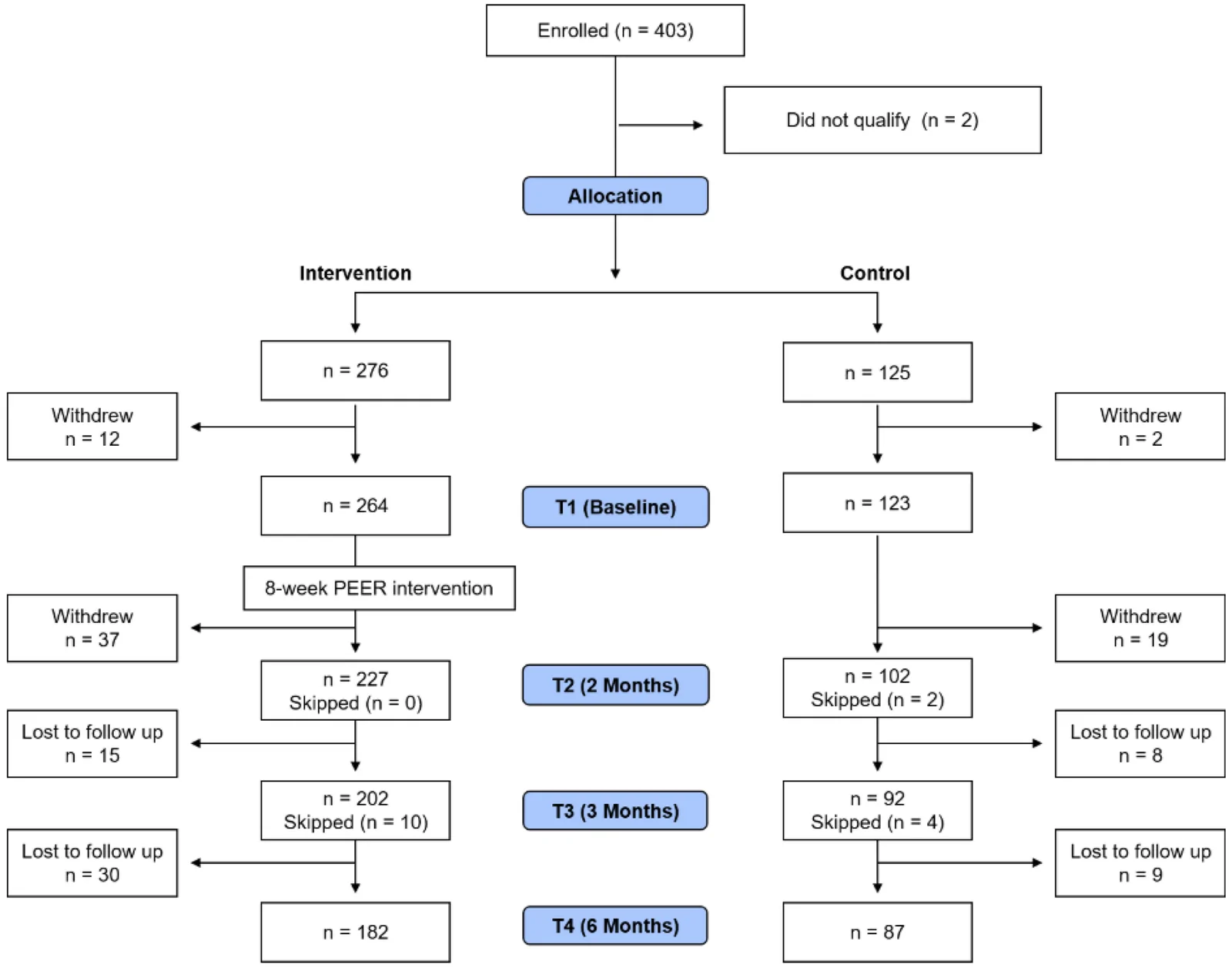
The cluster-randomized trial included 387 community-dwelling, low-income adults aged 60 or older in Orlando, Florida. Their average age was 74.1 years, and 87.8% were women. Researchers assigned sites to an eight-week program or fall-prevention pamphlets. The program combined balance-test feedback and discussions about fall risk with weekly one-hour group exercise sessions and at least 60 minutes of prescribed home exercises per week.
The program reduced worsening on a test of standing up, walking, turning and sitting down, with effects sustained through six months. It did not significantly improve leg endurance or balance while standing still. Over the six-month study, falls occurred in 12.9% of the program group and 17.9% of controls; this difference was not statistically significant.
Why it matters
Falls are a leading cause of injury in older adults. The trial tested a community-based approach to supporting physical function related to fall risk.
Caveats
Sites rather than individuals were randomized—11 program sites and six control sites—and the program group had worse balance-test scores overall. This preprint has not been peer-reviewed; participants were mostly women who could walk without another person’s help, and exclusions included medical conditions precluding exercise or receiving treatment from a rehabilitation facility.
From the paper
- Participants
Of the 403 participants recruited, 387 were included in the current analyses.
- Who took part
Participants were recruited from 18 independent living communities and senior centers in Orlando, FL through flyer distribution, word-of-mouth, and community partners facilitating our introduction.
- Ages
The participants were 74.1 ± 6.93 years old, 87.8% female, and of diverse race and ethnicity (Non-Hispanic White 20.2%, Hispanic 24.8%, African American 47.3%, Asian 5.68%, and Other 2.07 …
- Duration
Participants engaged in weekly 1-hour group exercise sessions for 8 weeks.
- Result
The risk of falls did not differ significantly between the control and intervention groups (risk ratio = 0.72, 95% CI [0.44, 1.18], p = 0.192).
- Dynamic balance
The intervention mitigated the time-dependent decline of dynamic balance after 8 weeks over time, as shown by the significant interaction (β = −0.21, p < 0.001).
- Lower limb endurance
Performance at both timepoints was not affected by intervention or sex (p > 0.05).
- Static balance
Static balance, as measured by BTrackS score, did not significantly change over the four timepoints (p > 0.05).
Quoted word for word from the full text on PubMed Central.
- Physio-feedback and exercise program
- 30-second chair stand test
- BTrackS Score
- Timed Up and Go test
- Humans
The paper
University of Central Florida
Research Square, Jul 30, 2026, Open access, Preprint, not peer-reviewed