Immune cell subgroup expands around age 100 in humans
An observational analysis of exceptionally long-lived people suggested that the expansion may reflect adaptation to persistent immune triggers.
Limit: Sampling exceptional survivors can miss immune patterns in people who die younger
Edited by Boris Djordjevic · AgingResearch.News
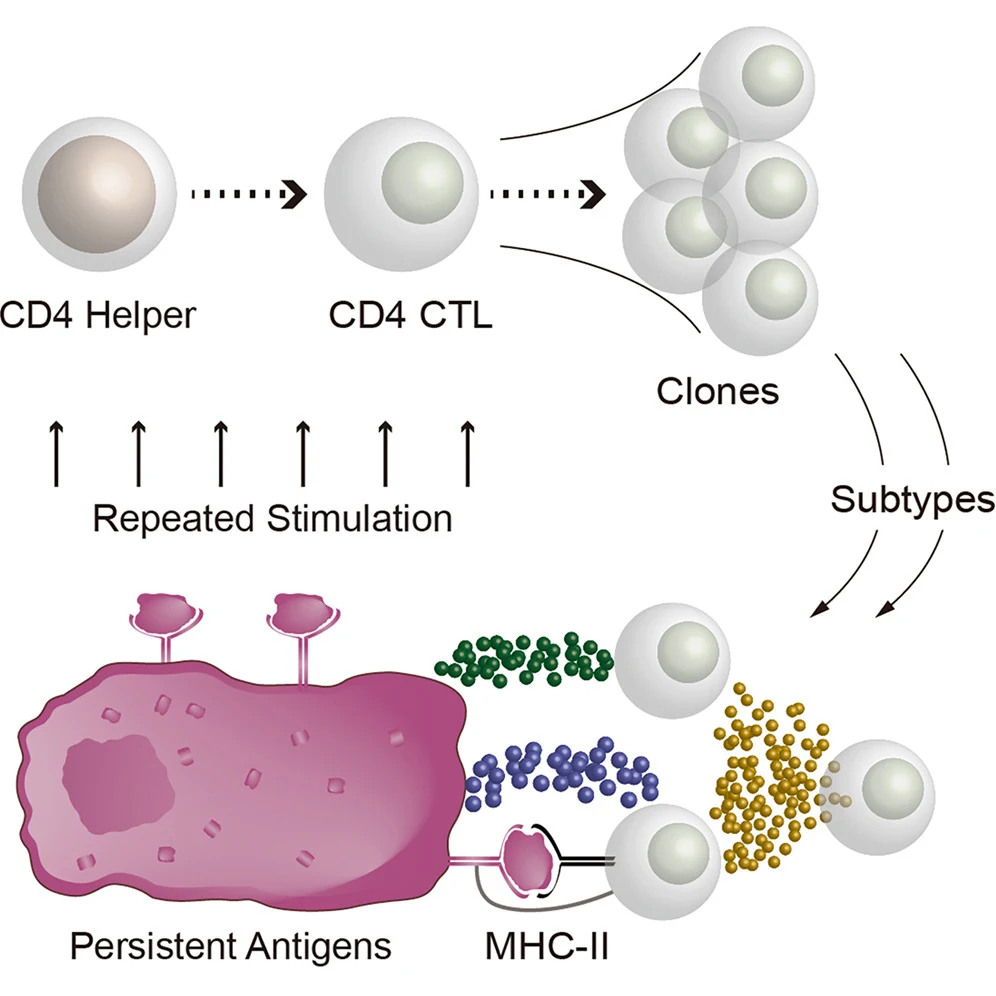
In an observational study, researchers analyzed individual T cells, a type of immune cell, from supercentenarians—exceptionally long-lived people. They focused on a subgroup capable of killing other cells. This subgroup began expanding around age 100 without signs of exhaustion, a state of reduced immune responsiveness. Large clones—groups descended from a single cell—dominated the subgroup, suggesting repeated stimulation by persistent antigens, substances that trigger immune responses.
Sequences from the largest clones matched those of T cells expanded in tumors, particularly lung cancer. In experiments stimulating cells outside the body, cells within the same clone showed different patterns of immune-signaling molecules. The authors interpreted these patterns as suggesting flexibility within a clone.
Why it matters
Adaptation to persistent immune triggers could contribute to longevity through cancer suppression, the authors suggested.
Caveats
The observational findings and experiments outside the body did not establish that these cells suppressed cancer or extended life. The abstract does not report the sample size.
The paper
CD4 CTLs in supercentenarians: Signs of adaptive expansion in healthy aging
RIKEN Center for Integrative Medical Sciences; Keio University
Cell Reports, Aug 19, 2026, Open access


