Non-pharmacological interventions for blood pressure management in hypertensive patients: selection of exercise regimens-a systematic review and network meta-analysis
Preregistered CRD420261432343, declared no competing interests
Abstract
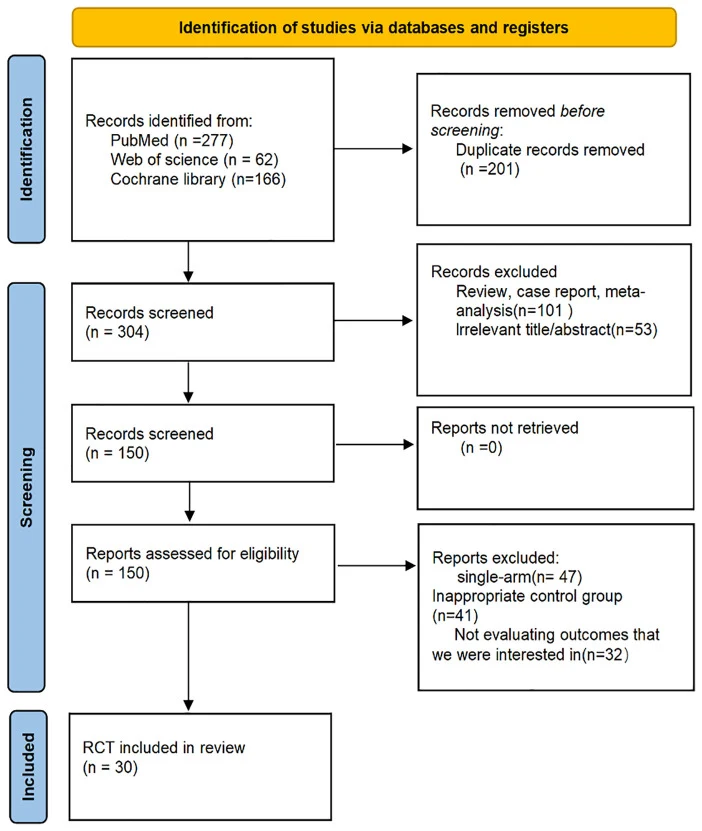
OBJECTIVE: To compare and rank the effects of exercise modalities on blood pressure in adults with hypertension. METHODS: We conducted a PRISMA-NMA-compliant systematic review and network meta-analysis. PubMed, the Cochrane Library, and Web of Science were searched through May 24, 2026, for randomized controlled trials of exercise interventions. Random-effects models were used, and interventions were ranked using surface under the cumulative ranking curve values. Risk of bias and evidence certainty were assessed with RoB 2, GRADE, and CINeMA. RESULTS: Thirty trials involving 2,137 participants were included. Compared with standard care, combined training produced the greatest reduction in systolic blood pressure (mean difference [MD], -9.52 mmHg; 95% CI, -13.47 to -5.56) and ranked first. Isometric training and moderate-intensity continuous training also significantly reduced systolic blood pressure. High-intensity continuous training produced the largest reduction in diastolic blood pressure (MD, -7.48 mmHg; 95% CI, -11.54 to -3.43), followed by combined training (MD, -5.84 mmHg; 95% CI, -8.51 to -3.16). No major inconsistency or publication bias was detected. CONCLUSION: Combined training may be most effective for lowering systolic blood pressure, whereas high-intensity continuous training may yield the greatest reduction in diastolic blood pressure. Larger, longer-term trials are needed to confirm these findings. SYSTEMATIC REVIEW REGISTRATION: https://www.crd.york.ac.uk/prospero/display_record.php?RecordID=1432343, identifier CRD420261432343.
The paper
Yunnan Technology and Business University
Frontiers in Endocrinology, 3 Aug 2026, Open access