Higher teen intelligence linked to less artery buildup in men
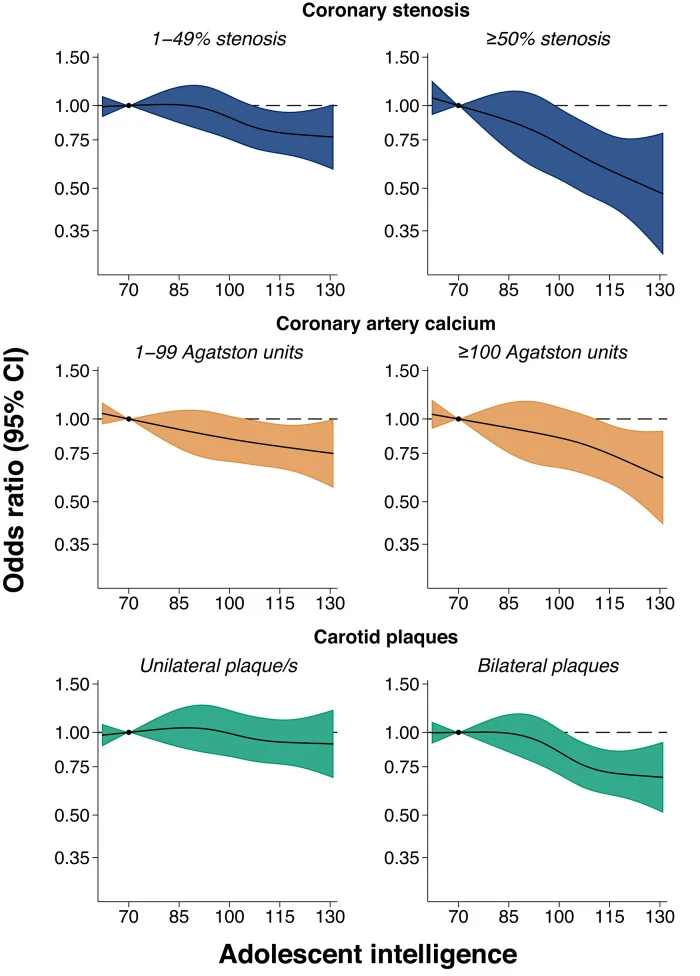
Each 15-point higher adolescent intelligence score was linked to 17% lower odds of at least 50% narrowing in heart arteries in middle age.
Our read
Populations- Studied:
- Cohort study of 8,117 Swedish men
- What changed:
- Each 15-point higher adolescent intelligence score was linked to 17% lower odds of at least 50% heart-artery narrowing
- The catch:
- Artery disease could influence cardiovascular health measured alongside it, rather than the other way around
- In the record:
- One of 3 papers on intelligence test score on record: 1 with results in people.
- Why it’s aging research:
- It bears on staying healthy in midlife and later life.
Editor of record: Boris Djordjevic · AgingResearch.News
In 8,117 Swedish men, a prospective observational cohort study linked standardized intelligence tests at a mean age of 18.3 with heart-artery scans at a mean age of 56.6. Other analyses examined calcium deposits in heart arteries in 7,958 men and plaques in neck arteries in 9,092 men.
Higher scores were associated with less atherosclerosis, the buildup of plaque in arteries. After adjustment for other factors, scores of 70 versus 130 corresponded to an estimated prevalence of at least 50% heart-artery narrowing of 10.3% versus 6.2%—a 4.1-percentage-point difference. Similar links appeared for calcium deposits and plaques on both sides of the neck. The authors suggested that modifiable cardiovascular health factors, including blood pressure and smoking habits, may partly account for the associations.
Why it matters
Artery plaque in middle age offers a way to investigate possible pathways linking early-life cognitive ability with cardiovascular disease later in life.
Caveats
The observational design cannot establish cause and effect, and cardiovascular health and artery disease were measured together, limiting conclusions about what mediated the links. The findings do not establish whether the same associations hold in women or outside the studied age range of 50–64.
- Intelligence test score
- Atherosclerosis
- Carotid plaque
- Coronary stenosis
- Coronary artery calcium score
- Humans
The paper
Linköping University; Uppsala University
BMC Medicine, Aug 12, 2026, Open access


Comments
Be the first to comment.