Higher childhood body mass linked to adult heart-artery plaque
Genetic analysis linked higher childhood body mass index to adult heart-artery plaque and calcium buildup, with association estimates of 0.326 and 0.114, respectively.

Our read
Populations- Studied:
- Mendelian randomization in people
- Why it’s aging research:
- It bears on staying healthy in midlife and later life.
Editor of record: Boris Djordjevic · AgingResearch.News
Human genetic data were examined in a two-sample Mendelian randomization analysis, which uses genetic differences to study links between traits. The researchers assessed genetically predicted childhood body mass index, a weight-to-height measure, and adult artery plaque.
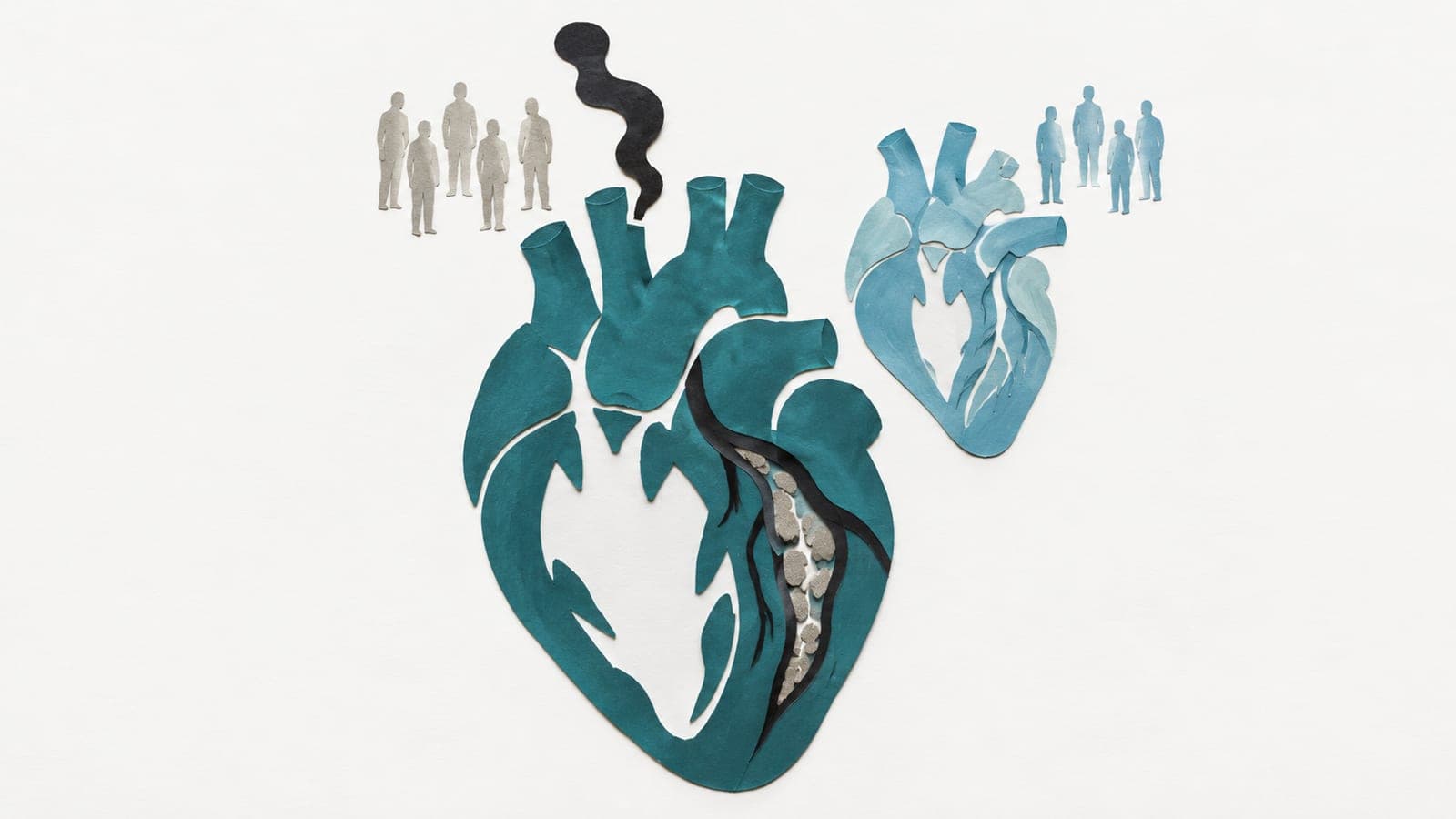
Each one-standard-deviation increase in predicted childhood body mass index was associated with higher plaque burden in heart arteries and more calcium buildup there. The association estimates were 0.326 and 0.114, respectively. There was no clear association with plaque in neck arteries. The heart-artery links weakened after accounting for adult body mass index, high blood pressure or certain blood fats. Triglycerides, a type of blood fat, accounted for the largest estimated share of these associations: 15.6% for plaque burden and 16.2% for calcium buildup.
Why it matters
Plaque buildup in heart arteries is relevant to cardiovascular disease later in life. The analysis addresses whether this adult burden may have roots in childhood body fat and later metabolic health.
Caveats
The analysis examined genetic predictions, not whether changing children’s weight changes adult artery plaque. The abstract does not specify the measurement scales, limiting interpretation of the numerical effect sizes.
The paper
Guangdong Provincial People’s Hospital (Guangdong Academy of Medical Sciences)
European Heart Journal Open, Nov 6, 2026, CC BY-NC
Comments
Be the first to comment.