Airborne metals linked to poorer scores on some thinking tests
Estimated lead exposure was linked to poorer executive function, with an odds ratio of 1.15 for an increase spanning the middle half of exposures.
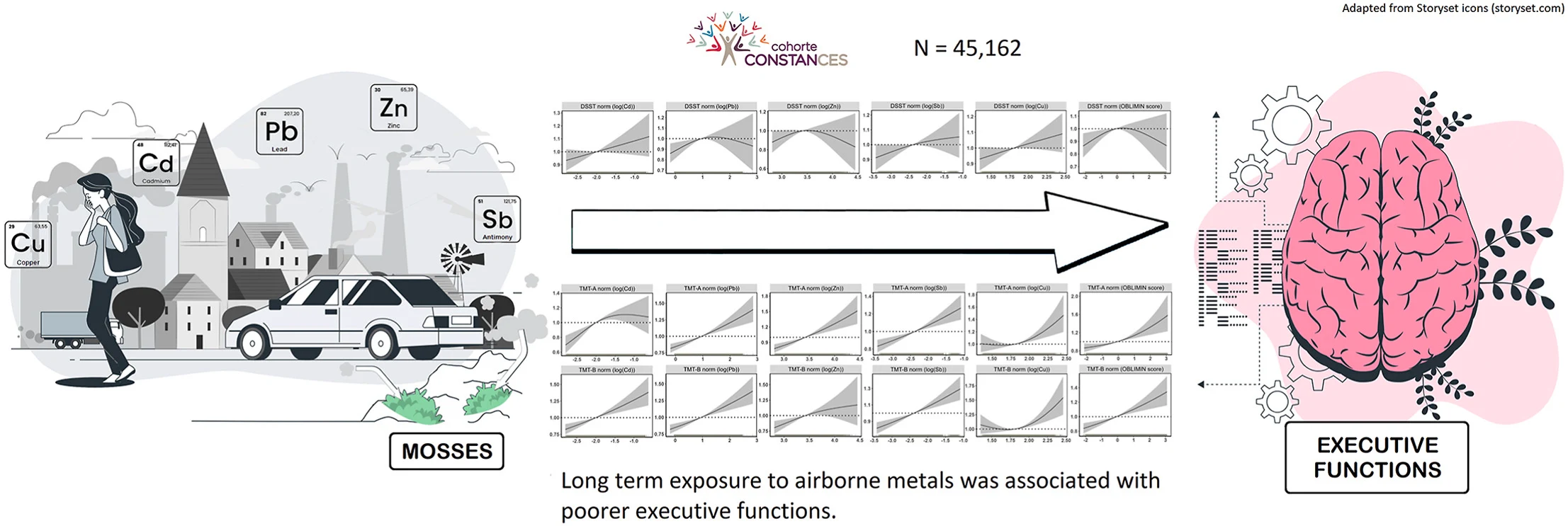
Limit: Moss measurements gave only an indirect estimate of participants’ metal exposure
Edited by Boris Djordjevic · AgingResearch.News
Researchers analyzed 45,162 adults over 45 from rural and semi-urban areas in the French Constances cohort in a cross-sectional study. They estimated exposure to airborne metals at participants’ homes using measurements in moss. Participants took six tests covering memory for events, language and executive function—the mental skills used to plan and manage tasks.
Metal exposure was associated with poorer performance in at least one area. Higher estimated lead exposure was linked to poorer executive function. The odds ratio above one indicated higher odds of poor performance. Copper exposure was associated with poorer semantic skills, which concern word meanings. Results for other language skills and memory were mixed: associations either followed no clear trend or linked exposure to better performance.
Why it matters
Following adults over time could help clarify how these environmental exposures relate to changes in thinking skills with age.
Caveats
Cross-sectional data cannot establish cause or track cognitive decline, and moss measurements provided an indirect estimate of exposure. The findings may not extend to urban populations.

Comments
Be the first to comment.