Updated models better predict undiagnosed dementia in older adults
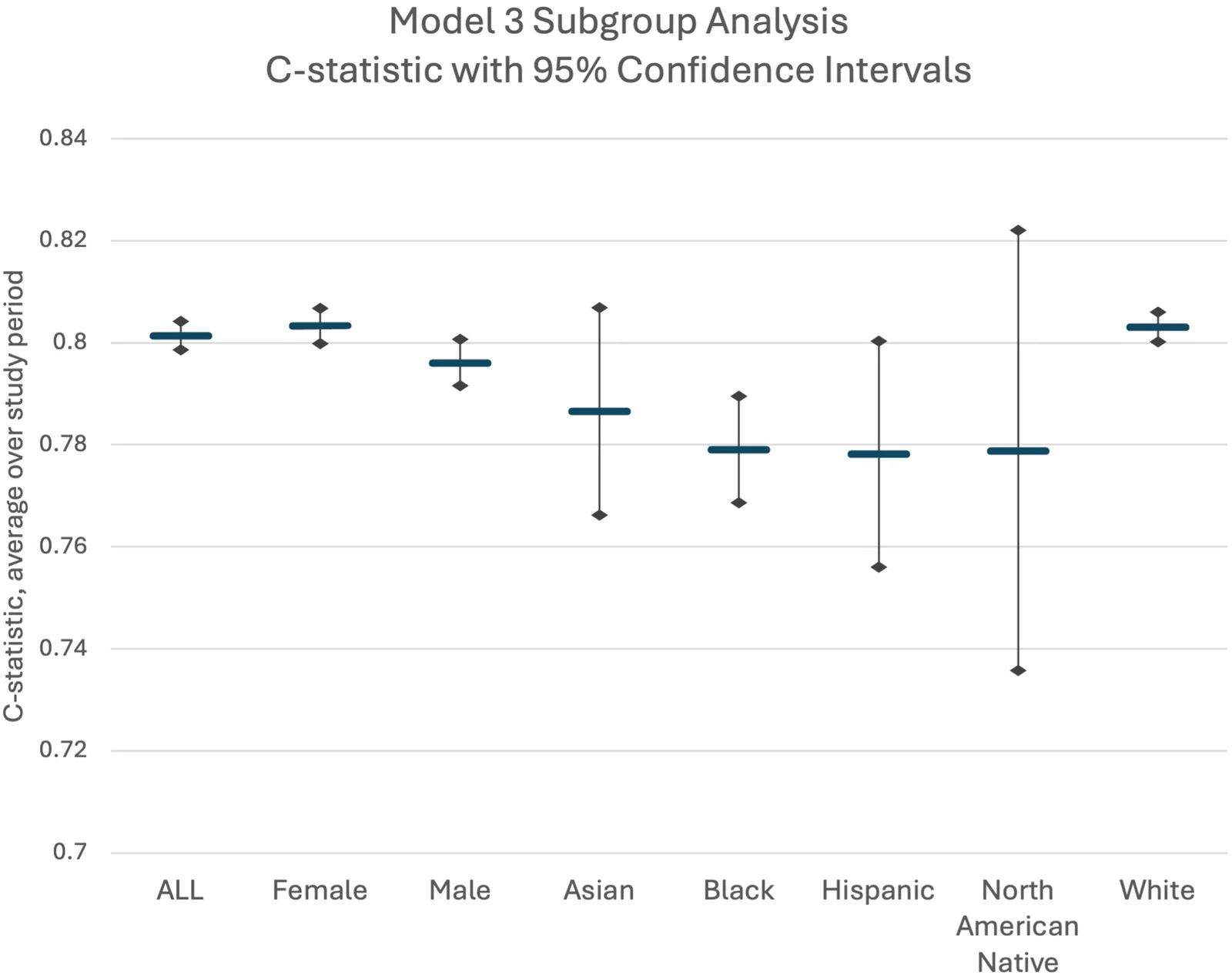
In Medicare claims, updating an existing model raised a statistical performance score from 0.770 to 0.795, with little further improvement from adding predictors.
Our read
Biomarkers- Studied:
- Cohort study of adults aged 65 or older, one year, against an existing model
- What changed:
- Updating an existing model raised the statistical performance score from 0.770 to 0.795 in Medicare claims
- The catch:
- Recorded diagnosis was a proxy rather than a direct measure of undiagnosed dementia
- Why it’s aging research:
- It bears on staying healthy in midlife and later life.
Editor of record: Boris Djordjevic · AgingResearch.News
An observational modeling study used data from US adults aged 65 or older without evidence of dementia at baseline: 8,374,400 Medicare beneficiaries and 29,983 primary care patients. Their average ages were 76 and 75, respectively; 57% and 56% were female.
Researchers used two years of records to predict a dementia diagnosis in the following year. They assumed that people newly diagnosed that year already had undiagnosed dementia at its start. They adapted an existing electronic health record model for Medicare claims and tested updated models in subsequent annual cohorts. Recalculating how much weight the model gave each predictor improved its ability to distinguish people later diagnosed from those not diagnosed. Adding new predictors improved the statistical performance score slightly further, to 0.801. In the primary care group, which had both electronic records and claims, updating models also improved performance; adding predictors offered little further benefit.
Why it matters
About half of people living with Alzheimer’s disease and related dementias are undiagnosed. The work addressed whether routine healthcare data could help target dementia screening in older adults.
Caveats
A later recorded diagnosis served as a proxy for dementia already present, rather than a direct measure of undiagnosed disease. Both datasets excluded hospice recipients, the primary care dataset excluded people who died during the study, and Medicare beneficiaries could appear in multiple annual cohorts.
The paper
University of California, San Francisco
Journal of Alzheimer's Disease, Aug 12, 2026, Open access



Comments
Be the first to comment.