Time of day effects of high-intensity interval resistance training on metabolism, adiposity, and adipogenic markers in male mice
Abstract
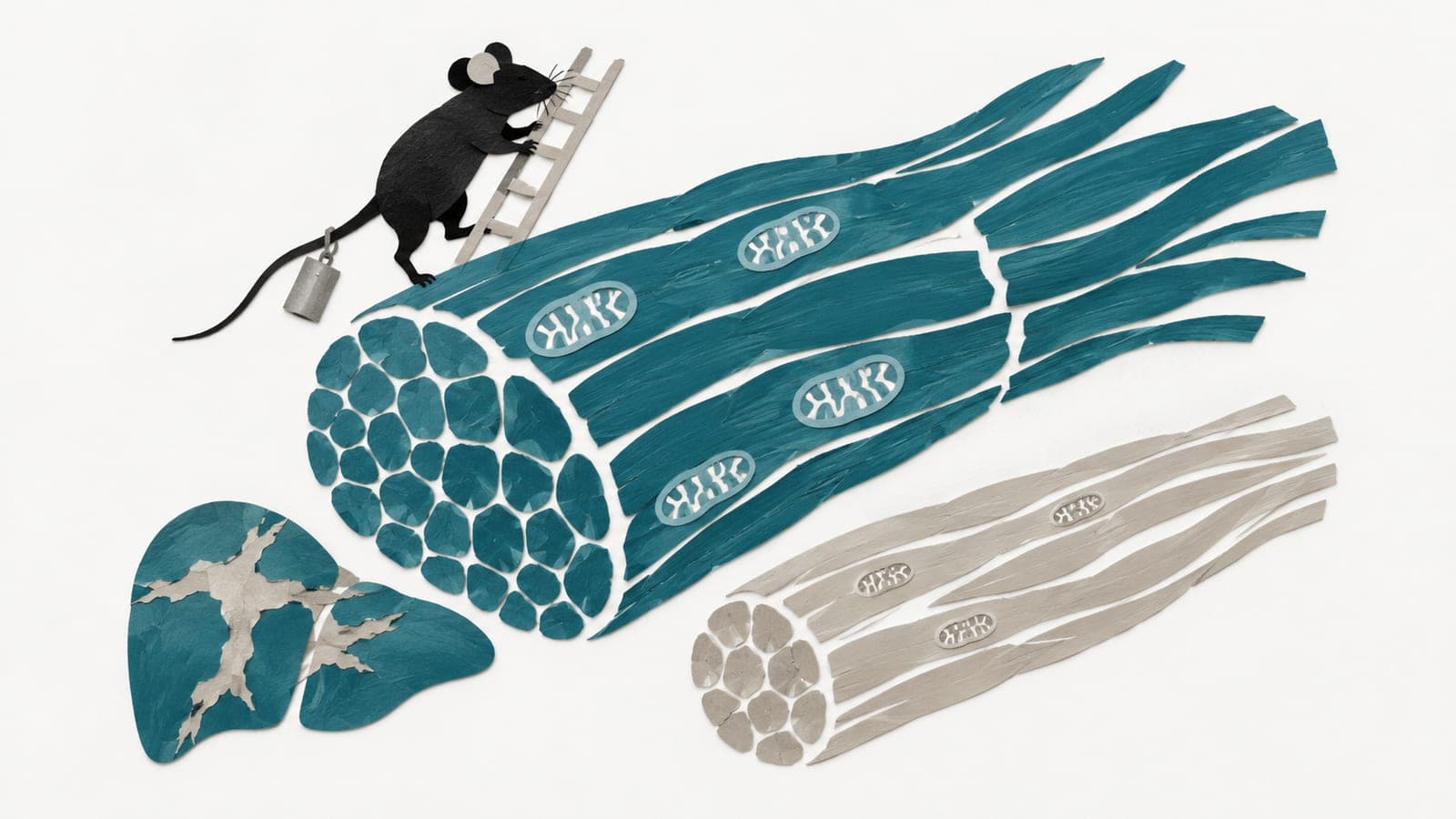
The circadian system regulates physiological and metabolic processes, and exercise timing may influence metabolism and adiposity. To investigate the time-of-day effects of high-intensity interval resistance training (HIRT) on metabolism, adiposity, and adipogenic markers, male Swiss mice (n = 111) were allocated to control or HIRT groups during the light (C6 and T6) or dark phase (C18 and T18). HIRT was performed for 8 weeks (3 sessions/week) on a ladder at 90% of maximal load until exhaustion. Metabolic biomarkers, adiposity, adipocyte morphology, and protein expression of PPARγ and adiponectin were assessed. Maximal strength increased in trained groups. Training-time interactions were observed for triglycerides and total cholesterol, with higher values in T6 than in C6 and T18. Glucose and PPARγ were higher during the dark phase. PPARγ was also higher in trained than control groups, irrespective of the time of day. HIRT reduced adiposity across multiple depots regardless of training time. No significant differences were observed for adipocyte area, adiponectin, insulin, or HOMA-IR. HIRT reduced adiposity independently of training time, suggesting that chronic adaptations in adipose tissue were primarily driven by the training. However, time of day modulated metabolic responses, particularly lipid metabolism.
The paper
Universidade Estadual de Maringá
Chronobiology International, 4 Aug 2026