Ketone use may support memory gains in exercising female mice
An 18-week experiment found impaired memory responses to wheel running plus time-restricted feeding in female mice with disrupted ketone use in nerve cells.
Our read
Interventions- Studied:
- Experiments in middle-aged female mice, 18-week duration, against control mice (Randomized)
- What changed:
- Short- and long-term memory was lower in female SCOT knockout mice than in control mice after exercise
- The catch:
- Exercise failed to improve short- and long-term memory in control mice
Editor of record: Boris Djordjevic · AgingResearch.News
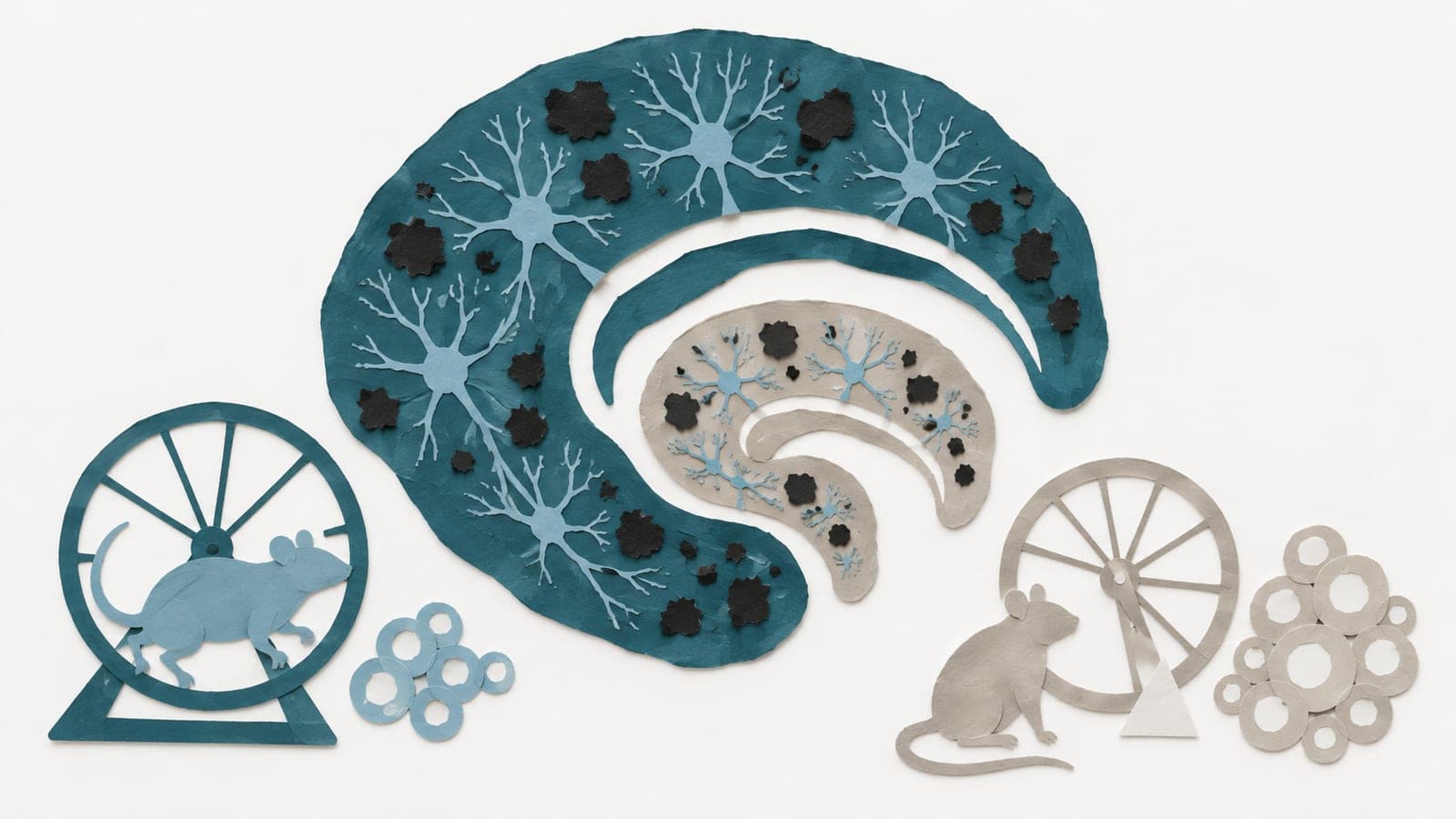
Middle-aged female mice underwent an 18-week experiment combining voluntary wheel running with eight-hour fasts, five days a week. Sedentary comparison mice could eat at any time. The researchers compared genetically altered mice with their unaltered littermates. The alterations disrupted either nerve cells’ use of ketones, molecules used as fuel, or liver cells’ ketone production.
Mice with disrupted nerve-cell ketone use showed impaired responses to the program in tests of short- and long-term memory. They also failed to broadly increase proteins supporting communication between nerve cells in the hippocampus, a brain region involved in memory. Mice with disrupted liver ketone production showed impaired short-term memory responses. The authors concluded that the findings suggest nerve cells’ ketone use is essential, while liver-produced ketones contribute, to the program’s full cognitive benefits.
Why it matters
Ketone metabolism has been linked to delaying age-related cognitive decline. This work addresses whether using that fuel is necessary for the brain benefits of exercise combined with time-restricted feeding in midlife.
Caveats
The experiment combined exercise and fasting, so it did not separate their effects. Both genetically altered female groups already had better short-term memory than controls before the program began.
Time-restricted feeding is part of Bryan Johnson's Blueprint
The paper
University of Kansas Medical Center; Children's Mercy Hospital
Molecular Metabolism, Jul 16, 2026, Open access

Comments
Be the first to comment.