Aging Alters Force Control Regularity and Delays Adaptation to Isometric Force Perturbations
Abstract
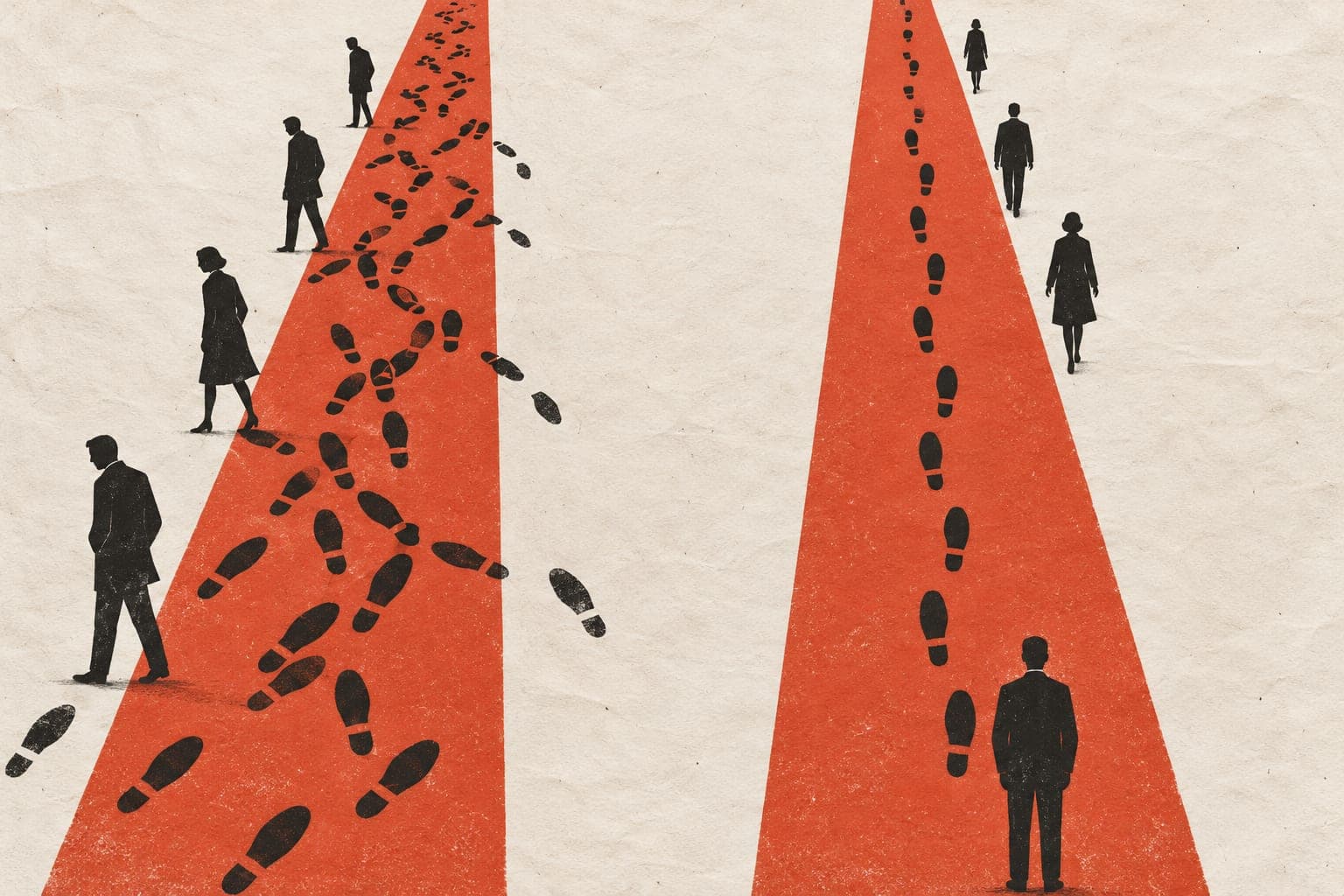
Variability is an inherent feature of human force output, and its temporal structure provides insights into motor control. In young adults, this structure has been associated with efficient motor behavior. Conversely, aging-related physiological changes may constrain neuromuscular adaptability, leading to less effective response to perturbations. We tested this hypothesis using a perturbation-based paradigm that quantified the time required to return to baseline force following unexpected target shifts during an isometric grip task. Sixteen young and eighteen older adults performed steady contractions and sudden upward (30→45% maximum voluntary contraction; MVC) and downward (30→15% MVC) force perturbations. Force regularity and variability magnitude were assessed using Sample Entropy (SaEn) and standard deviation (SD) across contraction intensities ranging from 5% to 80% MVC. Older adults exhibited significantly longer adaptation times and greater force regularity than young adults, whereas SD did not differ between age groups. Across both groups, downward perturbations resulted in slower recovery than upward perturbations, indicating direction-specific constraints in force control. These findings demonstrate that aging prolongs adaptation to force perturbations and increases force output regularity, highlighting perturbation-based assessments as a sensitive approach for probing adaptive motor control. Force regularity may represent a more informative marker of aging-related changes in motor control than variability magnitude.
The paper
Aristotle University of Thessaloniki
Journal of Motor Behavior, 14 Jul 2026