Hearing nerve branches persist after noise damage in mice
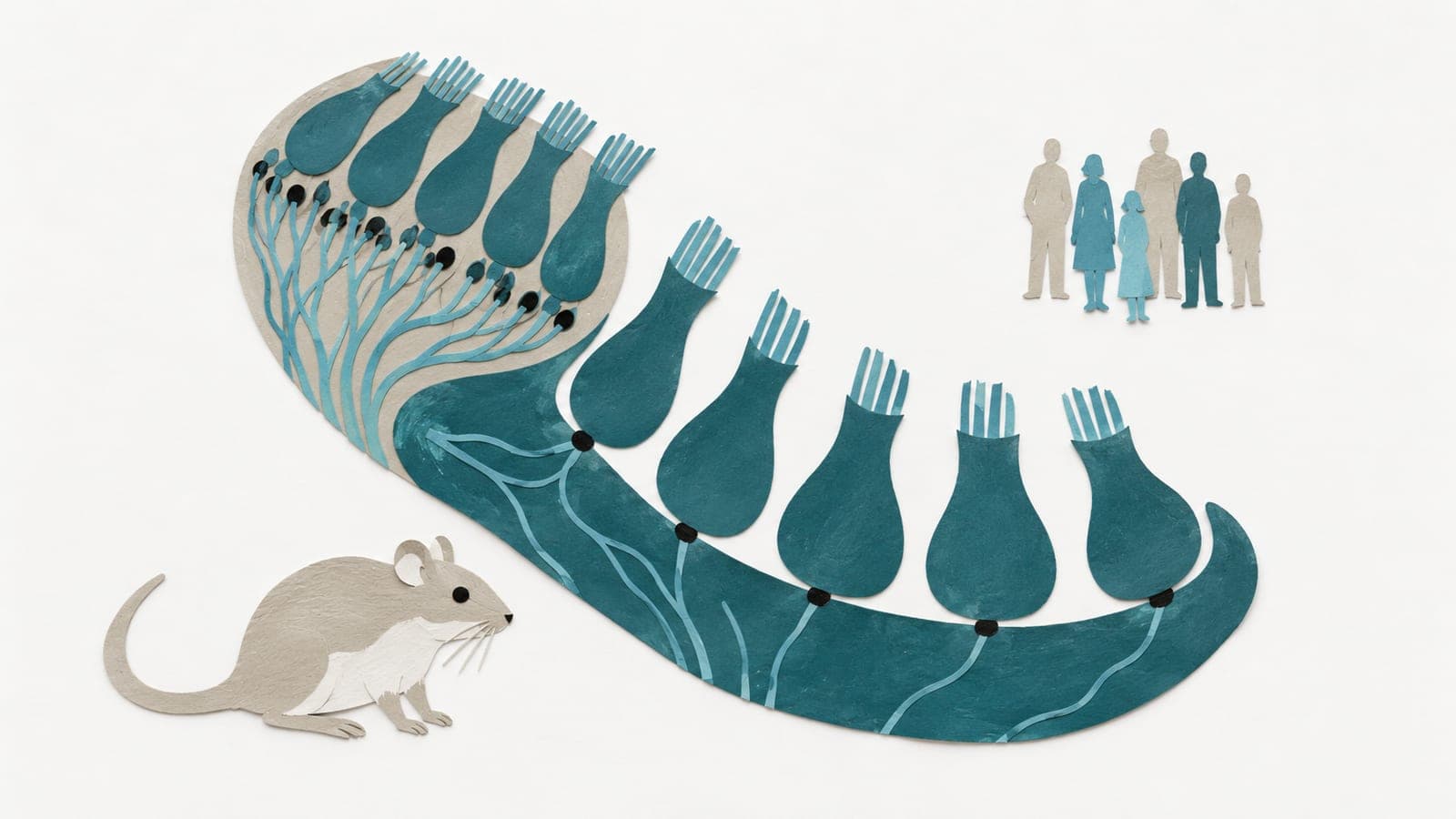
Two years after noise exposure, loss of hearing-nerve branches remained only half that of their connections to sensory cells.
Limit: The experiment measured tissue structures, not hearing function
Edited by Boris Djordjevic · AgingResearch.News
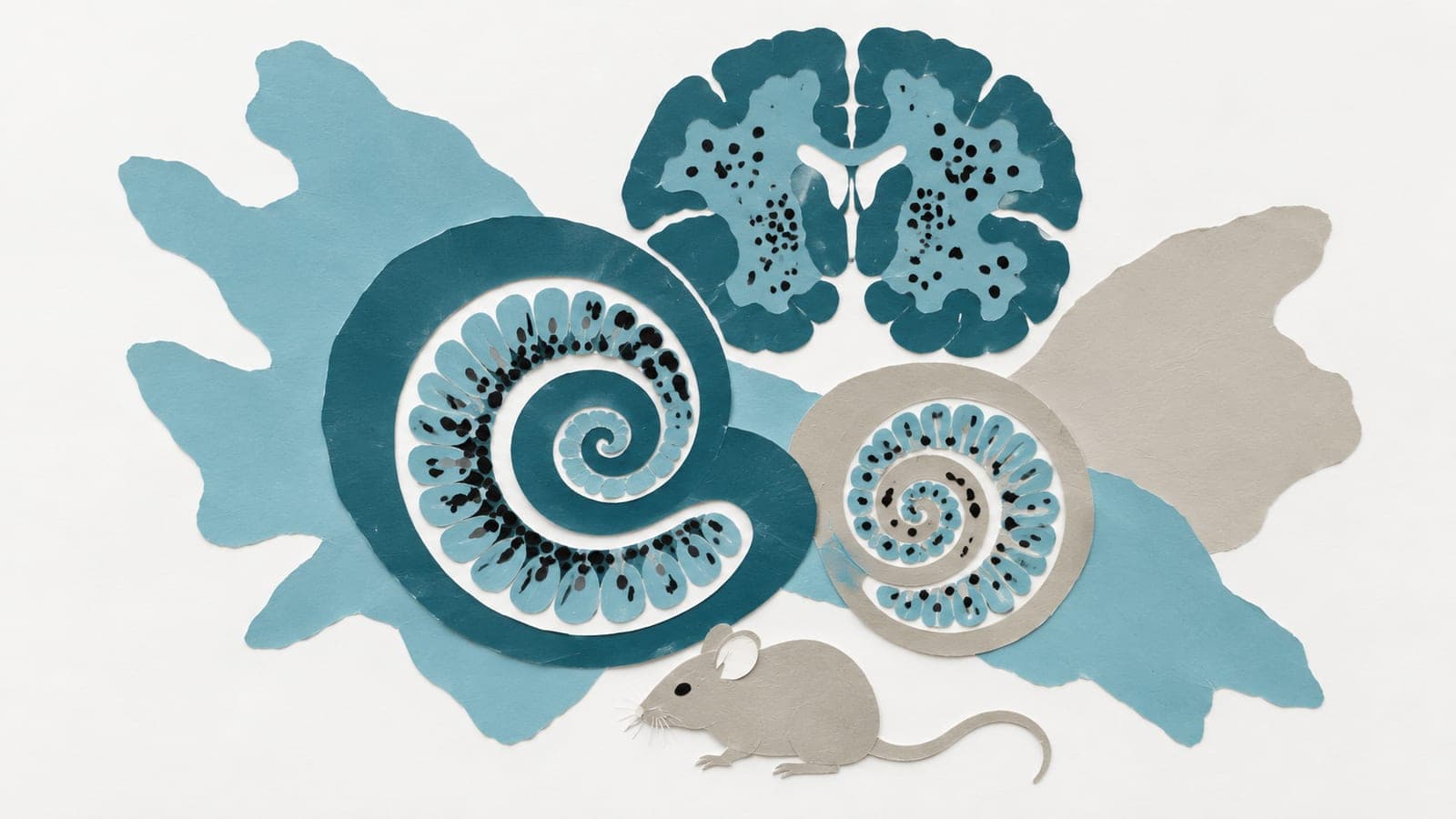
In CBA/CaJ mice, an animal experiment tracked hearing-nerve branches after noise damaged their connections to inner hair cells, sensory cells in the inner ear. Researchers randomly assigned mice to noise exposure or an unexposed control group. Exposed mice heard 98-decibel noise for two hours. The team examined inner-ear tissue one month, six months, one year or two years later.
Noise caused an immediate 50% loss of connections. Counts of synaptic ribbons, structures marking these connections, showed no recovery from one month to one year, with modest further losses at two years. Nerve-branch loss did not exceed that in age-matched controls until six months. Even at two years, nerve-branch loss remained only half that of synaptic ribbons. Gaps in myelin, the insulating covering around nerve branches, became more common with age in both groups.
Why it matters
Repairing hearing damage as the ear ages depends partly on what structures remain available to reconnect. The authors suggested that surviving nerve branches may offer an extended window for therapeutic intervention.
Caveats
The experiment measured tissue structures, not hearing function, and did not test a regenerative treatment. The findings came from mice, not people.
The paper
Technical University of Denmark; Massachusetts Eye and Ear Infirmary
Hearing Research, Jun 27, 2026