6-PPD quinone reduces lifespan by activating a feedback loop between cholesterol transformation related signal and insulin signaling in Caenorhabditis elegans
Abstract
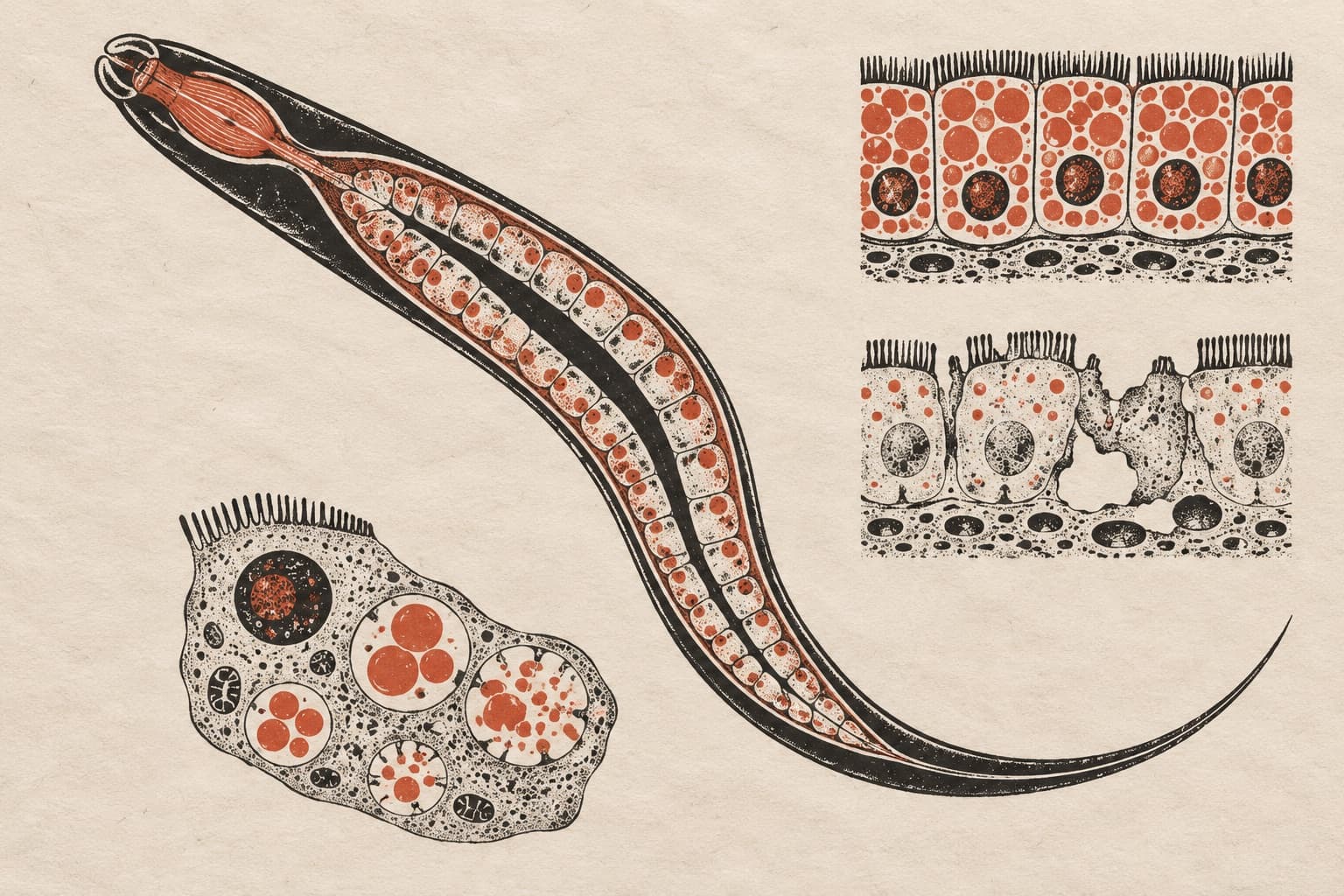
The 6-PPD quinone (6-PPDQ) is bioavailable to the organisms. In Caenorhabditis elegans, potential effect of 6-PPDQ on cholesterol absorption and transformation and association of this effect with lifespan reduction were investigated. Exposure to 6-PPDQ (1-10 µg/L) reduced cholesterol content by inhibiting cholesterol absorption as indicated by decreased expression of genes (lrp-2, scl-12, scl-13, and ifo-1) governing absorption of cholesterol and enhancing transformation from cholesterol to 7-dehydrocholesterol as indicated by increase in expression of daf-36 encoding Rieske oxygenase. In 6-PPDQ (10 µg/L) exposed nematodes, daf-36 expression was increased by lrp-2, scl-12, scl-13, and ifo-1 RNAi. The 6-PPDQ (10 µg/L) induced lifespan reduction was strengthened by lrp-2, scl-12, scl-13, and ifo-1 RNAi and inhibited by daf-36 RNAi. Resistance of daf-36(RNAi) to toxicity of 6-PPDQ (10 µg/L) on longevity was suppressed by RNAi of daf-16 encoding FOXO transcriptional factor. After 6-PPDQ (10 µg/L) exposure, expressions of insulin ligand and receptor genes were further increased by lrp-2, scl-12, scl-13, and ifo-1 RNAi and decreased by daf-36 RNAi, and expressions of daf-16 and its targeted genes (sod-3 and hsp-6) were decreased by lrp-2, scl-12, scl-13, and ifo-1 RNAi and increased by daf-36 RNAi. Moreover, after 6-PPDQ (10 µg/L) exposure, cholesterol content was increased by RNAi of insulin ligand and receptor genes and decreased by daf-16 RNAi, and daf-36 expression was increased by daf-16 RNAi. Our results highlight 6-PPDQ exposure risk in disrupting cholesterol metabolism, which was linked to toxicity on longevity by activating a feedback loop between DAF-36 and insulin signaling.
The paper
Southeast University; Ministry of Ecology and Environment
Journal of Environmental Sciences, 27 Oct 2025