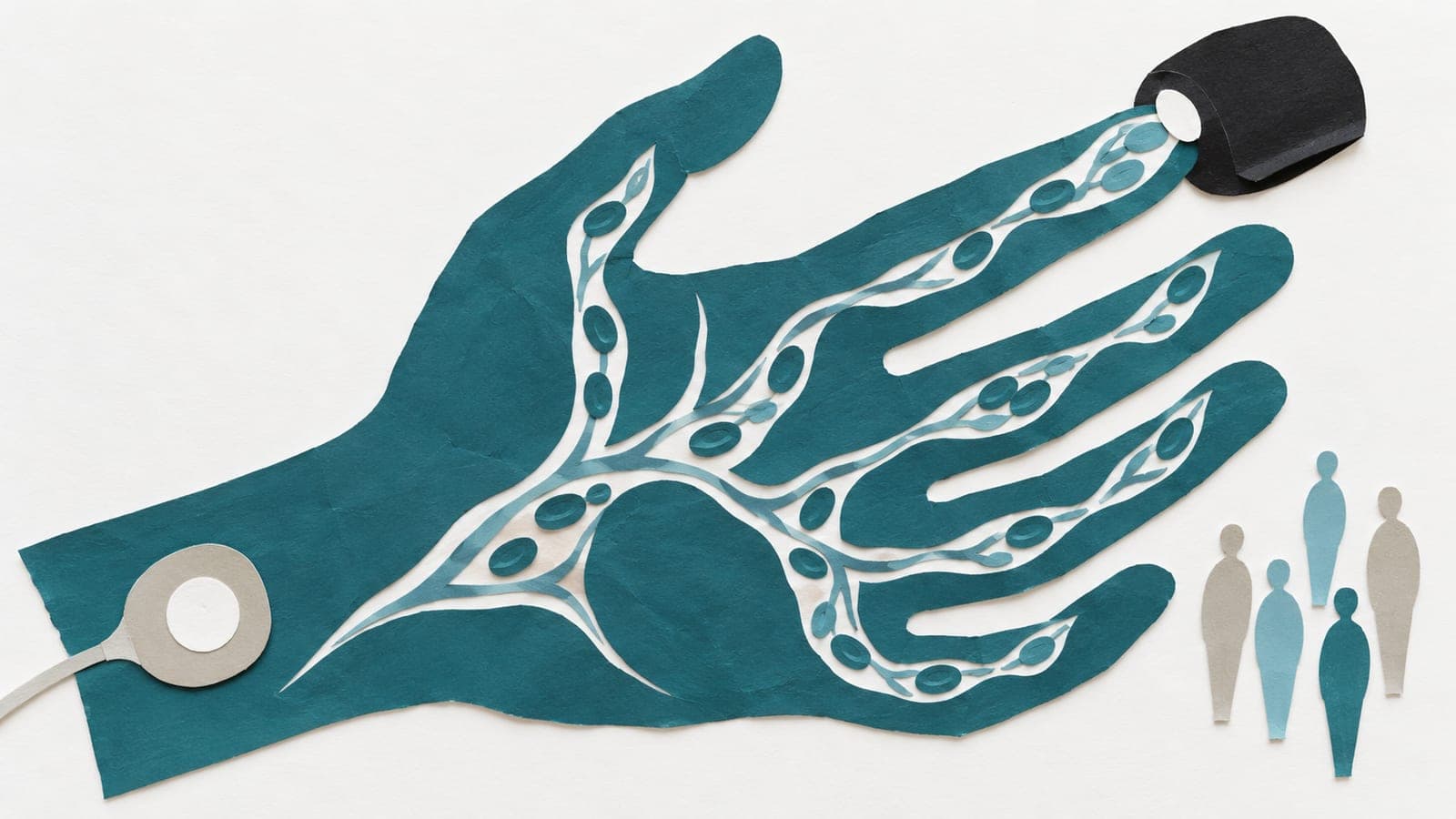
Intense cycling improved heart rate variability in older adults
Changes in a measure of overall heartbeat variability favored intense cycling over moderate cycling by 5.4 milliseconds after 12 weeks.
68 participants
Limit: Home heart recordings were unsupervised, with breathing patterns and adherence to instructions unmonitored
Edited by Boris Djordjevic · AgingResearch.News
A randomized trial assigned 68 non-exercising adults aged 65 or older to supervised cycling twice weekly for 12 weeks. The intense group did ten six-second intervals with 54-second recoveries; the moderate group did three eight-minute bouts. Workloads were personalized and increased progressively. Of 64 participants contributing data, 37 were women.
Researchers measured heart rate variability—the variation in time between heartbeats—at home over seven mornings before and after training. Changes favored intense cycling by 5.4 milliseconds for overall variation and 3.5 milliseconds for variation between successive beats. A third measure also favored intense cycling. Resting heart rate did not differ between groups. Researchers recorded 52 discomfort events with intense cycling and 94 with moderate cycling, mostly muscle, bone or joint complaints. No serious adverse events occurred.
Why it matters
Heart rate variability declines with aging and physical inactivity. Comparing exercise intensities addresses which forms of training might best support this marker of cardiovascular health in older age.
Caveats
These were secondary outcomes based on a cardiovascular health marker; only 54 participants had valid measurements both before and after training. The findings do not cover people excluded for conditions such as heart failure, significant irregular heartbeats or insulin-treated diabetes.
From the paper
- Participants
In total, 68 participants aged 65 years or older were included in the study.
- Who took part
In brief, participants for the Umeå HIT study were recruited through newspaper advertisements targeting older adults in Umeå, Sweden.
- Ages
The mean (± standard deviation) age, body mass index (BMI), and V̇O₂peak were 69.8 ± 3.0 years, 26.3 ± 4.0 kg/m², and 22.7 ± 4.8 mL/kg/min, respectively at baseline.
- Sex
Among the 64 participants, 37 were female.
- Duration
In brief, supramaximal HIT and MIT were performed indoors on stationary bikes (Tomahawk IC7) in supervised group sessions (8–10 participants), twice weekly for 3 months (25 sessions).
- Analyzed for SDNN
Sixty‐four participants contributed to 118 valid measurement averages whereof 54 participants (27 per group) had valid measurement averages at both baseline and follow‐up.
- Result
Specifically, the between‐group differences in change were for SDNN 5.4 ms [95% CI: 1.1, 9.7], RMSSD 3.5 ms [95% CI: 0.7, 6.3], and LnRMSSD 0.15 [95% CI: 0.01, 0.28].
- Limitation
First, HRV was assessed unsupervised in participants' homes over seven consecutive mornings.
- Resting heart rate
For resting heart rate, the between‐group difference in change was −1.3 beats per minute [95% CI: −3.4, 0.7].
Quoted word for word from the full text on PubMed Central.
The paper
Umeå University
Physiological Reports, Jun 2026, Open access