Endogenously generated Dutch-type Aβ non-fibrillar aggregates dysregulate presynaptic neurotransmission in the absence of detectable inflammation
Abstract
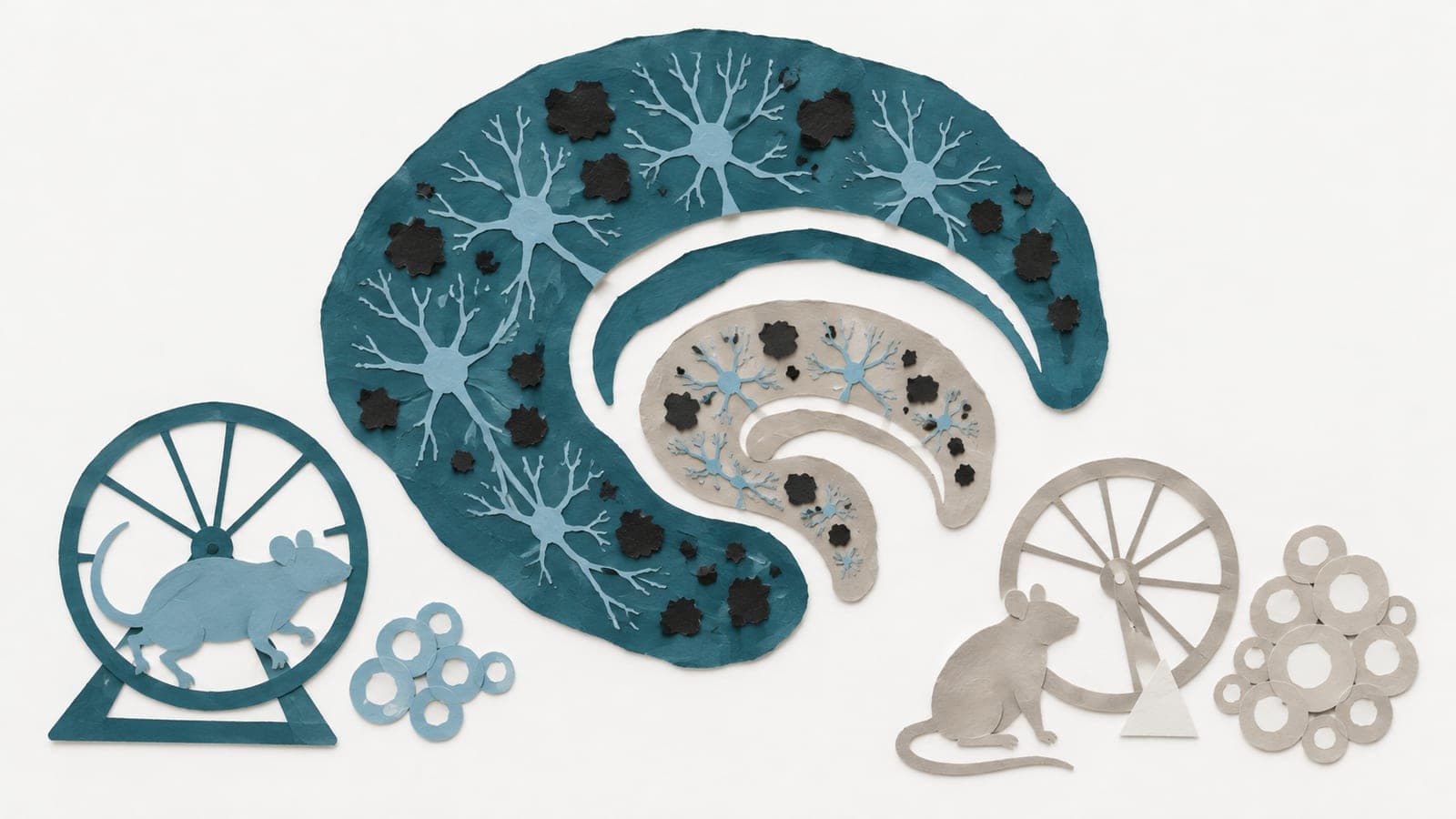
BACKGROUND: APPE693Q ("Dutch") transgenic mice develop aging-related learning deficits and accumulate endogenously generated non-fibrillar aggregates (NFAs) of amyloid beta (Aβ) and amyloid precursor protein α-carboxy terminal fragments. NFA-Aβ correlates with synaptic loss and memory deficits more closely than does fibrillar Aβ. METHODS: We assessed the physiological, transcriptomic, ultrastructural, histological, and metabolic changes associated with the accumulation of NFA of Dutch Aβ in brains of APPE693Q mice. RESULTS: Aging-related accumulation of NFA-Aβ in APPE693Q mice was revealed by A11 immunohistochemistry and cyclic D,L-α-peptide-fluorescein-5-isothiocyanate microscopy. Presynaptic termini of APPE693Q mice developed physiological abnormalities in post-tetanic potentiation, synaptic fatigue, synaptic vesicle replenishment, and an aging-related reduction in mitochondrial complex I activity. Single-cell RNA sequencing showed that excitatory neurons exhibited an altered transcriptomic profile involving "protein translation" and "oxidative phosphorylation." DISCUSSION: Accumulation of NFA-Aβ alters neuronal metabolism but does not activate inflammation. Depletion of all forms of Aβ may be required to eliminate Aβ toxicity with anti-amyloid antibodies.
The paper
Icahn School of Medicine at Mount Sinai
Alzheimer's & Dementia, 1 Jun 2026, Open access