Phylogenetic reconstruction of ancestral ageing rates in the primate lineage
Abstract
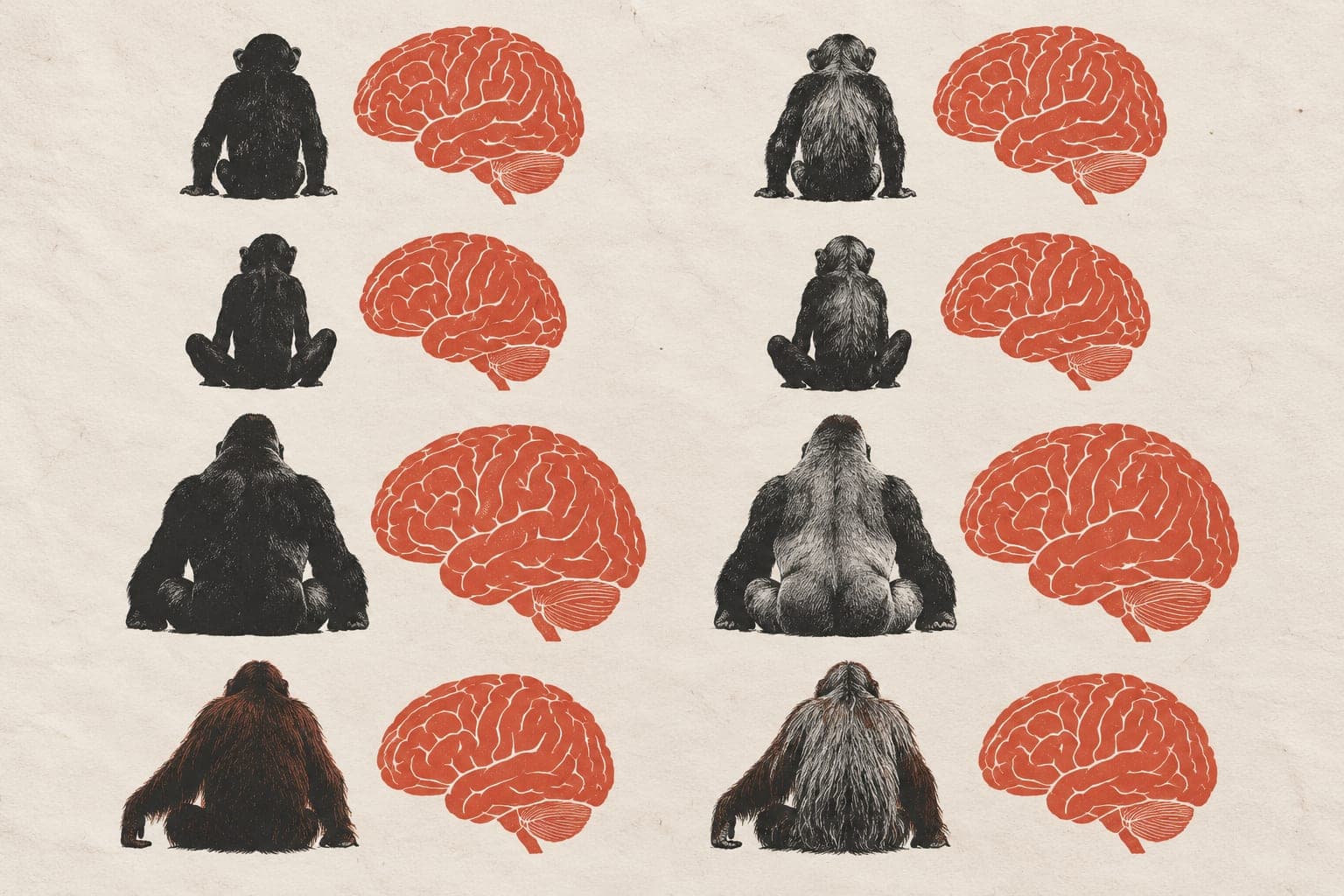
Median lifespans of primates show nearly 10-fold variation, ranging from approximately 8 years in marmosets to approximately 80 years in humans. The molecular mechanisms that govern this variation and how they evolved remain poorly understood. Based on a decades-long multi-site curation effort, we have compiled lifespan data for 39 captive primate species, estimated their Gompertzian ageing parameters, and reconstructed ancestral ageing parameters for major primate clades. To address the challenges in working with small colony sizes, we developed a robust framework for estimation of ageing parameters while considering phylogenetic relationships. We show that (i) lifespan variation in primates evolved through trade-offs in baseline hazards (at the time of sexual maturity) and adult ageing rates, (ii) ageing rates are significantly more evolutionarily conserved than baseline hazards (Pagel's λ = 0.98 versus λ = 0.52, respectively), and (iii) these two traits do not show a pattern of evolutionary covariation. Based on the reconstruction of ancestral ageing parameters, we find that the ancestor of great apes was likely ageing at a similar rate to modern humans (mortality rate doubling time approximately 7.8 ± 0.9 years), indicating that ageing rates have remained stable over long evolutionary timescales.
The paper
Calico Life Sciences; University of Wisconsin–Madison
Proceedings of the Royal Society B, 3 Jun 2026, Open access