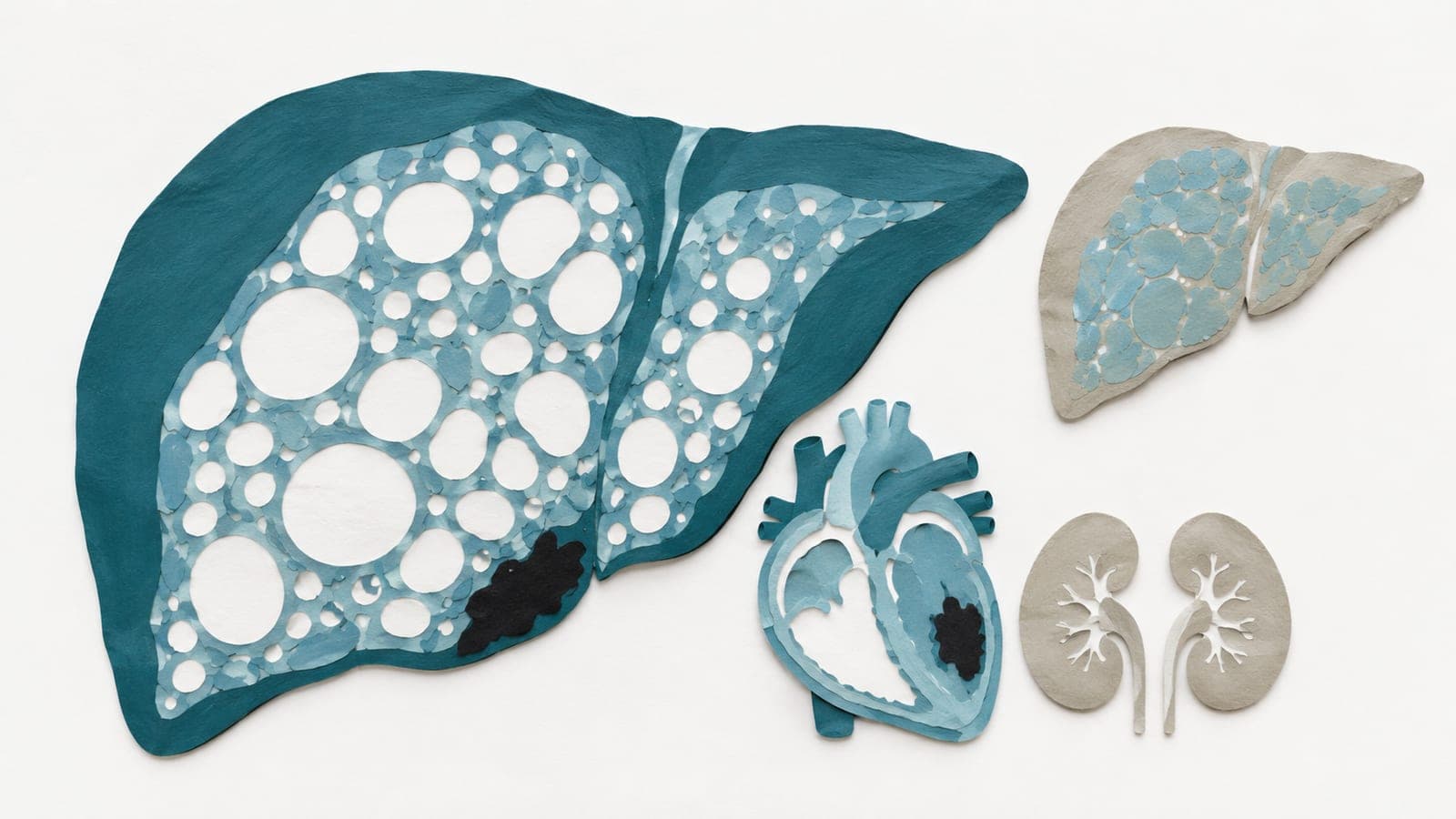
Liver aging score predicts death better than age alone
The score distinguished deaths from survival better than age alone, scoring 0.764 in US adults and 0.759 in adults with metabolically linked fatty liver disease.
21,629 participants, independent replication
Limit: The index is a risk-based proxy for liver aging, not a direct measure
Edited by Boris Djordjevic · AgingResearch.News
In 21,629 Chinese adults aged 45–95, researchers developed the Liver Aging Index in an observational cohort study. It combined 13 measures of body size, blood pressure, blood chemistry, liver fat and liver stiffness.
They validated it in 3,412 US adults and 12,170 adults with metabolically linked fatty liver disease from 16 international centers. All validation participants were at least 45; across the three cohorts, 48.1%–64.6% were women. The index distinguished people who died during follow-up from survivors better than age alone. A larger gap between the index and actual age was also associated with higher risks of death and serious liver complications.
Why it matters
Biological aging is linked to liver disease and mortality. The authors see the index as a feasible way to assess liver-specific aging without an invasive procedure.
Caveats
This observational study tested a risk-based proxy for liver aging, not whether changing the score improves health; gains in overall prediction error were modest in the Chinese cohort. The cohorts excluded adults under 45 and people with diagnosed cirrhosis, meaning severe liver scarring, or chronic hepatitis, meaning long-term liver inflammation.