A cohesion optimum underlies chromosome segregation fidelity in oocytes
Abstract
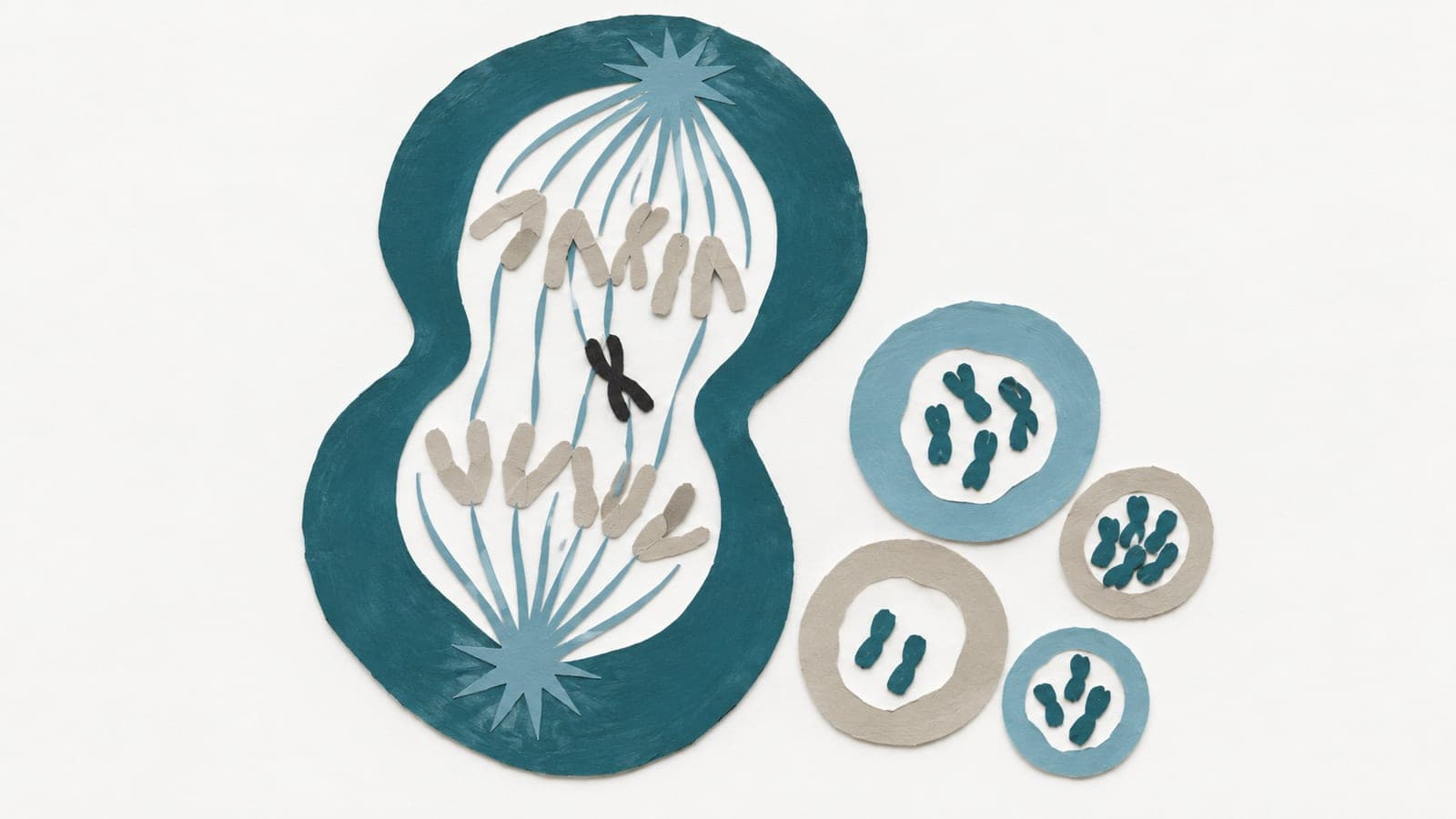
Chromosome segregation is compromised in eggs from women of both early and advanced reproductive ages. Deteriorating cohesion causes premature separation of sister-chromatids in eggs from older females. We show that the converse is true for oocytes of adolescents, with excessive cohesion impeding segregation. Oocytes from juvenile mice show severe chromosome lagging in anaphase I, leading to nondisjunction or, in extreme cases, failure of the first meiotic division. These defects are suppressed by experimentally weakening cohesion or enhancing its resolution during anaphase I. By contrast, lagging and nondisjunction are rare in the oocytes of young adults because cohesion is inherently weaker. Thus, relative cohesion strength underlies both the frequency and type of segregation errors observed in eggs throughout the female reproductive lifespan.
The paper
Howard Hughes Medical Institute
bioRxiv, 11 May 2026, Open access, Preprint, not peer-reviewed