Waking-hours sedentary behaviour and its PA-independent associations with muscle strength, specific force, activation capacity, and fatigability in older adults
Abstract
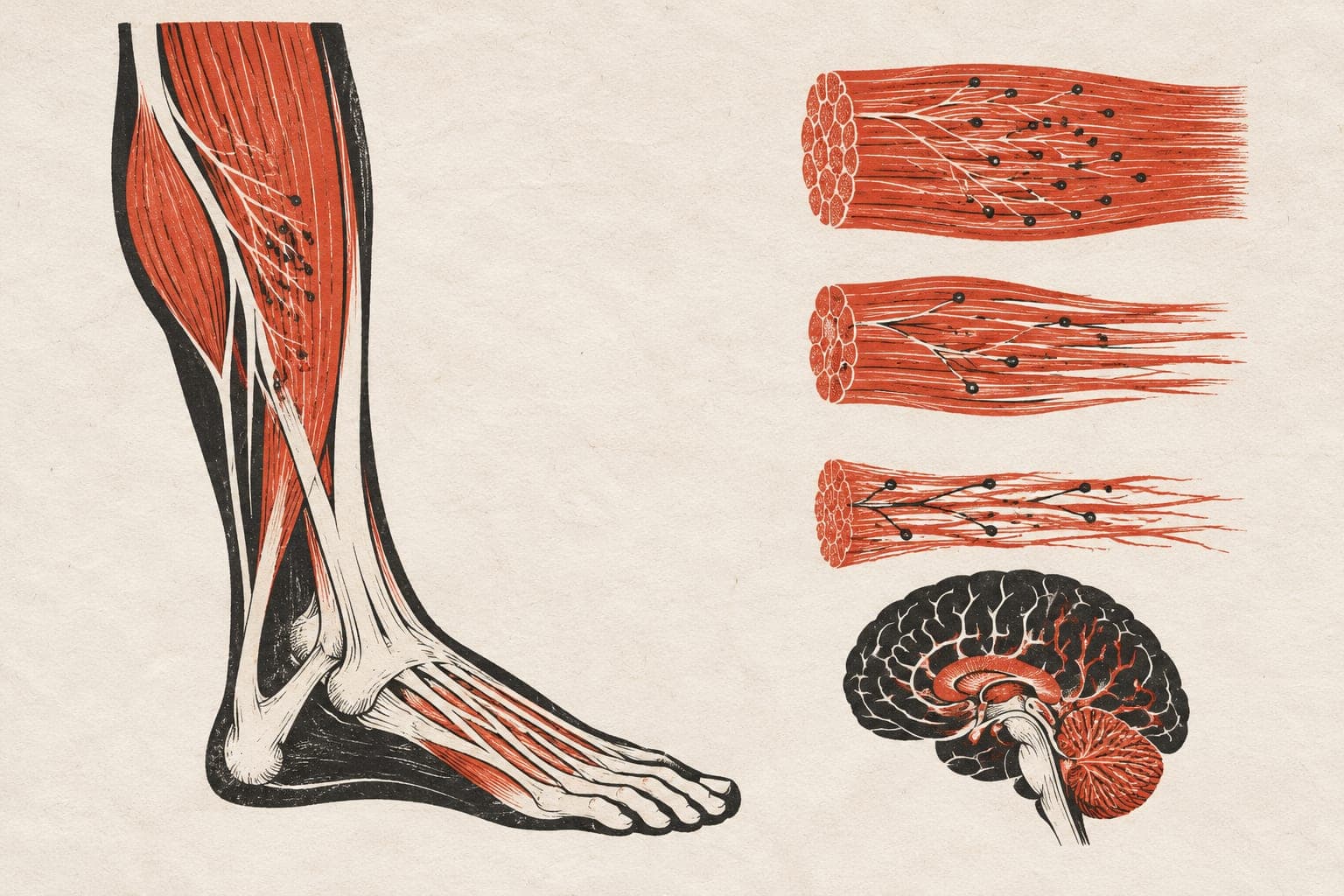
BACKGROUND: The physical activity (PA)-independent associations between sedentary behaviour (SB) and muscle characteristics such as activation capacity, specific force, and fatigability remain underexplored. METHODS: 105 older adults (72.8 ± 6.0 years), wore a 3D-accelerometer for 5-7 continuous days, to quantify free-living SB and PA, followed by assessments of the gastrocnemius medialis (GM) muscle using isokinetic dynamometry, electromyography (EMG), ultrasonography and percutaneous electrical stimulation. Associations with SB were examined using multiple analytical approaches, before and after adjustment for covariates. RESULTS: Multiple linear regressions (MLRs i.e. for total daily accumulations, and patterns) - SB accumulation explained much of the variance in optimal angle for maximal voluntary force, even after adjustment for all covariates (R²adj = 0.318, P < 0.01). Interestingly, Fifteen MLR models identified associations between SB patterns and GM functional and structural outcomes (R² 4.2% to 41%, P < 0.05), with five models remaining significant following adjustment. Compositional Analyses - Ten compositional models predicted GM function and/or structure (R² 11.5% to 39.8%, P < 0.05), with one (that predicting EMG amplitude during isometric fatigue) remaining significant following adjustment. Isotemporal substitutions - Reallocating 10-mins between physical behaviours was associated with GM outcomes e.g. muscle strength, specific force, activation capacity and fatigability (P < 0.05). DISCUSSION & CONCLUSION: In older adults, how sedentary time is accumulated is a key correlate of muscle function. Targeting prolonged SB, ideally through introducing Light-Intensity PA, rather than focusing solely on increasing MVPA, may provide a practical route to preserving muscle health.
The paper
Manchester Metropolitan University
Experimental Gerontology, 11 May 2026, Open access