Advancing Age Modulates Associations Between Cognitive Impairment and Brain Volumes in Early MS
Abstract
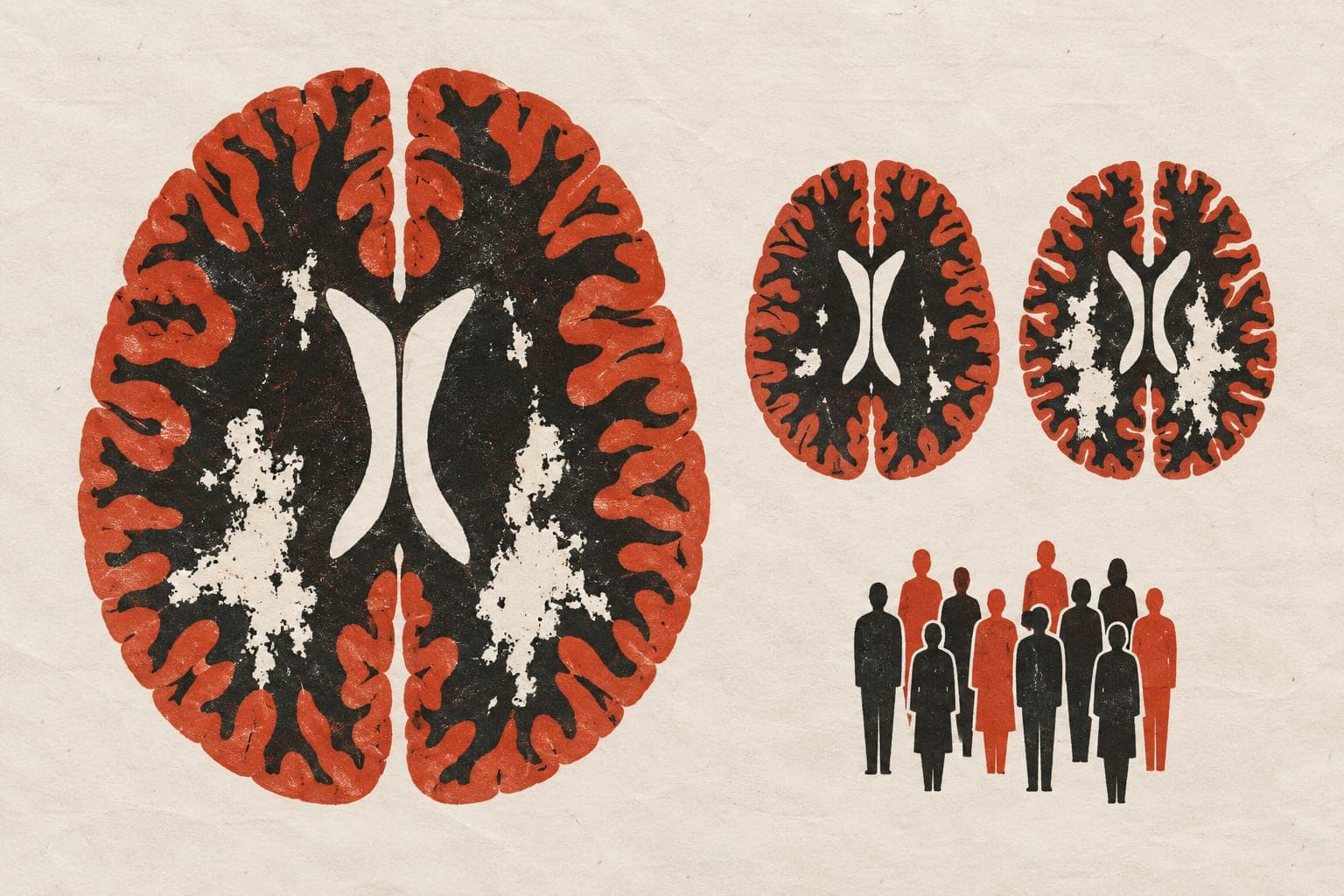
INTRODUCTION: Cognitive impairment is common in multiple sclerosis (MS), but manifestations following the first demyelinating event are relatively unexplored. We investigated cross-sectional associations between magnetic resonance imaging (MRI)-derived brain volumes and the presence of cognitive impairment outcomes five years after the first presentation with a demyelinating event. METHODS: Comprehensive cognitive assessments were performed five years after a first clinical demyelinating presentation using the Minimal Assessment of Cognitive Function in MS (MACFIMS). Participant Z scores were calculated for each MACFIMS subtest using available regression-based normative data. Participants were defined as having a cognitive outcome if one or more MACFIMS subtests were below the applied cutoff of Z ≤ -1.50. Gray matter volumes (GMV) were calculated using 3D T1-weighted MRI sequences. Logistic regression models assessed associations between 5-year MRI measures and cognitive impairment (adjusting for total intracranial volume where relevant). RESULTS: Forty participants were recruited. Lower GMV at 5 years was associated with 5-year cognitive impairment outcomes (OR = 1.06 per 1 cm³ decrease in GMV, 95% CI [1.00-1.13], p = 0.044). Among participants with a cognitive impairment outcome, there were significant associations between lower GMV and advancing age (p = 0.0095). Exploratory analysis of estimated marginal contrasts suggested that cognitive impairment outcomes were potentially associated with GMV above the age of 39 years (Z ≤ -1.50: p = 0.0476). DISCUSSION: Five years after a first demyelinating event, GMV volumes on MRI are significantly associated with the presence of cognitive outcomes, while advancing age also appears to be associated with GMV and cognitive outcomes.
The paper
UCL Queen Square Institute of Neurology
Annals of Clinical and Translational Neurology, 10 Apr 2026, Open access