Fear Learning and Memory in the Aging Brain: Neural Mechanisms of Posttraumatic Stress Disorder Risk and Resilience in Older Adults
Abstract
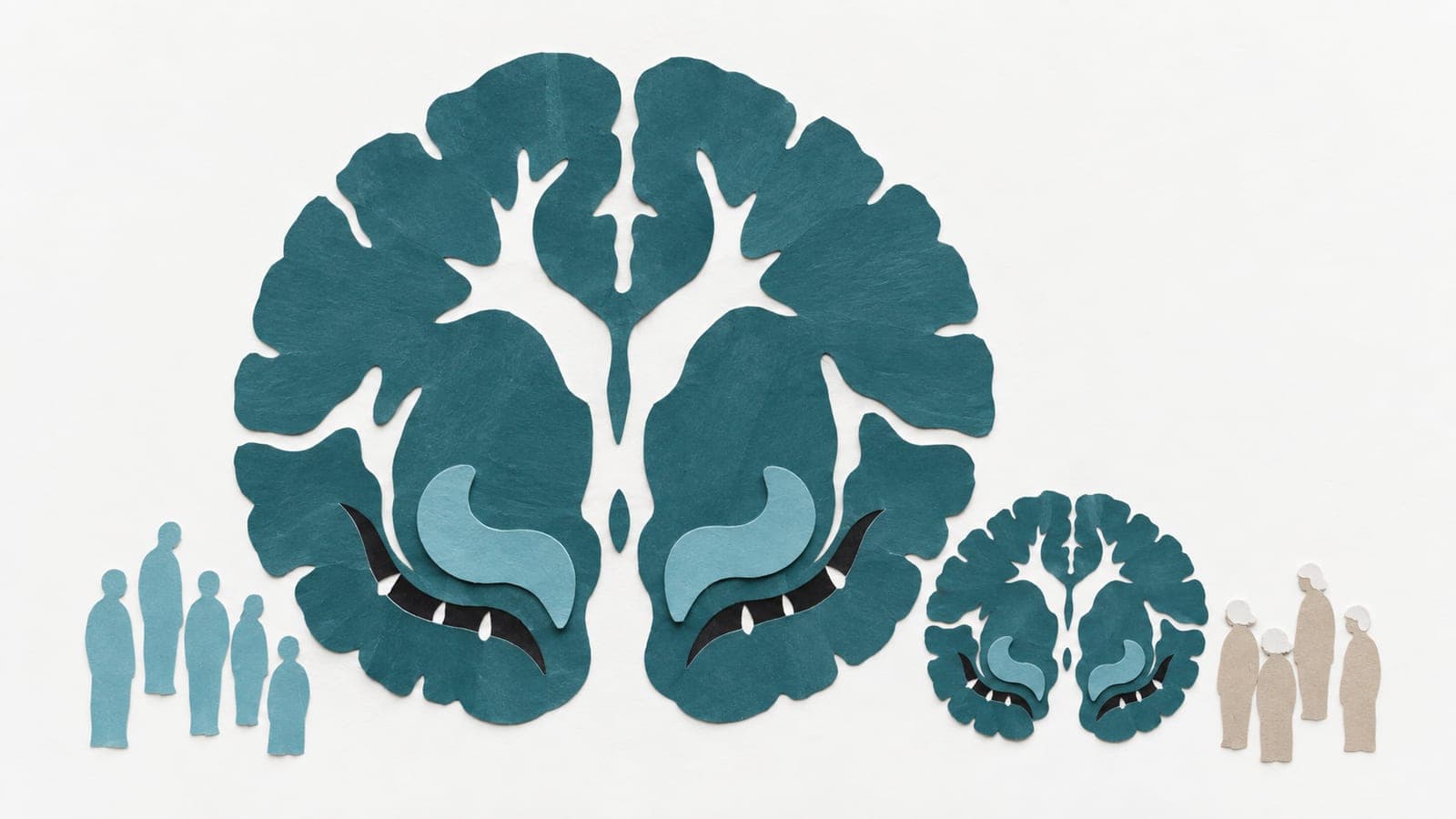
With a rapidly growing population of older adults worldwide, understanding how aging shapes mental and cognitive health is an urgent public health priority. Although older age has been considered protective against the development of posttraumatic stress disorder (PTSD), this pattern is far from universal. Emerging evidence indicates that older adults with a history of trauma may experience delayed-onset PTSD or a reemergence of symptoms after years of dormancy. In this review, we examine how age-related changes in the brain intersect with known PTSD mechanisms to influence trajectories of risk and resilience in later life. We focus on the canonical fear network-comprising the amygdala, hippocampus, and ventromedial prefrontal cortex-which is central to fear learning, memory, and emotion regulation. These regions are also highly vulnerable to aging and neurodegenerative processes; however, older adults remain underrepresented in both neurobiological and treatment studies of PTSD. We argue that the structural and functional aging of these systems may exacerbate difficulties with associative learning and emotion regulation while also interacting with psychosocial stressors unique to aging. At the same time, age-related strengths (such as positivity bias) may promote resilience. These insights carry important implications for clinical care; existing empirically supported psychotherapies may benefit from adaptations to account for age-related neural and cognitive shifts. A lifespan neuroscience framework is essential for identifying the shared mechanisms between PTSD and aging, with the goal of informing tailored, mechanism-driven interventions that promote the mental and cognitive health of trauma-exposed older adults.
The paper
University of Arizona
Biological Psychiatry Cognitive Neuroscience and Neuroimaging, 13 Dec 2025