Memory for links without conscious recall may stay intact with age
In a brain-imaging experiment, memory-related activity reductions in several regions did not differ between younger and older adults completing an object-categorisation task.
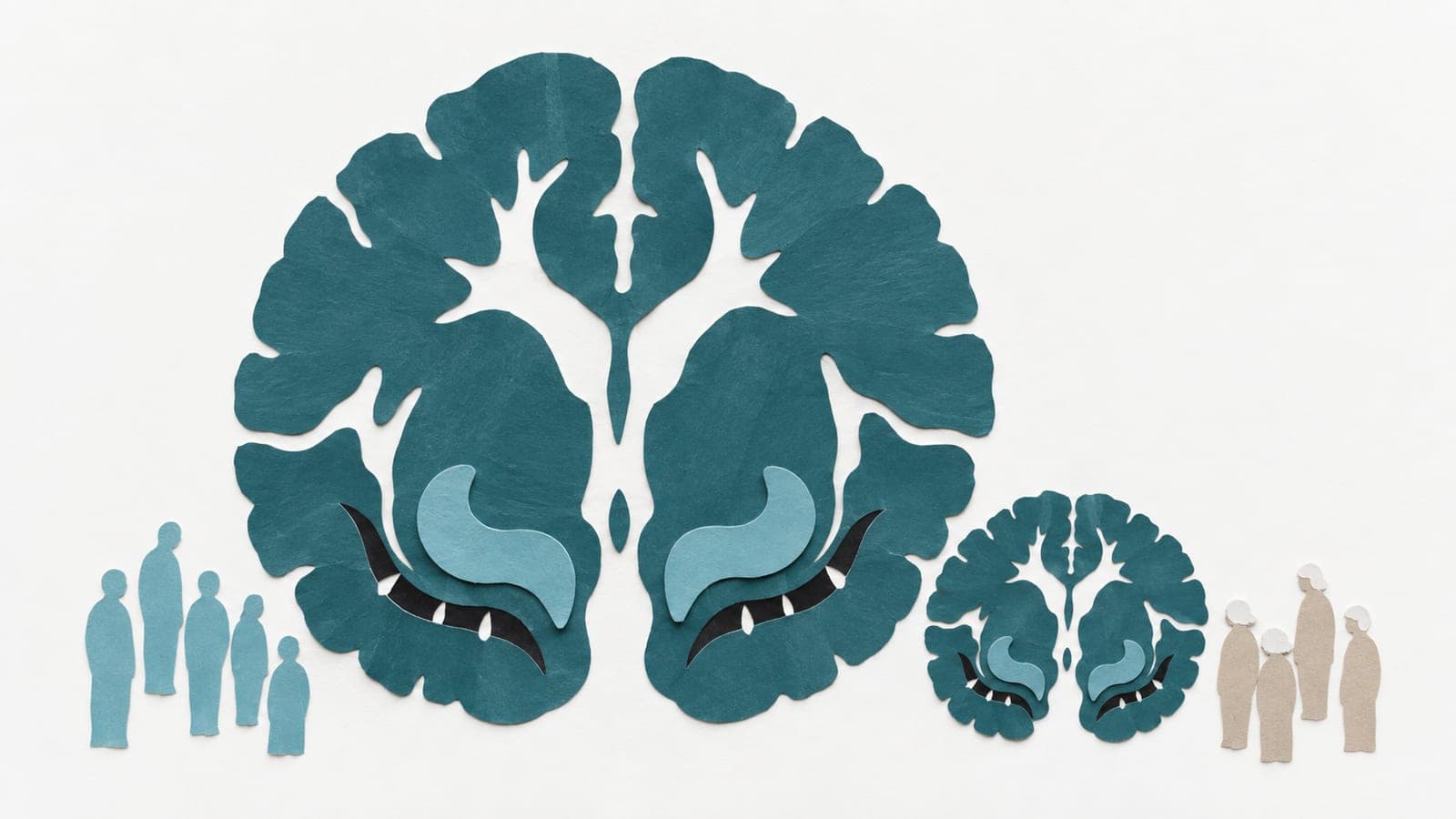
Younger and older adults took part in a brain-imaging experiment on memory for object–word pairings. They quickly categorised pictured objects overlaid with words, then repeated the task with original or rearranged pairings. This tested memory for links without asking participants to consciously recall them. The researchers compared response times and brain activity between the two types of pairings.
Several brain regions showed lower activity for original than rearranged pairings, with no age difference in this pattern. In both age groups, a bigger speed advantage for original pairings was linked to a bigger activity reduction in the perirhinal cortex, a brain region involved in memory. Activity in the hippocampus, another memory-related region, was not linked to this speed advantage. The findings suggest that memory for these links remains intact with age.
Why it matters
Conscious memory for associations declines with age. This study addressed whether remembering links without conscious recall may rely on additional brain processes outside the hippocampus.
Caveats
This brain-imaging experiment could not establish which brain regions were necessary for memory. It is a preprint and has not yet been peer-reviewed.
- Behavioural associative priming
- Hippocampal activation
- Neural associative priming
- Occipitotemporal and frontal neural associative priming
- Perirhinal neural associative priming
- Humans
The paper
University of Toronto
bioRxiv, 12 Oct 2026, CC BY, Preprint, not peer-reviewed