Dissecting Shared Genetic Architecture of Thoracic Aortic Aneurysm and Aortic Related Traits and Identifying SplA/Ryanodine Receptor Domain and SOCS Box Containing 1 Involved in Smooth Muscle Phenotype Switching and Cell Senescence Through Alternative Splicing
Abstract
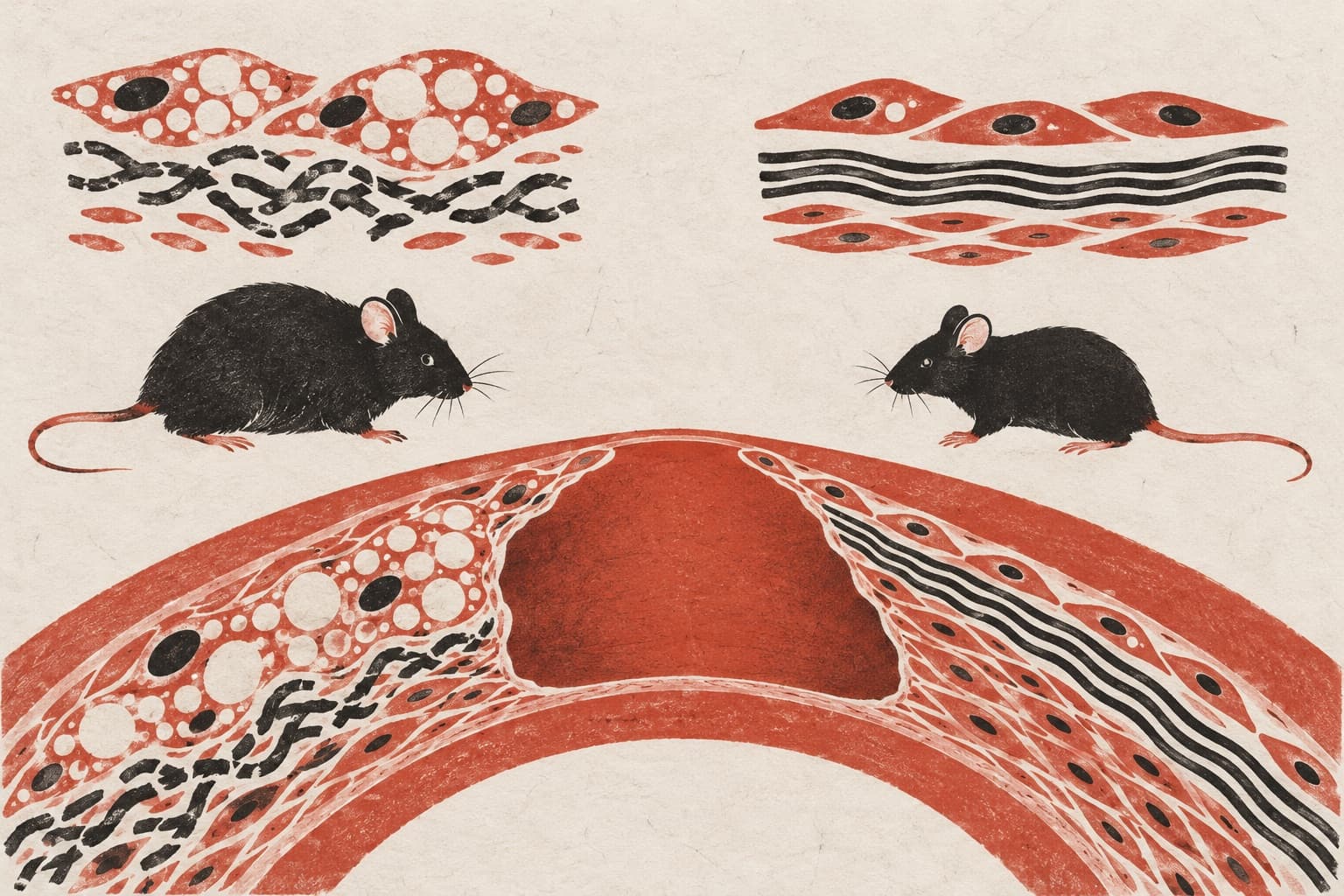
Machine learning was employed to annotate images of the thoracic aorta, resulting in the identification of additional thoracic-related targets. However, genetic evaluation of the associations among thoracic aortic traits and their shared genes is lacking. We integrated thoracic aortic aneurysm (TAA) genome-wide association study (GWAS) data and genetically related traits' GWAS to identify the shared genetic variants with multi-trait analysis of GWAS (MTAG) and N-weighted GWAMA (N-GWAMA). The robust shared gene, SplA/Ryanodine Receptor Domain and SOCS Box Containing 1 (SPSB1), was validated in TAA mouse models and TAA patients. Single-cell RNA sequencing was used to identify the specific cell niches. Additionally, functional experiments were implemented to examine the function of SPSB1 in smooth muscle cell (SMC) phenotypic transformation. Mass spectrometry and RNA sequencing were used to identify the potential function of SPSB1. We revealed a strong relationship between TAA, thoracic aortic diameter, and thoracic aortic area. 3091 shared variants in 50 loci reached significance (p < 5 × 10⁻⁸) in MTAG and N-GWAMA analysis. By integrating transcriptomics data and in vivo experiments, only SPSB1 was verified as a robust target. Single-cell RNA sequencing identified SPSB1 as a major regulator of SMC phenotype switching in TAA. In vitro, SPSB1 silencing inhibited SMCs toward a synthetic phenotype and cell senescence. Mass spectrometry and RNA sequencing indicated SPSB1 is involved in alternative splicing within SMC. We dissected the shared genetic architecture among TAA, thoracic aortic diameter, and thoracic aortic area. SPSB1 was the most robust shared target. Functional analyses showed SPSB1 may play a role in SMC phenotype switching and cell senescence through alternative splicing. These discoveries will offer novel insights into the pathogenesis of TAA.
The paper
The First Affiliated Hospital, Sun Yat-sen University
FASEB Journal, 18 Nov 2025