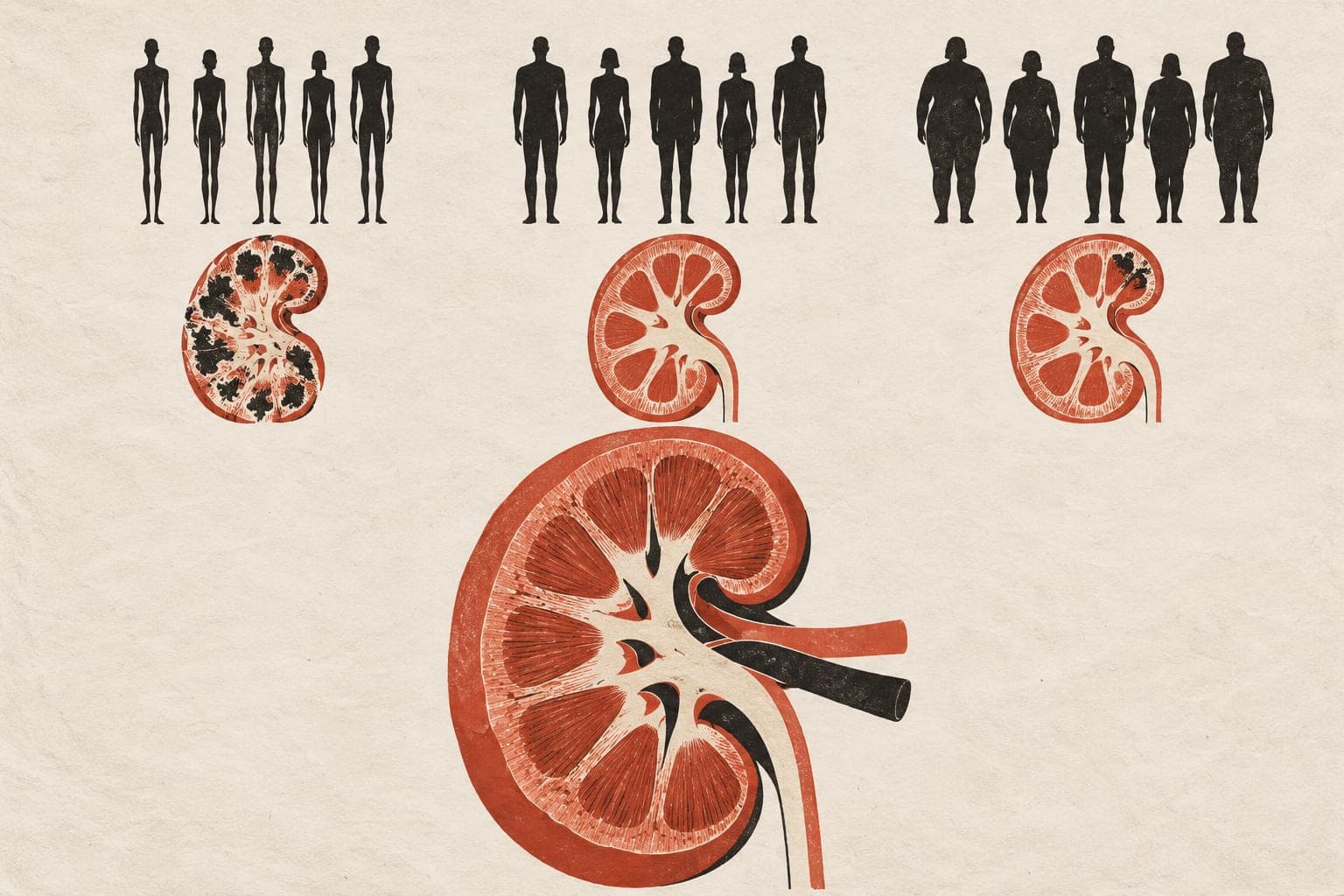
Elevated waist-to-hip ratio, as an abdominal obesity index, predicts the risk of diabetic kidney injury
Abstract
BACKGROUND: Diabetic nephropathy (DN) is associated with a high incidence of type 2 diabetic mellitus (T2DM) in Asia. Central obesity is an important risk factor for DN, represented by a series of indices, including waist circumference, waist-to-hip ratio (WHR), hip circumference, and visceral to subcutaneous fat area ratio (VSR). However, limited research has focused on the association between these indices and DN. AIM: To elucidate the relationship between central fat distribution, as measured by WHR and VSR, and the DN progression. METHODS: Between August 2018 and April 2023, a total of 991 individuals were retrospectively recruited from the Rui'an People's Hospital for this cross-sectional analysis. The 753 individuals with T2DM were divided into three groups according to the urinary albumin/creatinine ratio (ACR): normal albuminuria (n = 513, ACR < 30 mg/g), microalbuminuria (n = 166, 30 ≤ ACR < 300 mg/g), and clinical proteinuria (n = 45, ACR ≥ 300 mg/g). RESULTS: Our results indicated that WHR and VSR were closely correlated with sex, ageing, body mass index, hypertension, T2DM causes, and experience of drinking and smoking, and potential relationships between these factors and DN progression were observed. WHR, but not VSR, gradually increased with the severity of early-stage renal injury. Abnormal serum lipid levels in T2DM patients with early-stage renal injury were strongly correlated with WHR. Logistic regression analysis revealed that WHR may be an independent risk factor for early-stage renal injury. CONCLUSION: In patients with T2DM, WHR level, rather than VSR level, is closely associated with early-stage renal injury. An abnormal serum lipid spectrum was common in all stages of renal injury and was strongly related to high WHR. Thus, WHR measurement might be a valuable tool for the early prevention of renal injury, which could guide clinical monitoring and prevent diabetic complications.
The paper
Wenzhou Medical University
World Journal of Diabetes, 15 Apr 2025