Cytosolic and mitochondrial Ca²⁺ concentrations in primary hepatocytes change with ageing and in consequence of an mtDNA mutation
Abstract
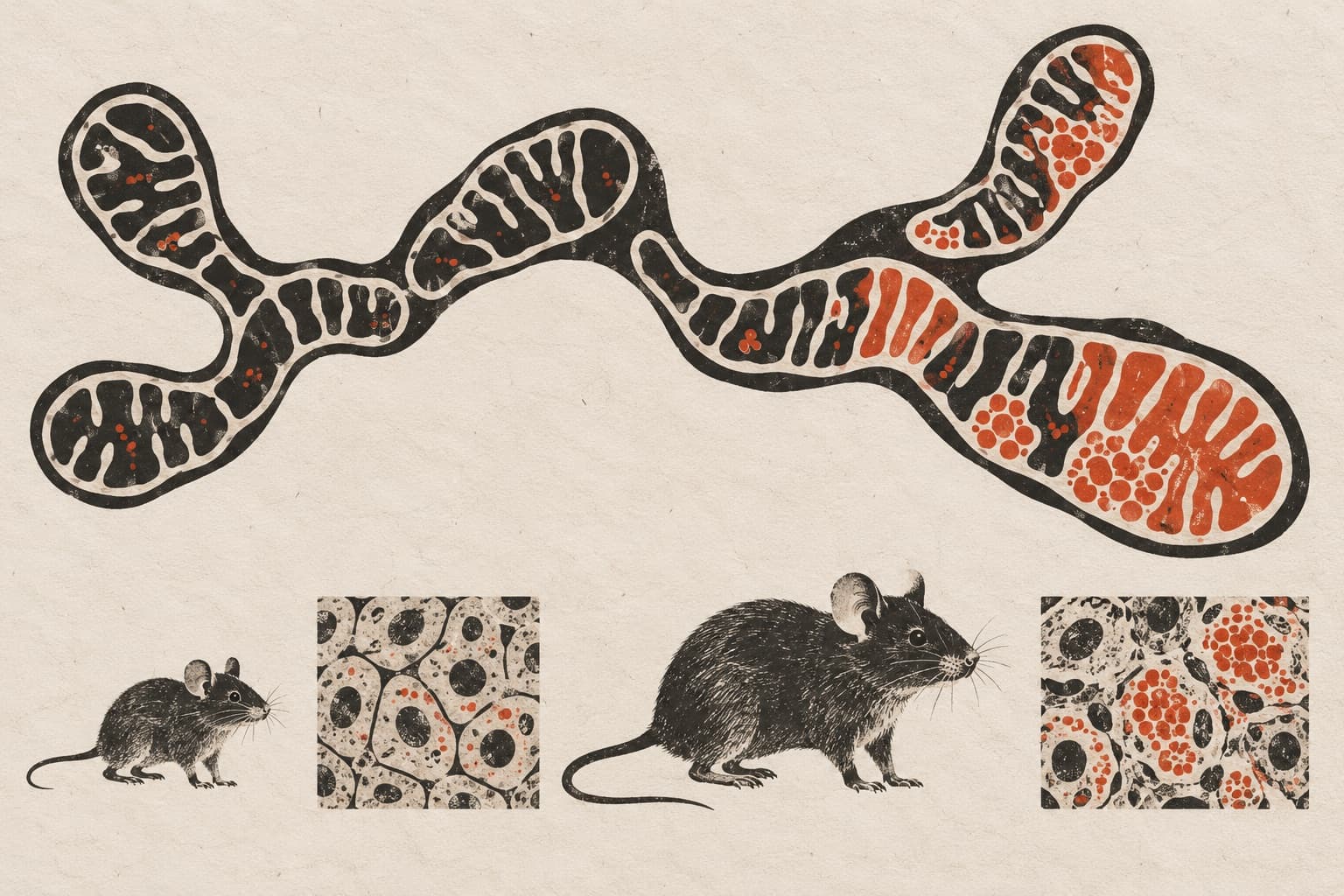
Mitochondrial Ca²⁺ flux is crucial for the regulation of cell metabolism. Ca²⁺ entry to the mitochondrial matrix is mediated by VDAC1 and MCU with its regulatory molecules. We investigated hepatocytes isolated from conplastic C57BL/6NTac-mtNODLtJ mice (mtNOD) that differ from C57BL/6NTac mice (controls) by a point mutation in mitochondrial-encoded subunit 3 of cytochrome c oxidase, resulting in functional and morphological mitochondrial adaptations. Mice of both strains up to 12 months old were compared using mitochondrial GEM-GECO1 and cytosolic CAR-GECO1 expression to gain knowledge of age-dependent alterations of Ca²⁺ concentrations. In controls we observed a significant increase in glucose-induced cytosolic Ca²⁺ concentration with ageing, but only a minor elevation in mitochondrial Ca²⁺ concentration. Conversely, glucose-induced mitochondrial Ca²⁺ concentration significantly declined with ageing in mtNOD mice, paralleled by a slight decrease in cytosolic Ca²⁺ concentration. This was consistent with a significant reduction of the MICU1 to MCU expression ratio and a decline in MCUR1. Our results can best be explained in terms of the adaptation of Ca²⁺ concentrations to the mitochondrial network structure. In the fragmented mitochondrial network of ageing controls there is a need for high cytosolic Ca²⁺ influx, because only some of the isolated mitochondria are in direct contact with the endoplasmic reticulum. This is not important in the hyper-fused elongated mitochondrial network found in ageing mtNOD mice which facilitates rapid Ca²⁺ distribution over a large mitochondrial area.
The paper
University of Rostock; Universitätsmedizin Rostock
Cell Calcium, Jul 26, 2019