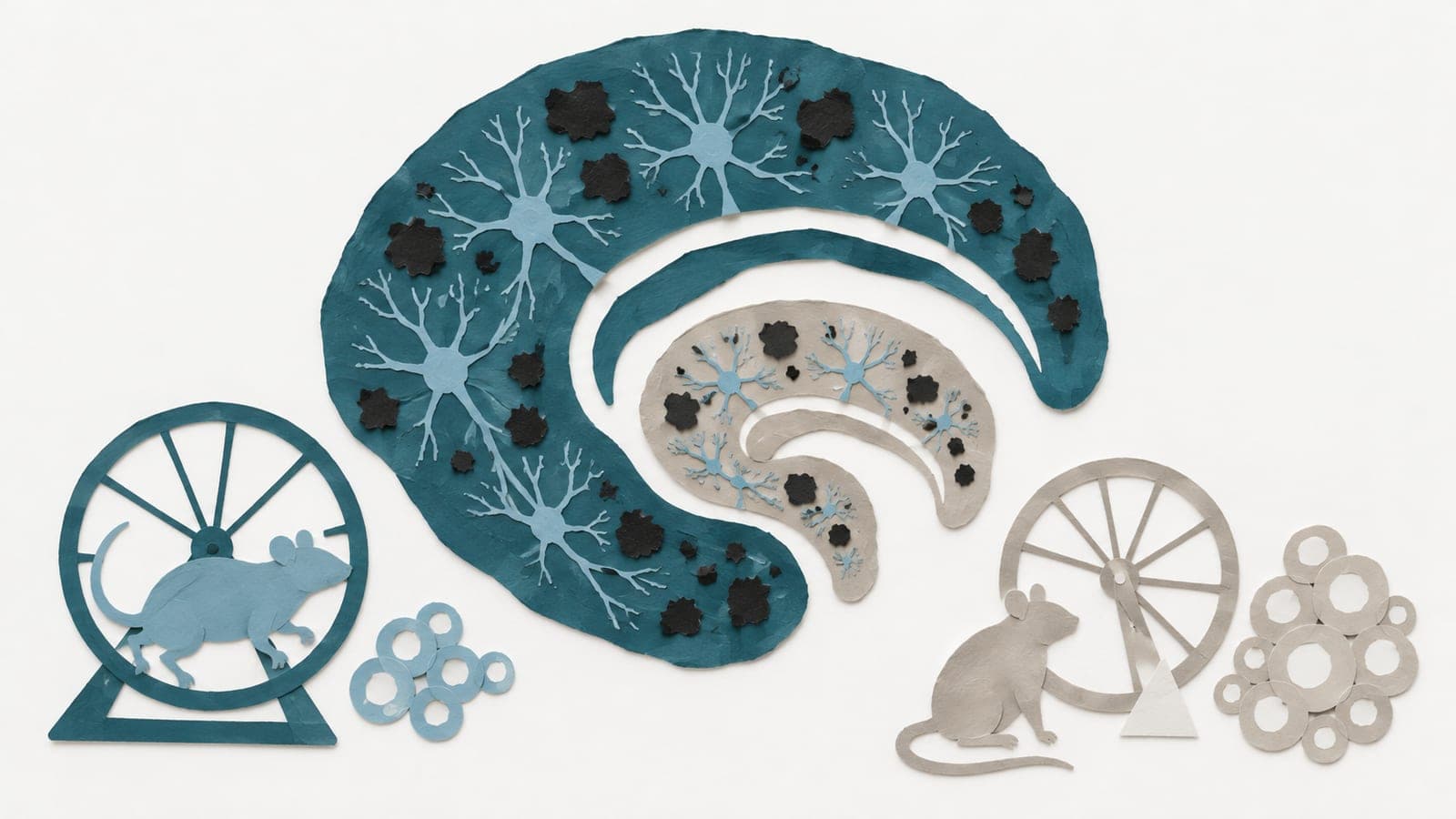
Endurance training effects on striatal D2 dopamine receptor binding and striatal dopamine metabolites in presenescent older rats
Abstract
Endurance training is associated with higher binding of 3H-spiperone to striatal D2 dopamine receptors of rats sacrificed 48 h following the last exercise bout (Gilliam et al. 1984). In the present study we investigated the effects of endurance training in presenescent older rats on the relationship between steady-state levels of DA and its metabolites in striatum versus the affinity and density of striatal D2 DA receptors. Citrate synthase activity of the gastrocnemius-plantaris muscle was 29.06 +/- 2.27 mumole/g wet wt in 21-month-old trained rats versus 22.88 +/- 1.13 mumole/g wet wt in 21-month-old untrained animals. DOPAC levels and DOPAC/DA ratios were greater in the old controls. Endurance training was associated with lower DOPAC levels in the 21-month-old animals. Thus, endurance training may postpone selectively changes in DA metabolism over a portion of the lifespan. As expected, the number of D2 DA binding sites was reduced with age (6 months Bmax:429 +/- 21 fmoles/mg protein; 21 months:355 +/- 20) with no change in affinity. The Bmax of old runners was significantly higher (457 +/- 38 fmoles/mg protein) than that of old controls. Thus, endurance training appears to exert a protective effect on D2 dopamine receptors during the lifespan. Taken together, the present results suggest that there may be a possible reciprocal relationship between changes in DA metabolites and DA binding as a function of exercise in presenescent older rats, and that endurance training may decelerate the effects of age both on nigrostriatal dopamine neurons and on striatal D2 dopamine receptors during a portion of the lifespan.
The paper
The University of Texas at Austin
Psychopharmacology, 1 Jan 1987