Microbial compounds limited muscle loss in aged mice
In a 10-day experiment, two compounds improved different aspects of muscle function in aged male and female mice with one hindlimb immobilised.
Physiological Reports
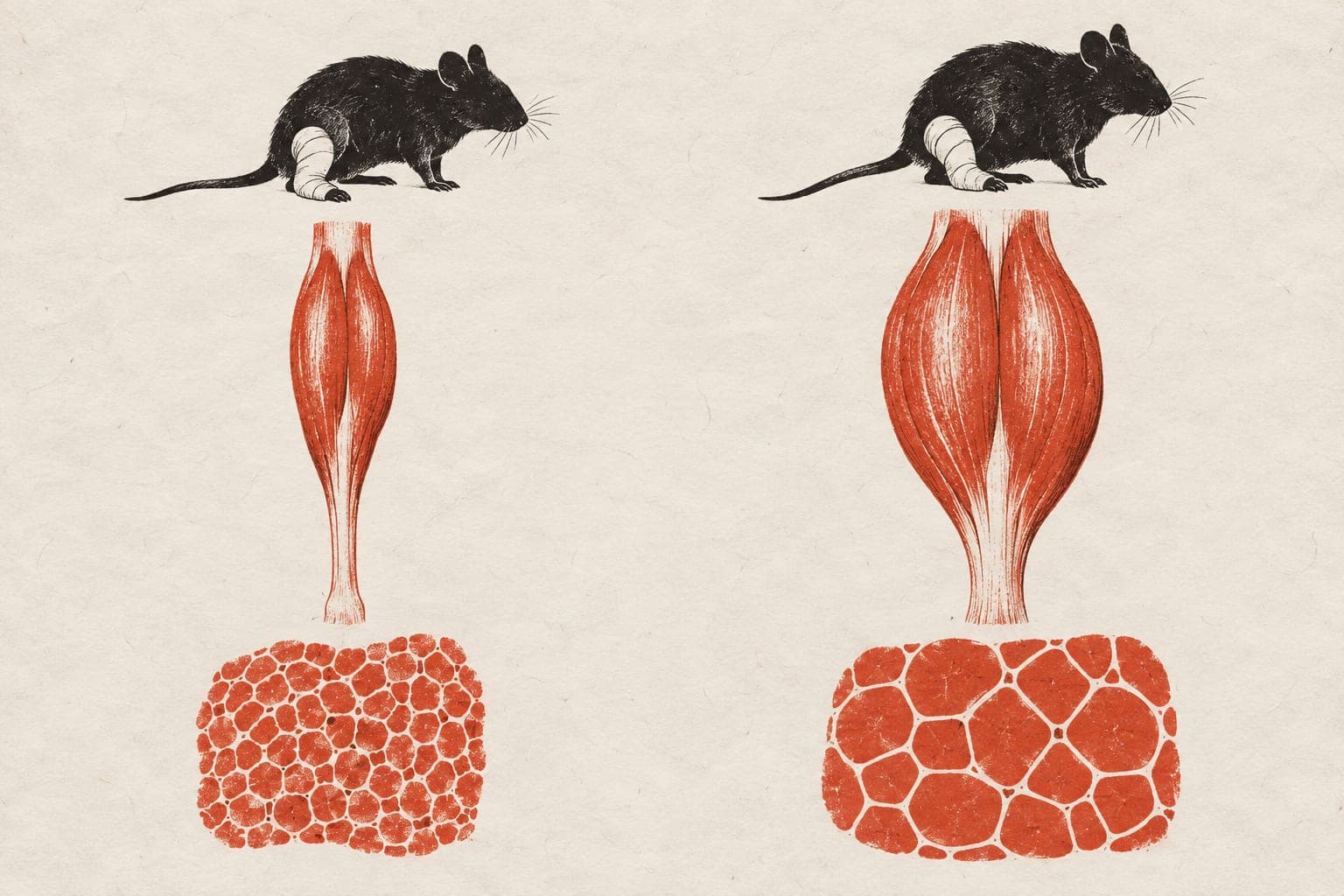
In an animal experiment, aged male and female mice received pipecolic acid and succinate, two compounds derived from microbes, or a control in drinking water. Researchers kept one hind leg in a cast for 10 days.
The compounds did not preserve the mass of the soleus or plantaris, two lower-leg muscles. However, the casted gastrocnemius, another lower-leg muscle, had greater mass in mice receiving the compounds than in controls, regardless of sex. The compounds reduced the loss of muscle fibre size, measured in cross-section, in the soleus and plantaris. The largest effect occurred in the female soleus. In the soleus, females produced greater force and built force faster than controls, while males resisted fatigue better.
Why it matters
Muscle loss during inactivity is a clinical challenge in older adults. The work points to compounds derived from microbes as a possible avenue for preserving muscle function during disuse in aging.
Caveats
The experiment tested 10 days of hindlimb immobilisation in aged mice. It did not establish whether the compounds would help older people.
The paper
Show 2 more authors
Yuan Wen, John J McCarthy,College of Medicine
Physiological Reports · 1 Oct 2026