Regulation of forkhead transcription factor FoxO3a contributes to calorie restriction-induced prevention of Alzheimer's disease-type amyloid neuropathology and spatial memory deterioration
Abstract
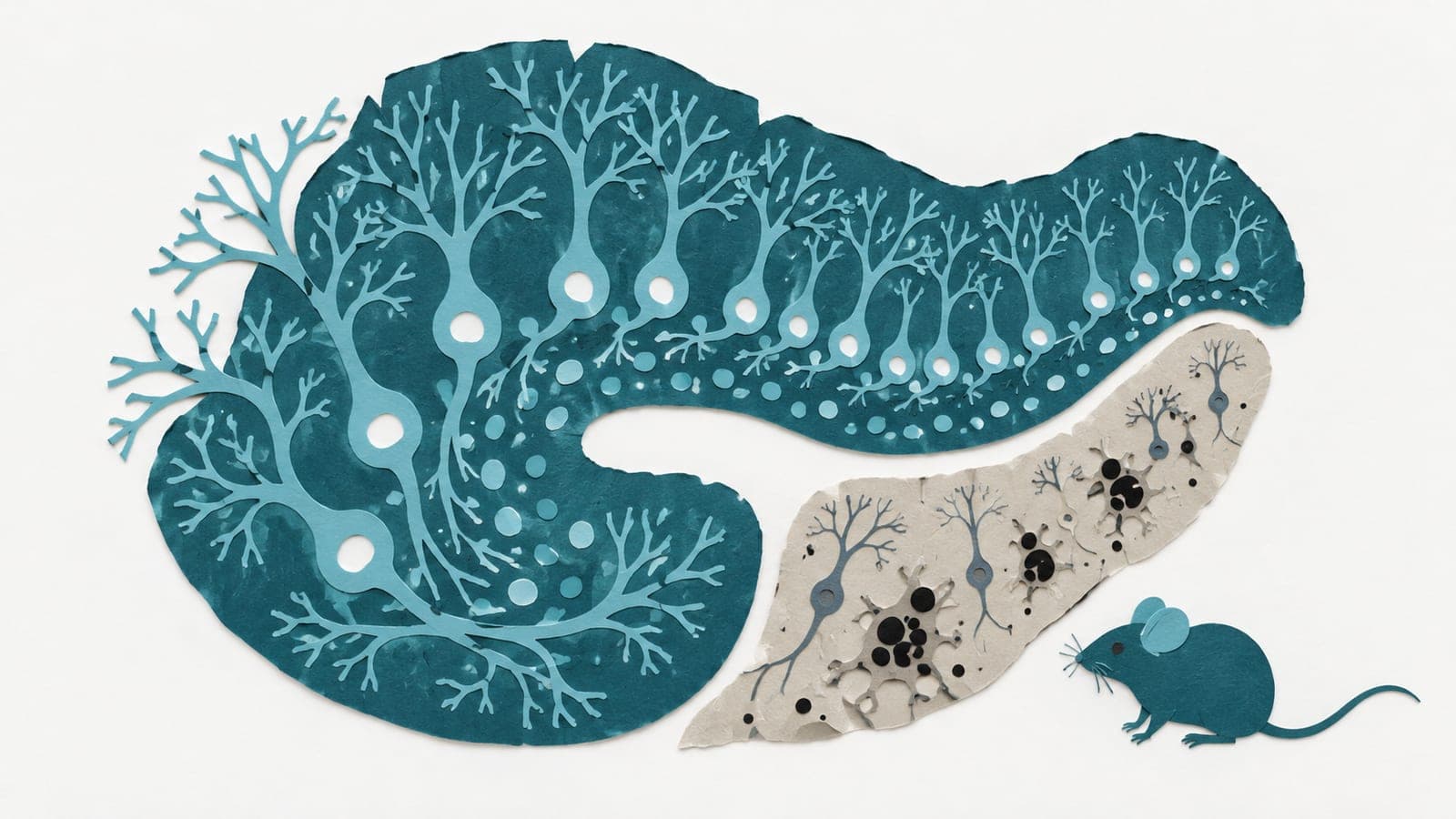
Forkhead transcription factor FoxO3a, also known as DAF-16 in Caenorhabditis elegans, is a key regulator of the insulin receptor (IR)/insulin-like growth factor-I signaling pathway mediated extension of life span in worms and yeast. In this study, we report that calorie restriction (CR)-mediated activation of the IR signaling pathway leads to hyperphosphorylation of FoxO3a transcription factor and, consequently, its exclusion from the nucleus. This inactivation of FoxO3a activity is correlated with attenuation of Alzheimer's disease (AD)-type amyloid neuropathology and with preservation of spatial reference memory in the Tg2576 mouse model of AD. Further, in vitro studies reveal that exogenous expression of viral, triple-mutant, constitutively active FoxO3a resulting in increased nuclear FoxO3a activity in primary neuron cultures derived from Tg2576 mouse embryos, causally promotes AD amyloid-beta peptide (Abeta) levels by inhibiting nonamyloidogenic alpha-secretase activity, indicating the existence of an inverse correlation between FoxO3a activity and cerebral Abeta amyloidosis. Moreover, we report for the first time that the exclusion of the FoxO3a transcription factor from the nucleus in combination with inhibition of nuclear FoxO3a activity by SIRT1-mediated deacetylation in response to CR is a mechanism resulting in the repression of Rho-associated protein kinase-1 gene expression, thereby activating nonamyloidogenic alpha-secretase processing of the amyloid precursor protein and lowering Abeta generation. This study provides a novel metabolic pathway for prevention and/or treatment of AD.
The paper
Icahn School of Medicine at Mount Sinai; James J. Peters VA Medical Center
Annals of the New York Academy of Sciences, 1 Dec 2008, Open access, accepted manuscript