Normal cells help kill some senescent neighbors in the lab
Some cells that had stopped dividing died when grown with normal neighbors, which pressed on them before their death.
Our read
Mechanisms- Studied:
- Preprint: experiments in lab-grown senescent cells, against p16-induced senescent cells
- What changed:
- Progerin-induced senescent cells died alongside normal cells, while p16-induced senescent cells resisted elimination
- The catch:
- Clearance of cells made senescent by natural aging was not measured
- Why it’s aging research:
- Something that builds up with age.
Editor of record: Boris Djordjevic · AgingResearch.News
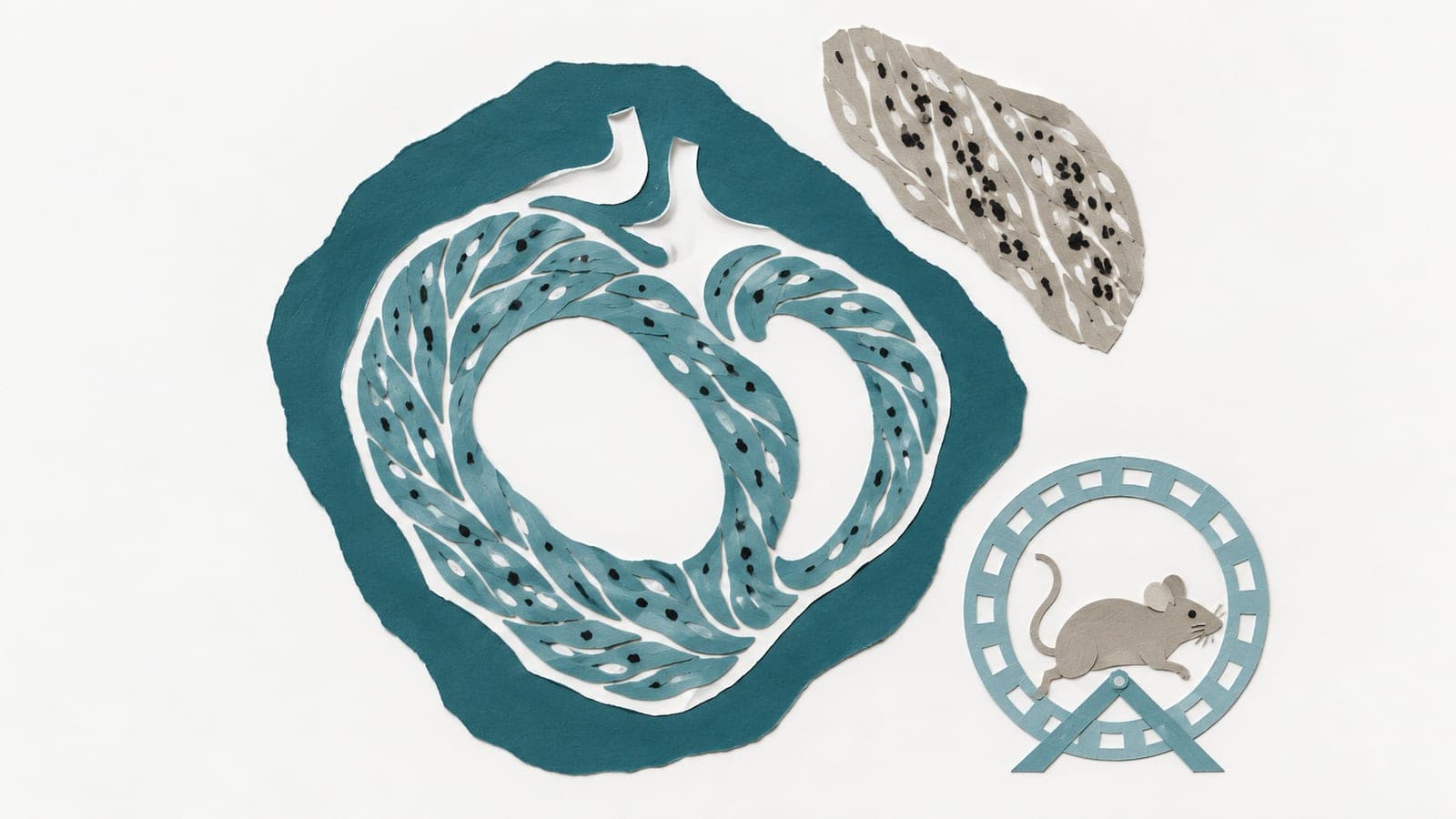
In lab experiments, researchers grew normal cells alongside cells made senescent—a state in which cells stop dividing—by progerin, an abnormal structural protein. The cells made senescent by progerin underwent programmed cell death. Their elimination required direct contact with normal cells. Before they died, their normal neighbors exerted persistent mechanical pressure on them. The authors said this was consistent with competition between cells through physical forces.
Cells made senescent by p16, a protein that halts cell division, resisted elimination under the same conditions. They maintained high levels of p21, another protein that halts cell division.
Why it matters
Senescent cells accumulate with aging and can disrupt tissue balance. Understanding what determines their survival could help clarify how tissues maintain that balance as they age.
Caveats
These experiments involved cells grown in the lab, not animals or people, and the response differed depending on how senescence was induced. The findings come from a preprint that has not been peer-reviewed.
The paper
Elimination of senescent cells by mechanical cell competition
National University of Singapore
bioRxiv, May 20, 2026, Open access, CC BY, Preprint, not yet peer-reviewed
Comments
Be the first to comment.