Retinal Vasculature, Plasma Metabolites and Cardiovascular Disease Risk: A Prospective Cohort Study from the Canadian Longitudinal Study on Aging
Abstract
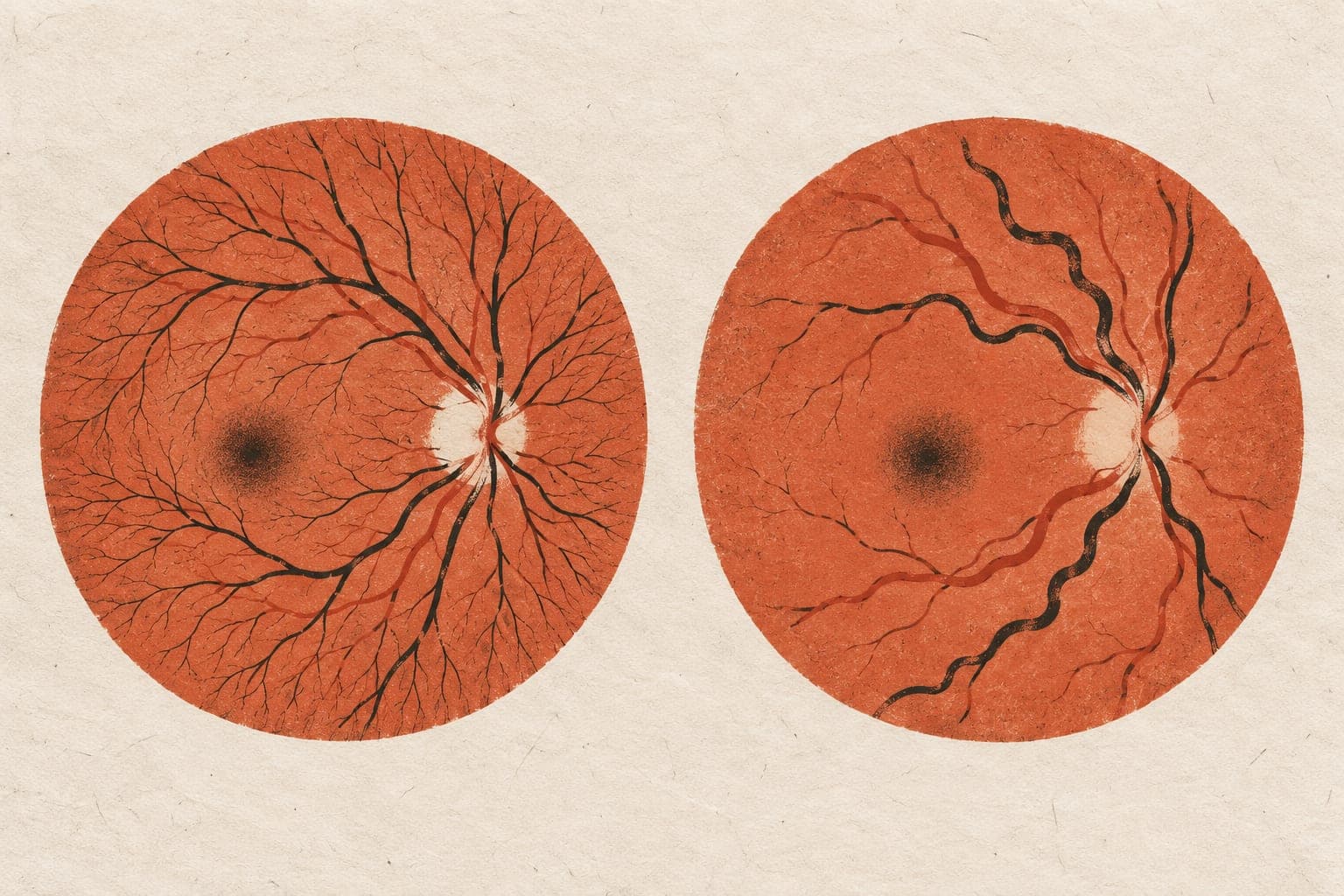
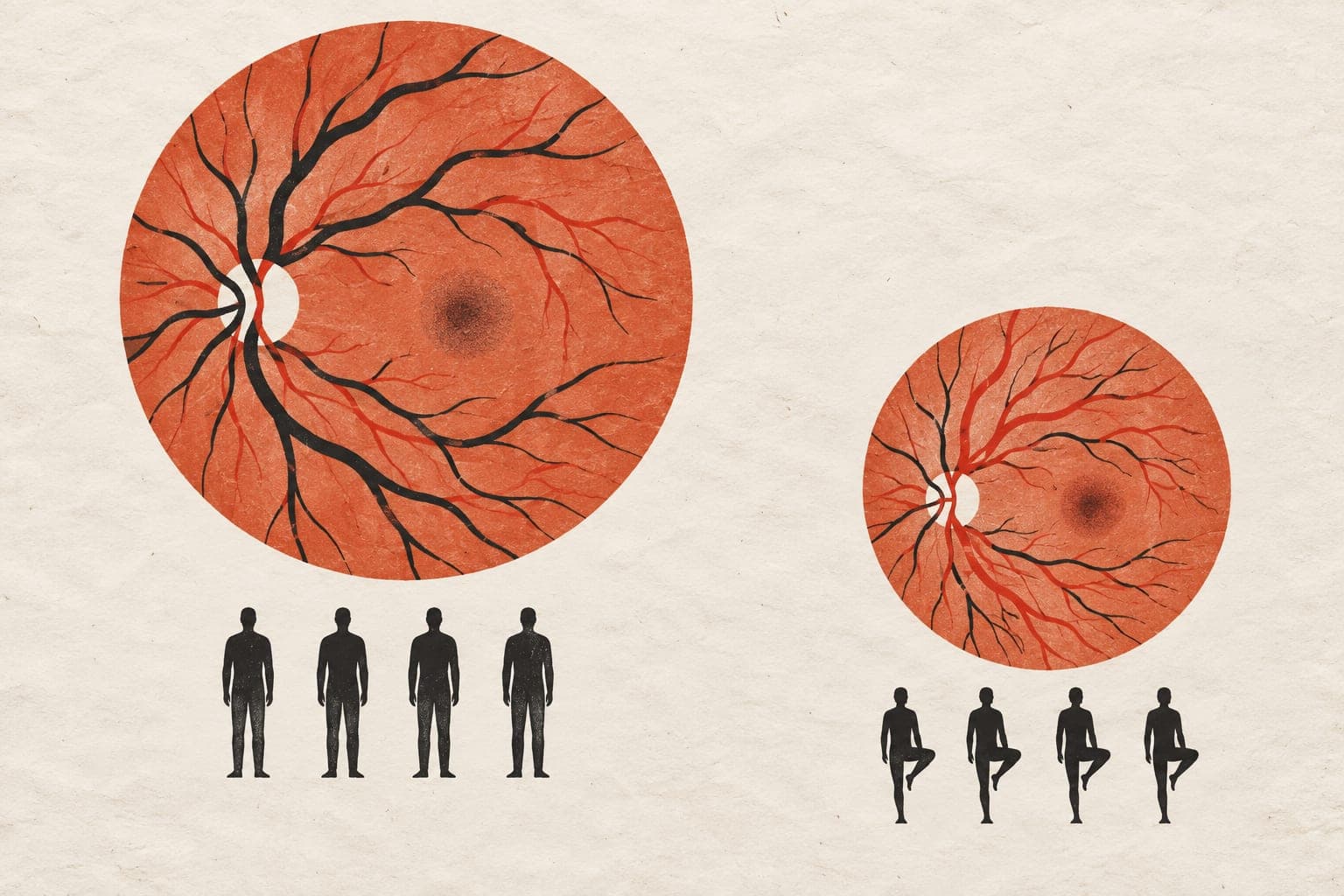
Abstract Background This study aimed to investigate whether retinal fractal dimension (D f ), a measure of microvascular branching complexity from fundus images, together with plasma metabolites, can help identify pathways linking microvascular changes to cardiovascular disease (CVD) events. Methods We analyzed longitudinal data from a subset of 4,781 participants from the Comprehensive cohort of the Canadian Longitudinal Study on Aging (CLSA), free of CVD at baseline (mean age 58.74 ± 8.39; 47% male), and with 811 plasma metabolites measured at baseline and retinal imaging. Total, arterial and venular D f were derived from fundus photographs using the Vessel Assessment and Measurement Platform for Images of the Retina. Incident CVD was defined as one or more of self-reported physician-diagnosed myocardial infarction, angina, coronary heart disease, stroke, transient ischemic attack, or peripheral vascular disease during follow-up. Regression models tested associations among D f , plasma metabolites and incident CVD. Results Over a median follow-up of 5.75 years (IQR 5.48-6.04), 546 participants (11.42%) developed CVD. Higher total, arterial and venular D f were associated with lower CVD risk in unadjusted analyses (Odds Ratio (OR)=0.62, 95% CI:0.53-0.72 for total D f ; OR=0.78, 95% CI:0.70-0.86 for arterial D f ; OR=0.74, 95% CI:0.67-0.82 for venular D f ). Total D f demonstrated the strongest predictive value for incident CVD but not independently of established CVD risk factors. Nine plasma metabolites, including amino acids, lipids, and xenobiotics, were associated with both incident CVD and one D f measure (p < 0.05), with cotinine and hydroxycotinine satisfying a false discovery rate adjustment (q < 0.05). Consistent with these findings the Total Nicotine Equivalent (TNE-3) was also associated with both lower arterial D f and increased CVD risk. Conclusions Retinal microvascular complexity is associated with incident CVD. Nicotine metabolism from tobacco smoking exposures emerged as the strongest association linking microvascular changes and CVD events. Clinical Perspective What is New? Lower retinal branching complexity, as measured through D f , is significantly associated with incident cardiovascular disease (CVD) in unadjusted analyses. In a population-based sample, we found nine plasma metabolites associated with both retinal vascular complexity and incident CVD, but only nicotine metabolites were significant after multiple testing correction. Nicotine metabolites, particularly cotinine and hydroxycotinine, remained significantly associated with incident CVD even after adjustment for self-reported smoking status. What Are the Clinical Implications? Retinal D f measures could be used as a predictor of CVD event, although not independently of age and traditional cardiovascular risk factors. Microvascular changes may lie on the pathway linking nicotine metabolites to CVD events. Plasma nicotine metabolites may provide additional cardiovascular risk information beyond self-reported smoking, reflecting individual exposure, metabolism and passive smoke exposure.
The paper
Population Health Research Institute
medRxiv, 10 May 2026, Open access, CC BY-NC-ND, Preprint, not peer-reviewed