Knee osteoarthritis linked to higher osteoporosis risk
Osteoporosis developed in 5.2% of participants with knee osteoarthritis versus 3.9% without it over a median 10 years of follow-up.
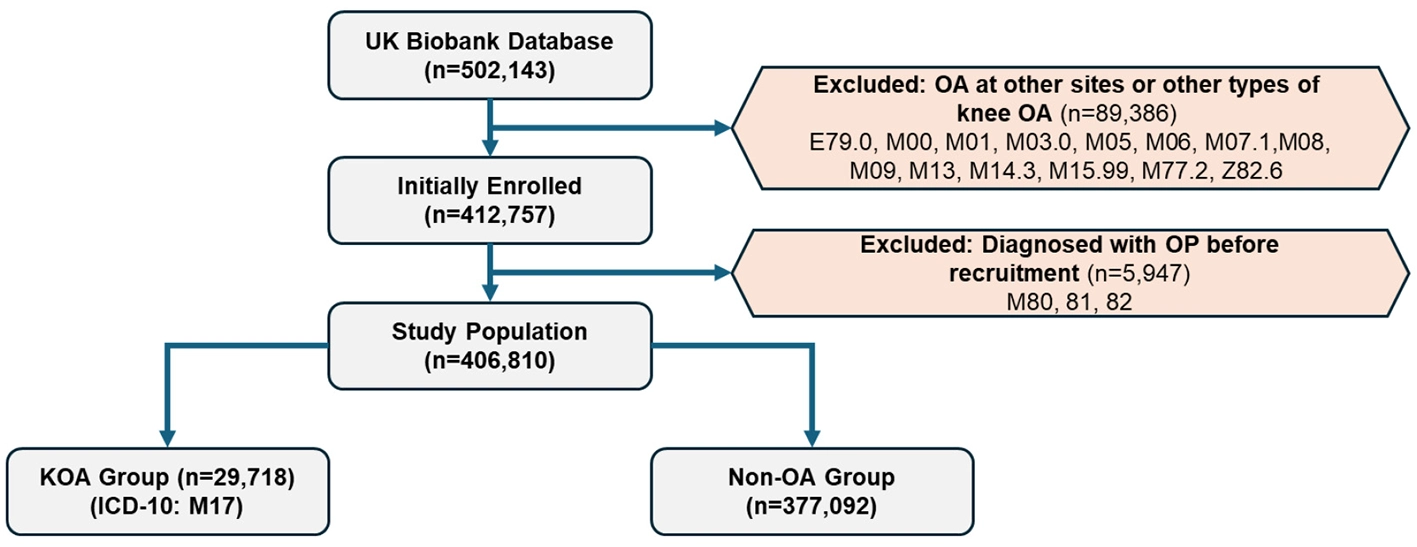
Limit: Hospital diagnosis codes can miss mild osteoarthritis and osteoporosis managed only in primary care
Edited by Boris Djordjevic · AgingResearch.News
Researchers followed 406,810 UK Biobank participants without metabolic bone disease or potentially confounding joint conditions at entry in a prospective observational cohort study. They compared participants with and without knee osteoarthritis, a disease that damages joint tissues.
Knee osteoarthritis was associated with a 22% higher relative risk of developing osteoporosis, a condition that weakens bones, after adjustment for socioeconomic factors, lifestyle and other illnesses. The adjusted hazard ratio was 1.22. In a separate clinical comparison, 35 people with knee osteoarthritis had higher blood levels of two markers of bone breakdown than 30 matched controls without osteoarthritis.
Why it matters
Bone fragility is a concern in aging. The authors called for monitoring both joint and bone health in people with knee osteoarthritis.
Caveats
This observational study cannot establish that knee osteoarthritis caused osteoporosis or identify the pathways behind the association. People with metabolic bone disease or potentially confounding joint conditions at entry were excluded.
From the paper
- Participants
A total of 406,810 participants were tracked over a median follow-up of 13.0 years [interquartile range (IQR): 12.0–14.0 years].
- Result
In the fully adjusted model, which incorporated socioeconomic status, lifestyle factors, comorbidities, and relevant medication use, KOA persisted as an independent predictor of OP with an HR of 1.22 (95% CI: 1.16–1.29, p < 0.001; Figure 3 ).
Quoted word for word from the full text on frontiersin.org.
The paper
Guangzhou University of Chinese Medicine
Frontiers in Public Health, Oct 22, 2026, Open access, CC BY


Comments
Be the first to comment.