Coexisting brain and spine diseases linked to worse cognition
Among 100 older adults followed for two years, having both conditions was linked to greater impairment, but not faster decline than either alone.
Paper by Li Lin, Zhongzhong Lv, Chunjie Song et al.
Our read
Biomarkers- Studied:
- Accepted, not yet published: cohort study of 100 older adults, 2 years, against healthy controls and single-condition groups
- What changed:
- People with both conditions had worse thinking skills than healthy people or those with either condition alone
- The catch:
- Only 26 participants had both conditions
- Why it’s aging research:
- It measures an outcome that worsens with age.
Editor of record: Boris Djordjevic · AgingResearch.News
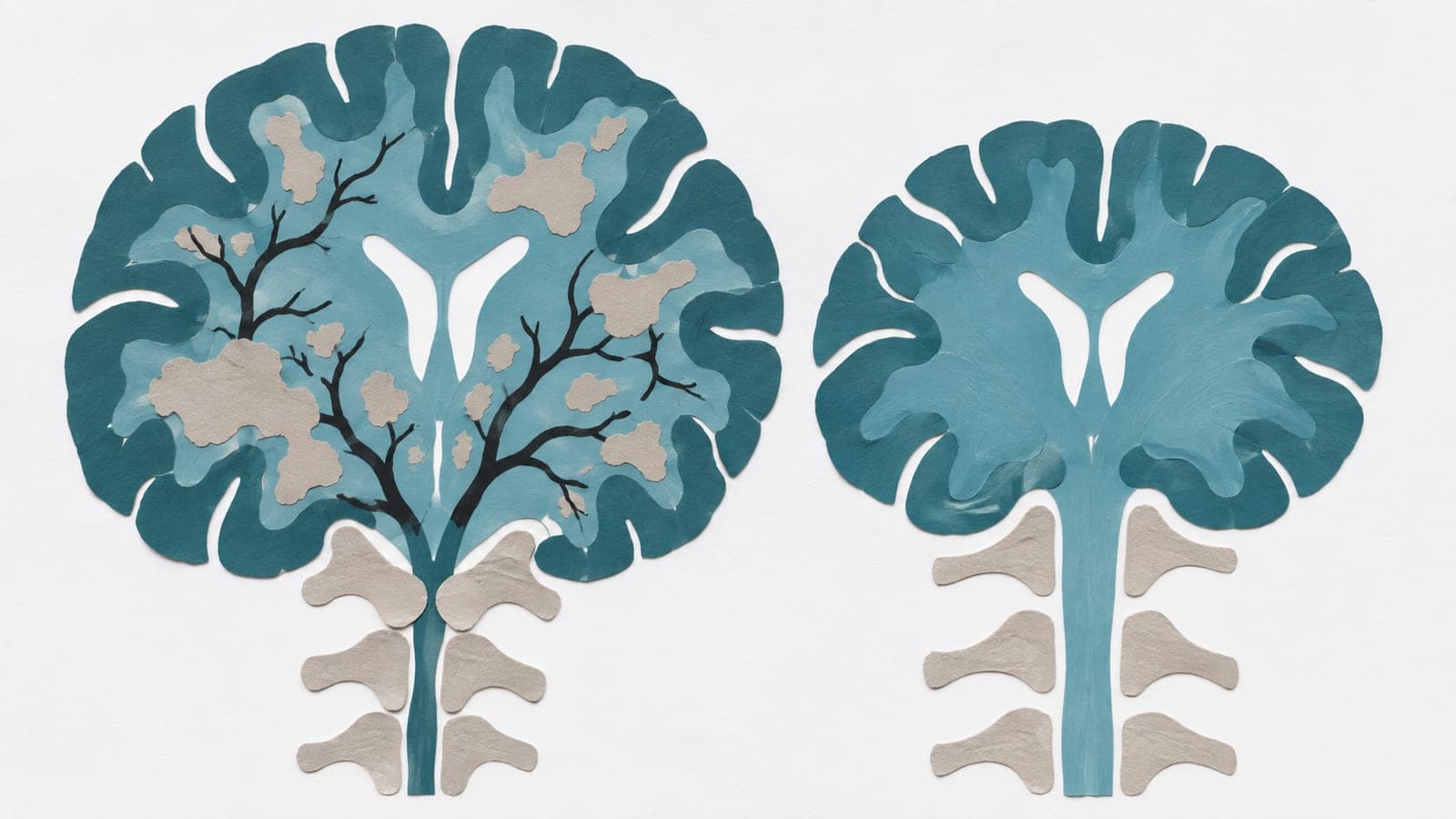
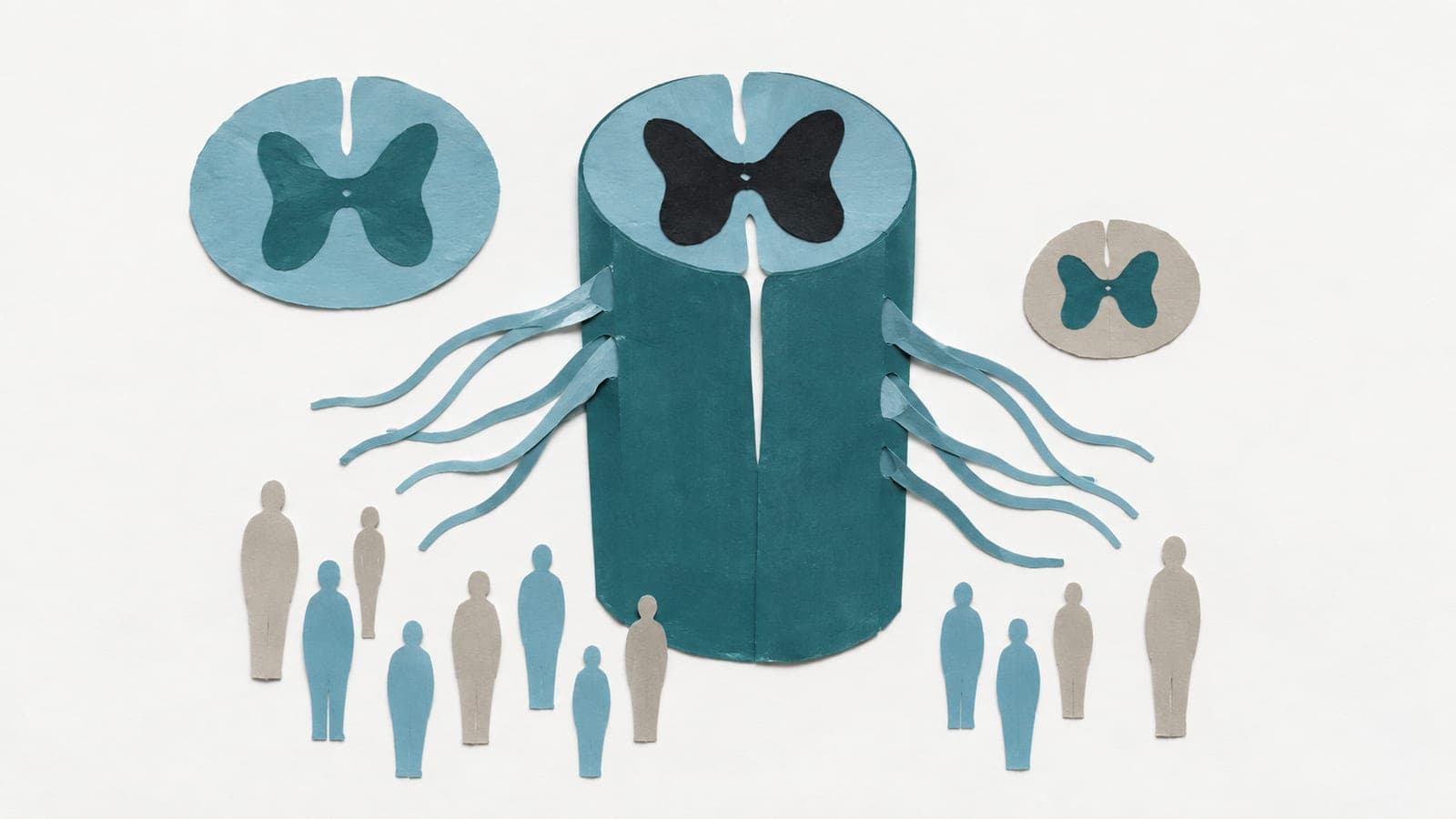
One hundred older adults took part in a two-year prospective observational study of cervical spondylotic myelopathy, spinal cord compression in the neck, and cerebral small vessel disease, which affects the brain’s small blood vessels. The groups included 24 healthy controls, 25 people with each condition alone and 26 with both. Participants underwent cognitive testing at the start, one year and two years, alongside measurements of electrical signals in the nervous system.
People with both conditions had the poorest overall cognitive performance. Each condition alone was associated with faster cognitive decline, but having both did not further accelerate decline over two years. The extent of small vessel disease and baseline timing of sound-related signals through the brainstem independently predicted worsening scores on a test of overall cognition.
Why it matters
Age-related spinal cord and brain diseases raise questions about how different parts of the nervous system contribute to cognitive aging. The authors propose a “spinal cord-brain axis” framework for studying these connections and potentially identifying risk earlier.
Caveats
Other health differences between people with and without these conditions could have contributed to their cognitive trajectories. The findings cover 100 older adults followed for two years.
- Cervical spondylotic myelopathy
- Cerebral small vessel disease
- Cognitive impairment
- BAEP I–V interval
- Brainstem auditory evoked potential
- Humans
The paper
Li Lin, Zhongzhong Lv, Chunjie Song et al.
Frontiers in Aging Neuroscience, Nov 6, 2026, CC BY, Accepted, not yet published
Comments
Be the first to comment.