Harmful inherited gene changes linked to lung scarring
Carriers had 10.9 times the odds of lung scarring seen in controls in UK Biobank, and 6.64 times in a US health-system cohort.
Our read
Populations- Studied:
- Case-control study of 341 carriers of deleterious TERT variants
- What changed:
- Lung scarring was more common in harmful TERT variant carriers than controls: odds ratio 10.9 in UKB, 6.64 in DiscovEHR
- The catch:
- Diagnosis codes may miss subclinical disease or lack specificity
- In the record:
- The 157th paper on TERT with results in people; 866 on record in all.
Editor of record: Boris Djordjevic · AgingResearch.News
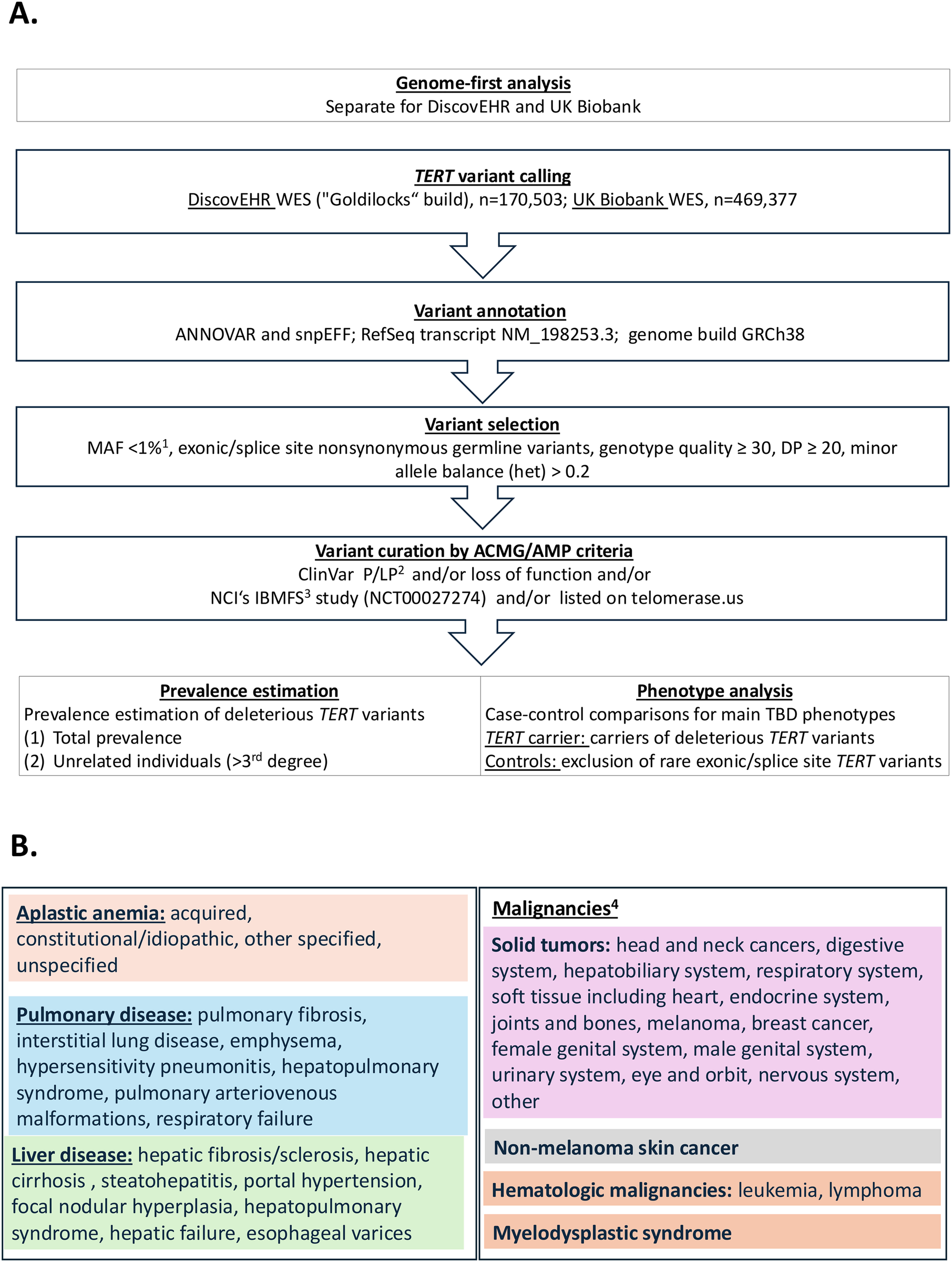
Genetic and health records from 469,377 UK Biobank participants, aged 40–69 at recruitment, and 170,503 Pennsylvania health-system participants, aged 0 to over 90, supported an observational case-control analysis. Researchers identified harmful inherited variants in TERT, a gene for telomerase, an enzyme that maintains chromosome ends. These occurred in 203 UK participants and 138 US participants: 1 in 2,312 and 1 in 1,235, respectively.
Lung scarring, called pulmonary fibrosis, was recorded in 6.4% of UK carriers versus 0.7% of controls, and 6.5% versus 1.0% in the US cohort. Analyses accounted for smoking, alcohol use, body mass index, sex, genetic ancestry and birth year. Links to liver disease and a type of head and neck cancer appeared only in UK Biobank.
Why it matters
Telomere biology disorders involve problems with maintaining the protective ends of chromosomes and can affect several organs. The authors emphasized genetic diagnosis and clinical trials tailored to these disorders.
Caveats
Disease identification relied on health-record codes, with no specific code for telomere biology disorders. UK Biobank’s volunteers may have been healthier than the wider population, and all US variant carriers had European ancestry.
From the paper
- Participants
This study used whole exome sequencing (WES) variant data from peripheral blood DNA available for research use in total of 469,377 individuals from the UKB linked electronic health records (EHR), cancer and death registries [27–29].
- Result
Risk of PF was significantly increased for TERT heterozygotes compared with controls (UKB: odds ratio [OR] 10.9 95% confidence interval [CI]: 6.11-19.45, p < 0.001; DiscovEHR: OR 6.64, 95% CI: 3.31-13.3, p < 0.001).
- Events by group
This is also reflected in the higher percentage of PF diagnoses among TERT carriers compared to controls (UKB: 6.4% vs 0.7%; DiscovEHR: 6.5% vs 1.0%; Table C in S1 Appendix).
Quoted word for word from the full text on journals.plos.org.
- Pulmonary fibrosis
- Liver disease
- Telomere biology disorders
- Head and neck squamous cell carcinoma
- Humans
The paper
University Medical Center Ulm; National Cancer Institute
PLOS Genetics, Nov 5, 2026, Open access, CC0

Comments
Be the first to comment.