Older donors’ cultured human brain cells had less accessible DNA
A study of human brain-support cells grown in the lab linked older donor age to localized buildup of unusual DNA folds.
Our read
Mechanisms- Studied:
- Experiments in human cells
- In the record:
- One of 8 papers on DDX5 on record: 1 with results in people, 1 in animals.
Editor of record: Boris Djordjevic · AgingResearch.News
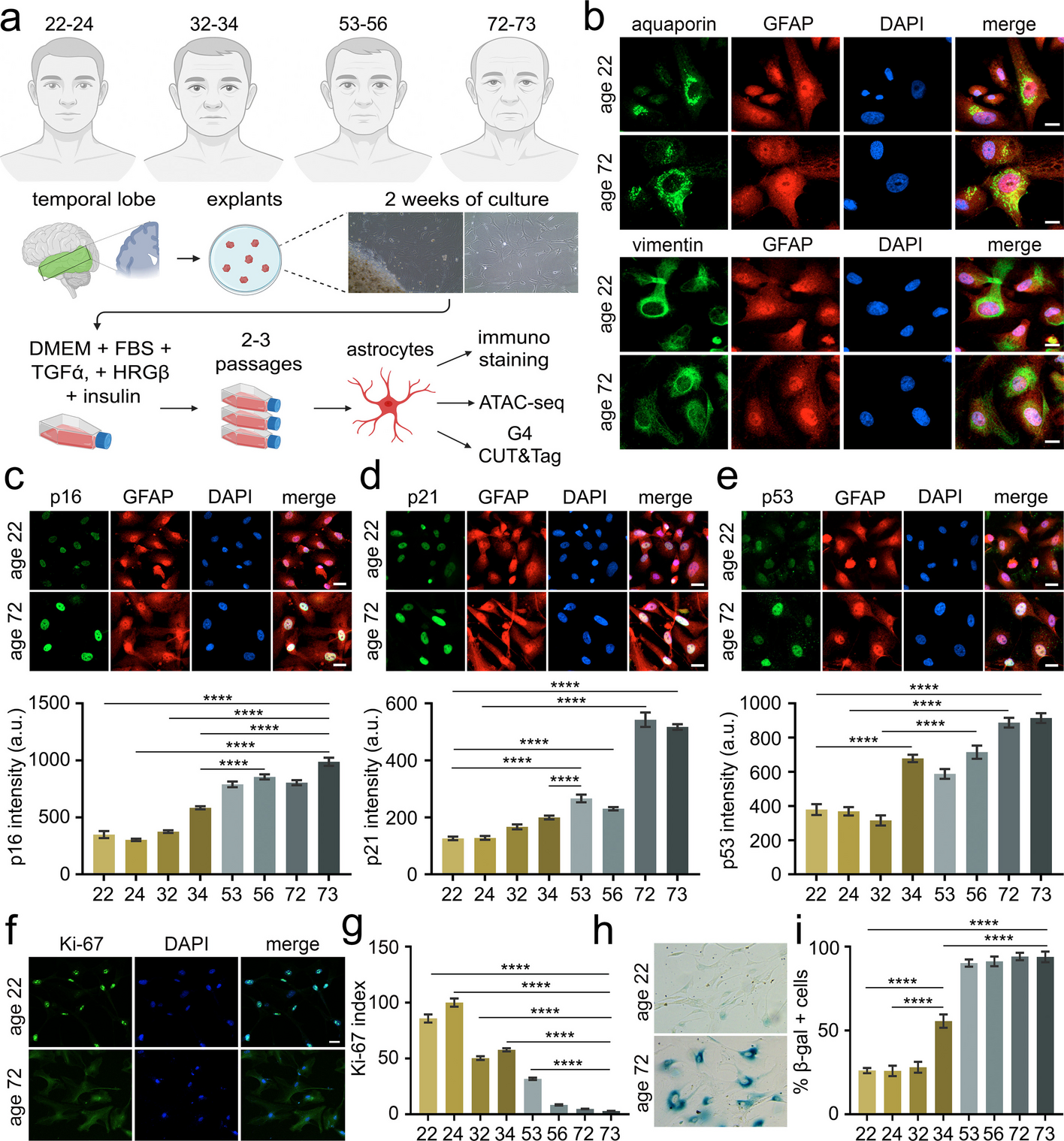
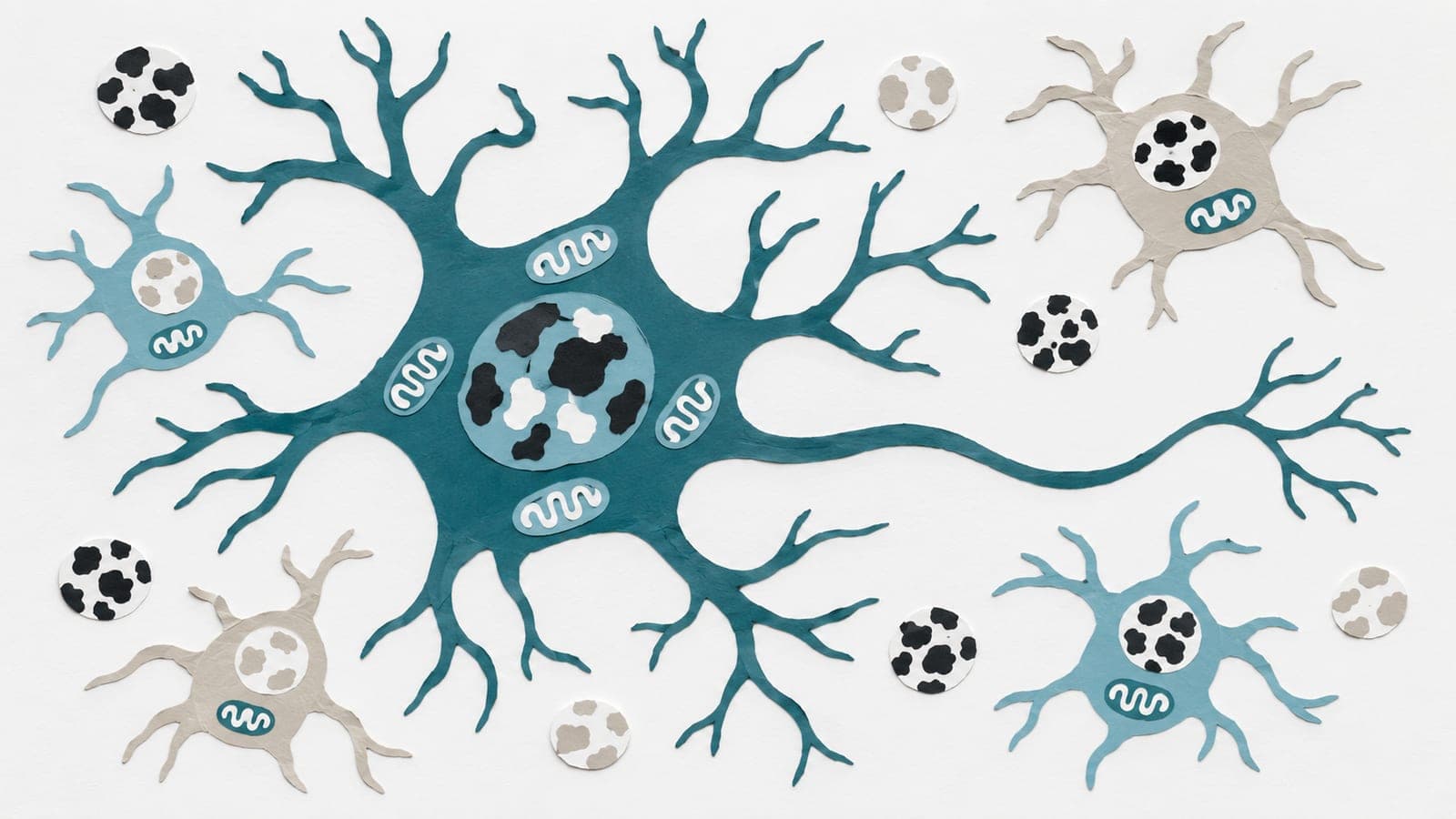
Human astrocytes—cells that support nerve cells—came from surgically removed brain tissue from donors spanning early to late adulthood and were grown in the lab for experiments. Cells from older donors had stronger signals from G-quadruplexes, unusual folded structures in DNA or RNA. They also had less DDX5, a protein that unwinds these structures, in their nuclei.
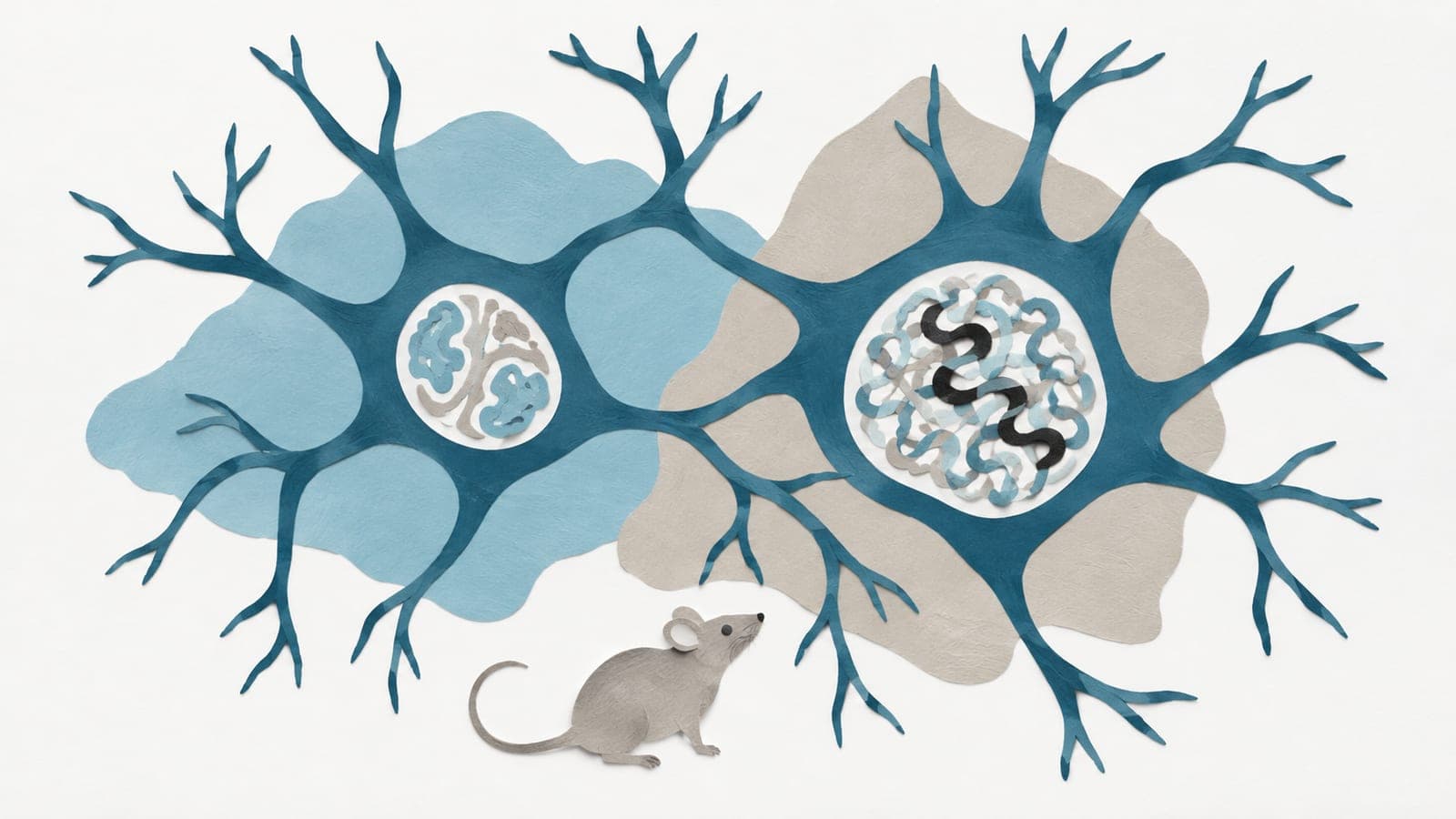
DNA accessibility declined with donor age. Mapping found localized G-quadruplex enrichment in both more and less accessible DNA. Increasing DDX5 in young astrocytes changed gene activity in pathways related to DNA organization and maintenance, stress signaling and nerve-cell connections. Briefly reducing DDX5 caused localized G-quadruplex buildup without reproducing the broader changes in DNA accessibility associated with aging.
Why it matters
The authors identified regulation of these folded structures as a candidate mechanism shaping how astrocytes control their genes as they age.
Caveats
The results came from cells grown in the lab, leaving open how closely these patterns reflect astrocytes aging in the living human brain.
Comments
Be the first to comment.