Activating a protein improved egg quality in aged mice
In a 21-day experiment, female mice aged 56–62 weeks showed improved egg quality and early embryo development after treatment that activated a metabolic regulator.
Limit: PPARγ was activated without genetic manipulation to confirm its role
Edited by Boris Djordjevic · AgingResearch.News
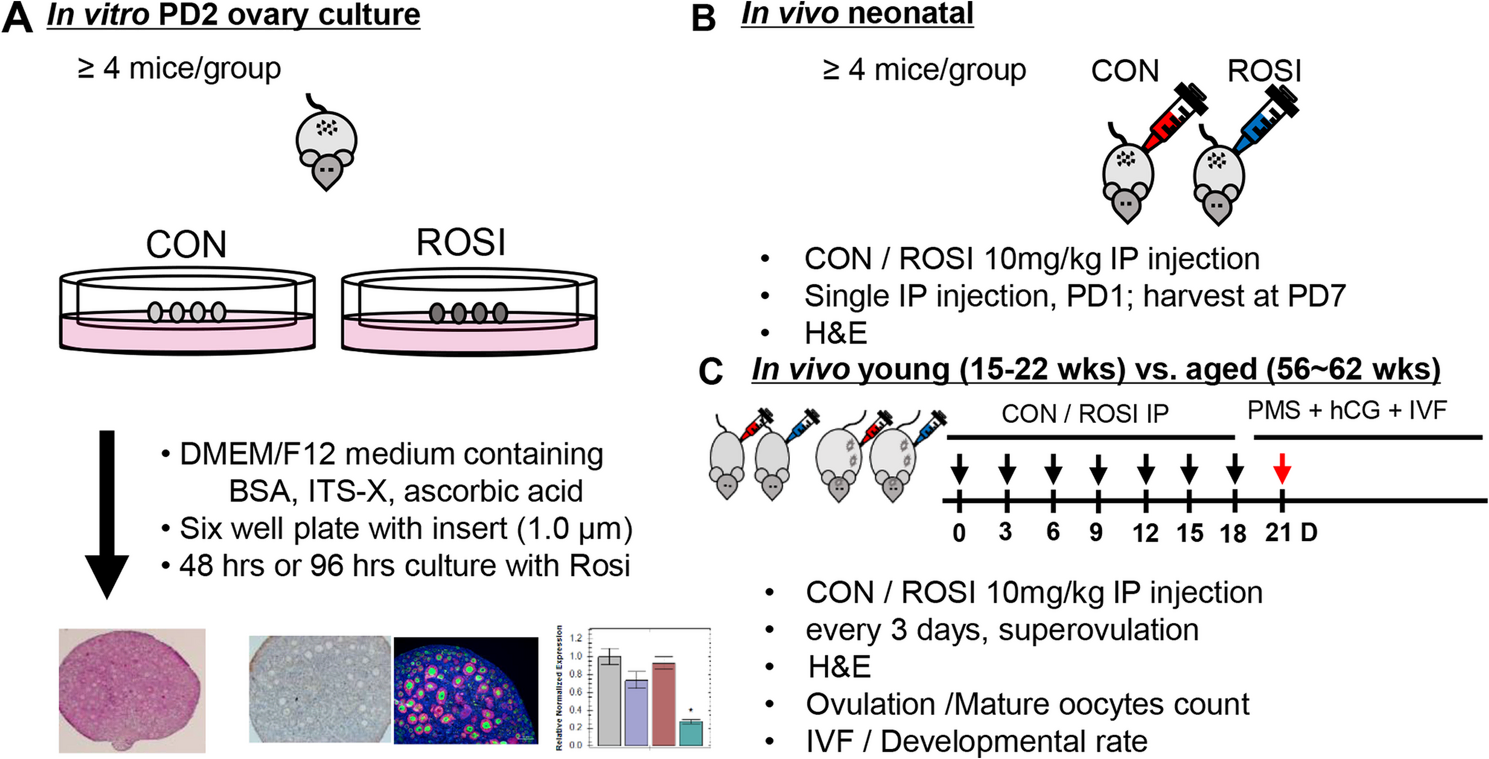
Female mice aged 56–62 weeks and young adult female mice aged 7–8 weeks received repeated treatment over 21 days in an animal experiment. The treatment activated peroxisome proliferator-activated receptor gamma, a protein involved in metabolism and gene activity. Researchers then induced egg release, collected eggs and fertilized them in the lab.
In aged mice, treatment increased the number of primordial follicles, immature structures that contain eggs. It also improved egg quality and development to the blastocyst stage, an early stage of embryo development. Effects in young mice were minimal. The authors said the findings supported a role for this protein in linking metabolic signals to regulation of anti-Müllerian hormone, which helps regulate follicle activation and maintenance of the ovarian egg reserve.
Why it matters
The work addresses how metabolic signaling may contribute to age-related changes in ovarian function and the remaining supply of eggs.
Caveats
These were animal and laboratory experiments, not a study in women. The researchers activated the protein but did not genetically manipulate it to test its role.
The paper
PPARγ modulation enhances ovarian function and oocyte competence in aged mice
CHA University Fertility Center
Journal of Ovarian Research, Oct 19, 2026, Open access, CC BY
Comments
Be the first to comment.