More intense activity linked to lower risk of death
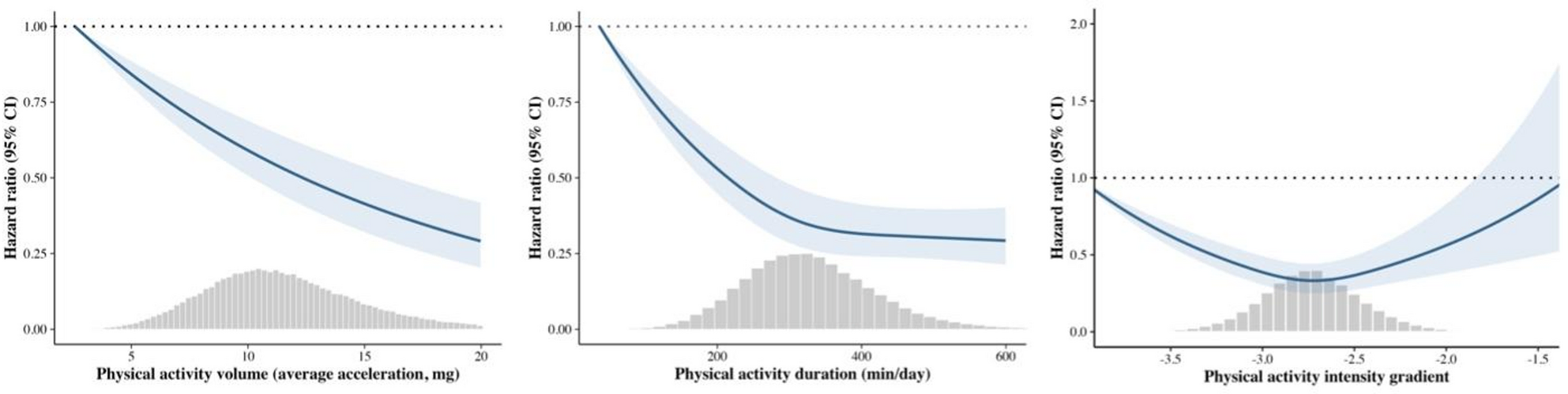
Higher intensity during the day’s most active minute was linked to lower mortality after accounting for total activity, with a hazard ratio of 0.58.
Our read
Populations- Studied:
- Cohort study of 65,028 German National Cohort participants, median 8.0 years
- What changed:
- Death from any cause was lower with higher intensity during the day’s most active minute (hazard ratio 0.58)
- The catch:
- People moving more intensely may have been healthier to begin with
- In the record:
- The 3,250th paper on physical activity with results in people; 6,863 on record in all. Its result on mortality agrees with 191 of 216 other findings on record; 15 point the other way and 10 found no change.
Editor of record: Boris Djordjevic · AgingResearch.News
Among 65,028 German National Cohort participants aged 19–74, a prospective cohort study measured physical activity using hip-worn movement monitors. During a median follow-up of 8.0 years, 1,634 participants died.
Greater total activity was associated with lower mortality. After accounting for total activity, higher intensity during the day’s most active minutes was also linked to lower mortality. The hazard ratio—a comparison of death rates during follow-up—was 0.58 for the most active minute and 0.69 for the most active 120 minutes. The links were stronger when activity accumulated intermittently rather than in continuous stretches. Among people with low total activity, higher intensity during continuous stretches was associated with lower mortality. Among those with high total activity, this association was absent for shorter stretches but present for longer ones.
Why it matters
For understanding longevity, the authors conclude that activity intensity and daily patterns provide information about mortality risk beyond what a daily activity total captures.
Caveats
People who moved more intensely may also have been healthier to begin with. Participants were aged 19–74, leaving the links in adults above that age range unresolved.


Comments
Be the first to comment.