Flies grow more vulnerable to infection early in life
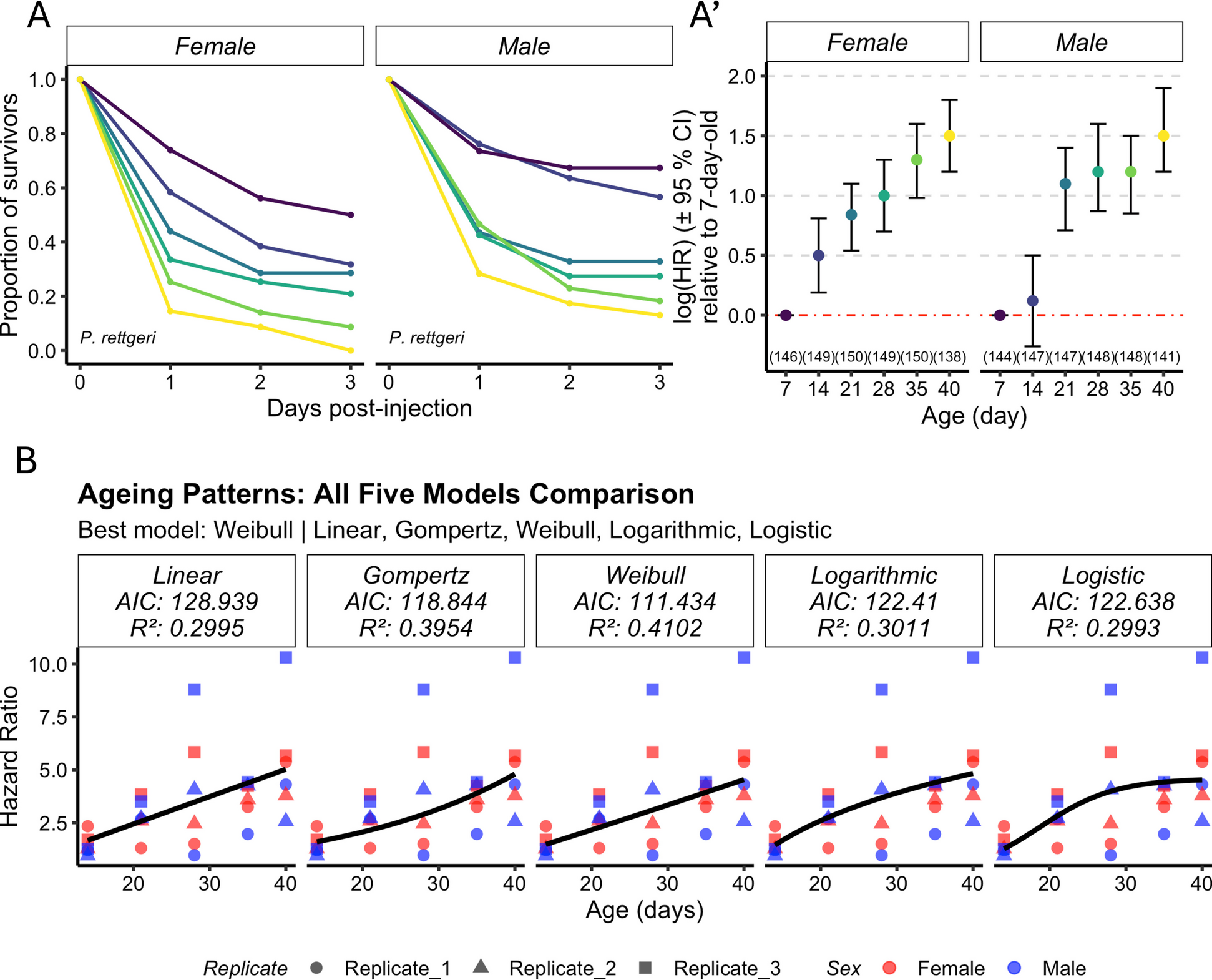
Infection susceptibility approximately doubled with each doubling of age in experiments involving a genetically mixed fruit fly population and 22 fly lines.
The catch: The reported infection tests covered bacteria, leaving other pathogen types unmeasured
Edited by Boris Djordjevic · AgingResearch.News
An experiment in fruit flies (Drosophila melanogaster) assessed susceptibility to bacterial infections across age in a genetically mixed population and 22 fly lines. Susceptibility increased early in life in both sexes and across infections and populations.
Increased susceptibility was associated with impaired resistance, the ability to control pathogens. More often, it was associated with reduced tolerance, the ability to withstand harm from infection. Reduced tolerance could be detected early in life and persisted. Susceptibility in old age predicted lifespan in males but not females. The authors argued that “immunosenescence,” or age-related immune dysfunction, should refer only to problems with resistance, rather than reduced tolerance.
Why it matters
The work addresses whether declining immune defenses are enough to account for infection vulnerability with age, or whether changes in other bodily functions also matter.
Caveats
The lifespan analysis identified an association, not a causal effect. The findings came from flies and do not establish whether the same patterns occur in people.


Comments
Be the first to comment.