Becoming active linked to less functional decline in older adults
Becoming active was linked to a lower transition rate from independence to disability in complex daily tasks than staying inactive (relative rate 0.58).
Limit: The main analysis excluded participants without complete data
Edited by Boris Djordjevic · AgingResearch.News
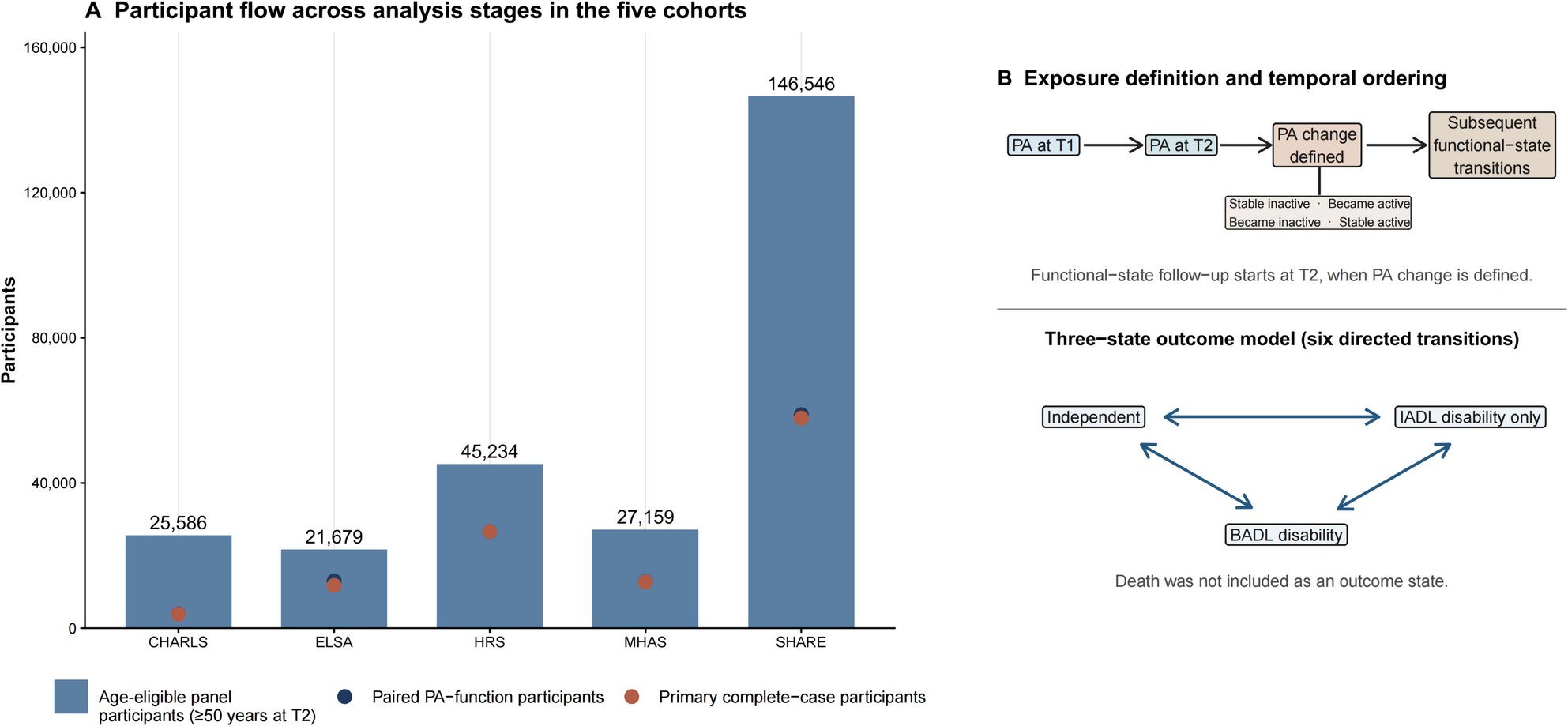
An observational study analyzed 112,855 adults aged 50 years or older from five population-based aging cohorts. Researchers classified changes in activity between two assessments, typically two years apart in four cohorts and three years apart in the Mexican cohort. They tracked moves between independence, disability in complex daily tasks and disability in basic daily tasks.
Becoming or remaining active was generally linked to less deterioration and greater recovery than staying inactive. Remaining active had the most favorable overall pattern. The estimated rate of returning from disability in basic daily tasks to independence was 1.73 times as high for adults becoming active as for those staying inactive. Becoming inactive was linked to less favorable transitions than remaining active.
Why it matters
Managing daily tasks is central to independence as people age. Studying changes in activity may help identify patterns associated with preserving or regaining that independence.
Caveats
The observational design cannot establish cause and effect, and estimates varied substantially across cohorts. The main analysis included only participants with complete data, and death was not modeled as an outcome.
- Physical activity
- Basic activities of daily living disability
- Instrumental activities of daily living disability
- Basic activities of daily living
- Instrumental Activities of Daily Living
- Humans
The paper
Beijing Normal University
BMC Public Health, Oct 22, 2026, Open access, CC BY-NC-ND
