Slower cognitive decline linked to more midday movement
A cohort study linked cognitive changes in 811 older adults without cognitive impairment to activity patterns measured a median of 8.2 years later.
Limit: Cognitive changes preceded activity measurement; declining cognition could explain lower movement
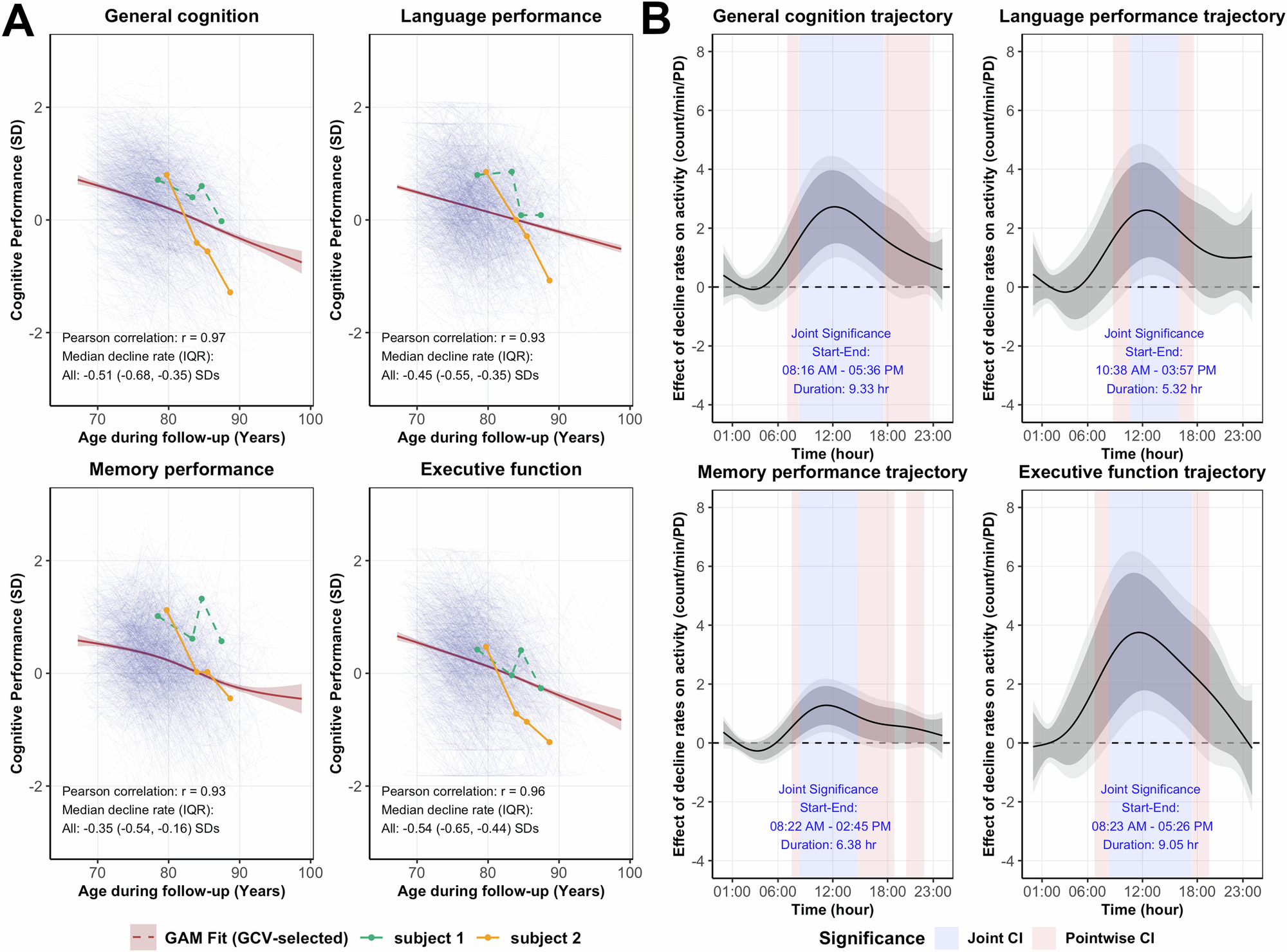
The longitudinal cohort study included 811 participants from the Atherosclerosis Risk in Communities Study who initially had no cognitive impairment. Their mean baseline age was 73.1 years. Researchers modelled changes in overall cognition and specific mental abilities, then related them to movement-sensor measurements taken a median of 8.2 years later.
Slower cognitive decline was associated with more movement and less sedentary time between 10 am and 3 pm. It was also linked to fewer interruptions to active periods and greater variation in activity during those hours. Links with activity variation were stronger than those with other activity measures. In adjusted analyses, associations based on activity between 11 am and 1 pm were comparable to those using measurements from the whole day.
Why it matters
Everyday movement patterns, particularly variation in activity, may offer a non-invasive way to help monitor cognitive decline in older adults before clinical impairment emerges.
Caveats
This observational study cannot establish whether cognitive decline caused the activity differences. Its findings concern older adults who were cognitively unimpaired at the start.
- Physical activity
- Sedentary time
- Interruptions to active periods
- Activity variability
- Movement volume
- Humans
The paper
Johns Hopkins University
NPJ Digital Medicine, 15 Oct 2026, Open access, CC BY-NC-ND