Mental and movement training improved older adults’ leg strength
Chair-rise performance improved versus waitlist controls after 12 weeks, with a standardized effect size of 0.54 measuring the difference between groups.
Our read
Interventions- Studied:
- Randomized trial in 50 people (Registered DRKS00038787)
- What changed:
- Older adults receiving combined mental and movement training improved more on timed chair rises than waitlist controls
- The catch:
- Overlap between training and assessment could make chair-rise gains reflect practice rather than broader strength
- Why it’s aging research:
- It measures an outcome that worsens with age.
Editor of record: Boris Djordjevic · AgingResearch.News
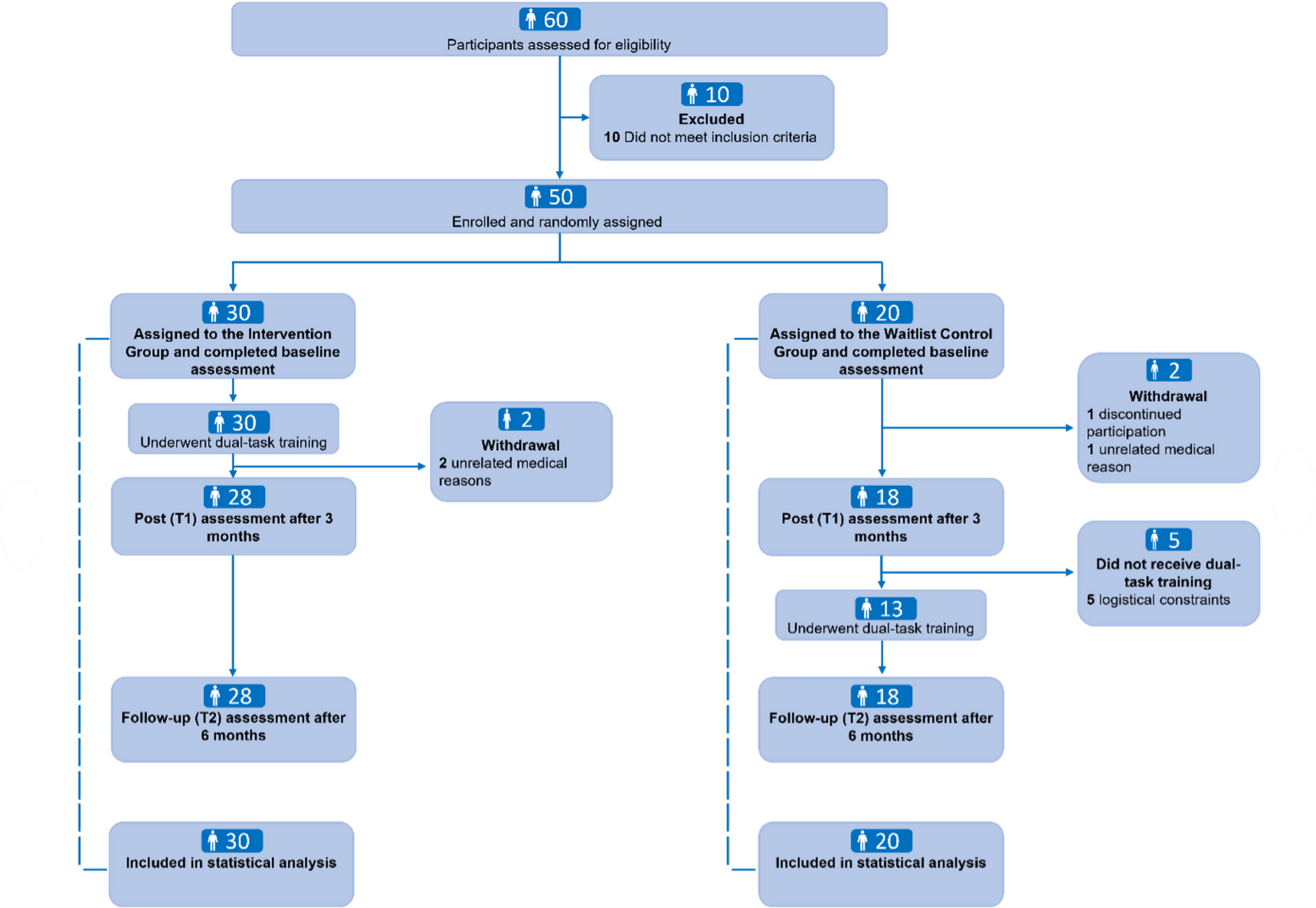
Fifty community-dwelling adults aged 65 or older joined a randomized trial of training that combined mental tasks with movement. Some met criteria for mild cognitive impairment, a decline in memory or thinking skills. Researchers assigned 30 to 24 hour-long sessions over 12 weeks and 20 to a waitlist. Training took place twice weekly and varied across mental and movement demands.
After training, the intervention group improved more than controls on a timed test of standing from a chair five times, which assessed functional leg strength. The remaining movement and thinking tests showed no statistically significant differences between groups then. Three months later, the training group retained its chair-rise gains. Improvements in mobility, the ability to resist distractions, and short-term memory appeared only at follow-up in comparisons within that group.
Why it matters
Age-related declines in movement and thinking make it important to ask whether training benefits extend beyond practiced tasks and persist after sessions end.
Caveats
The delayed improvements came from comparisons within the training group, leaving open whether similar changes occurred without training.
Comments
Be the first to comment.