Models identify daily limits in Chinese elders with chronic conditions
Among Chinese older adults with chronic conditions, all six models scored above 0.75 on a measure distinguishing daily-activity limitations from no limitations.
Cross-sectional study, independent replication
The catch: The study measured classification performance, not benefits of using the models in routine screening
Edited by Boris Djordjevic · AgingResearch.News
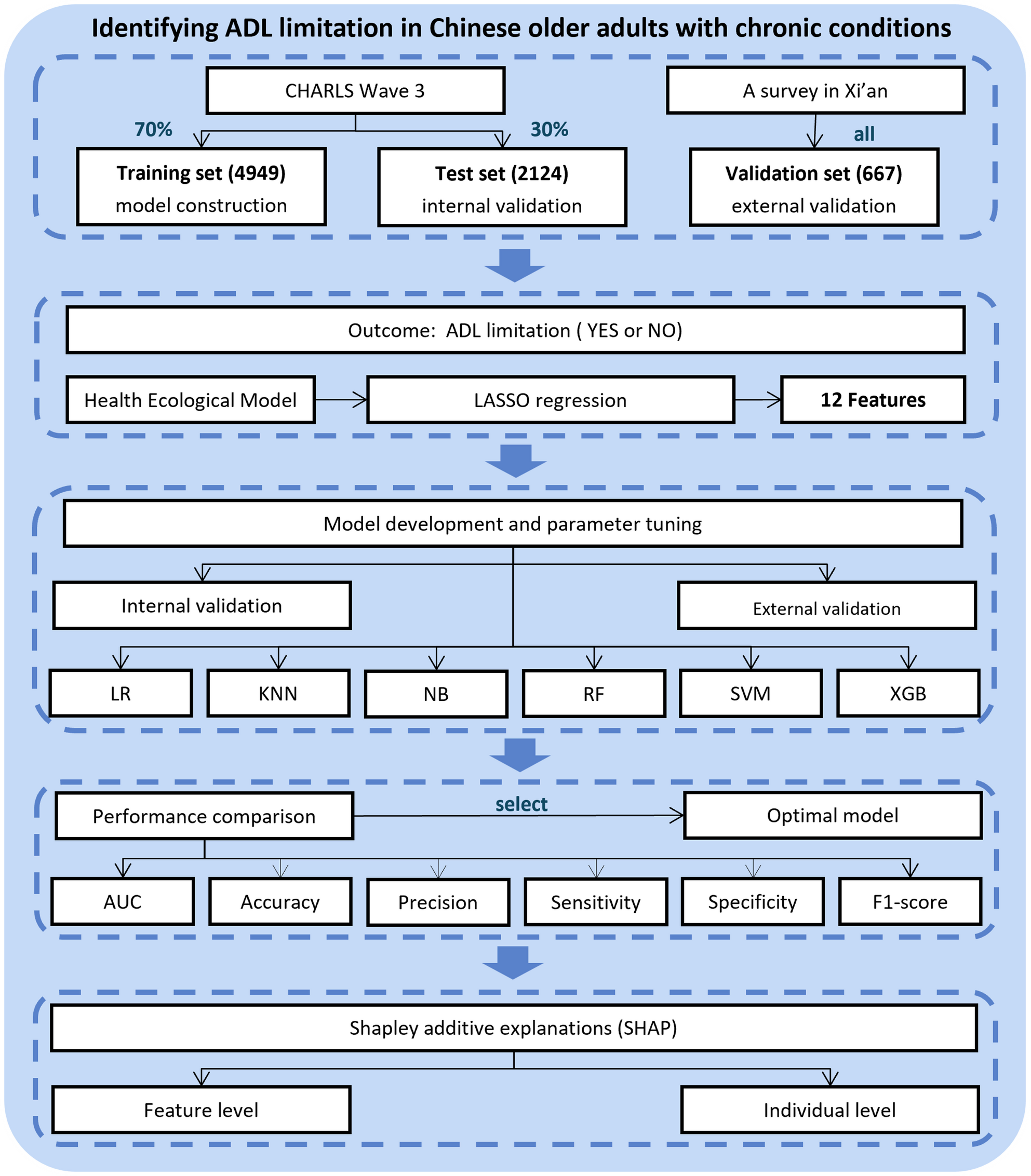
In an observational modeling study, researchers used data from 7,073 Chinese older adults with chronic conditions to identify limitations in activities of daily living, meaning everyday self-care tasks. They randomly divided data from the China Health and Retirement Longitudinal Study into training and internal test groups. They also tested the models in 667 individuals from a community in Xi’an.
The researchers compared six machine-learning models. A model using a method called extreme gradient boosting performed best. Its estimates showed generally acceptable agreement with observed outcomes across all three datasets. Depressive symptoms, walking speed, cognitive function, chronic pain and grip strength contributed most to its classifications. Higher depressive-symptom scores and chronic pain tended to favor classification as having daily-activity limitations. Faster walking, better cognitive function and stronger grip tended to favor classification as having no limitations.
Why it matters
Difficulty with everyday self-care is a major concern for older adults with chronic conditions. The authors suggested that the identified features may help inform screening and guide more comprehensive assessments of daily functioning.
Caveats
The observational analysis does not show that changing the model’s key features would prevent daily-activity limitations. Validation was limited to the Chinese study samples.
Comments
Be the first to comment.