Frailty and outcome after hospital admissions in two populations aged 80 years and above in 2012 and 2022 using the Hospital Frailty Risk Score
Abstract
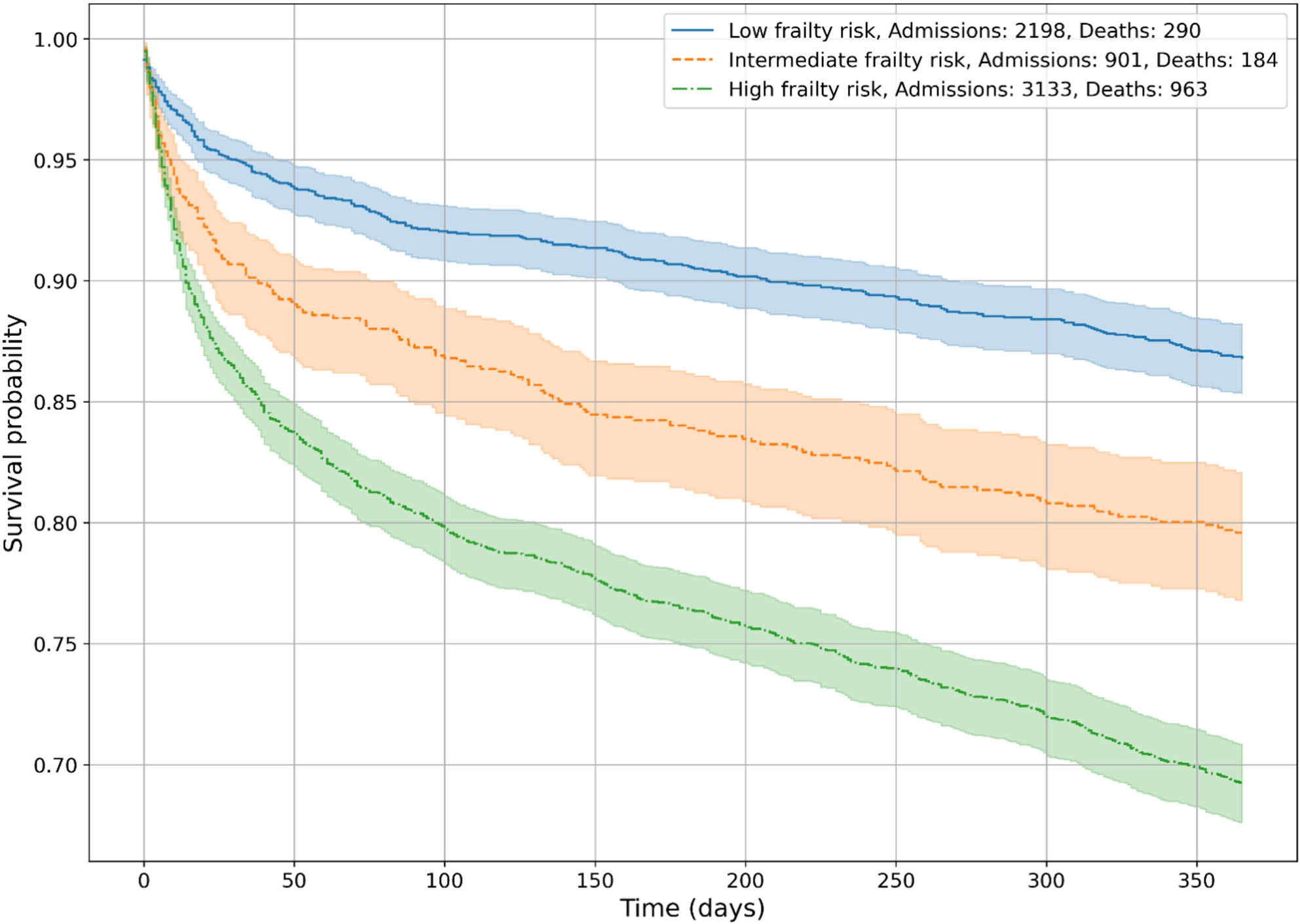
Purpose: To study outcomes in two cohorts of patients ≥ 80 years admitted to a tertiary hospital in Bergen Norway in 2012 and 2022. Methods: This retrospective observational study compared two separate calendar-year cohorts of patients aged ≥ 80 years hospitalized in 2012 and 2022. Frailty was assessed using the ICD-10-based Hospital Frailty Risk Score (HFRS). Outcomes included hospital length of stay, 30-day readmission, hospital mortality, and one-year survival after last admission. Survival was analyzed using Kaplan–Meier curves and Cox regression models. Results: There was an increase in patient admissions from 5112 (2012] to 6232 (2022] with a female majority. Half of both cohorts were classified as frail [HFRS > 15], with no significant sex difference. Non- frail patients had the highest one-year survival [87%] compared to 69% in the high frailty group. A higher mortality was found in frail males [65%] compared with females and in the age group ≥ 90 years. The combination of high frailty risk [HFRS > 15], age ≥ 90 years and male had the lowest survival of all sub-group analyzed [60%]. Conclusion: Higher HFRS was associated with worse clinical outcomes. The HFRS was able to identify vulnerable patient groups with significantly increased mortality, but there was no increase in frailty over the 10-year period in the two cohorts.
The paper
BMC Geriatrics, 13 Oct 2026, CC BY