Fluid from reprogramming cells reduced wound area in mice
In mice, fluid collected as human skin cells were being converted into stem cells reduced wound area and increased the number of vessels carrying a blood-vessel marker.
Our read
Interventions- Studied:
- Experiments in mice with excisional skin wounds
- What changed:
- Reprogramming-conditioned medium reduced wound area in a mouse excisional skin wound model
- The catch:
- Wound area was measured; tissue strength and scar quality were not
Editor of record: Boris Djordjevic · AgingResearch.News
Mice with surgically created skin wounds had smaller wound areas after receiving fluid collected from human skin cells during reprogramming, an animal experiment found. Reprogramming converts mature cells into induced pluripotent stem cells, which can develop into many cell types. The fluid also increased the number of vessels carrying a blood-vessel marker at wound edges.
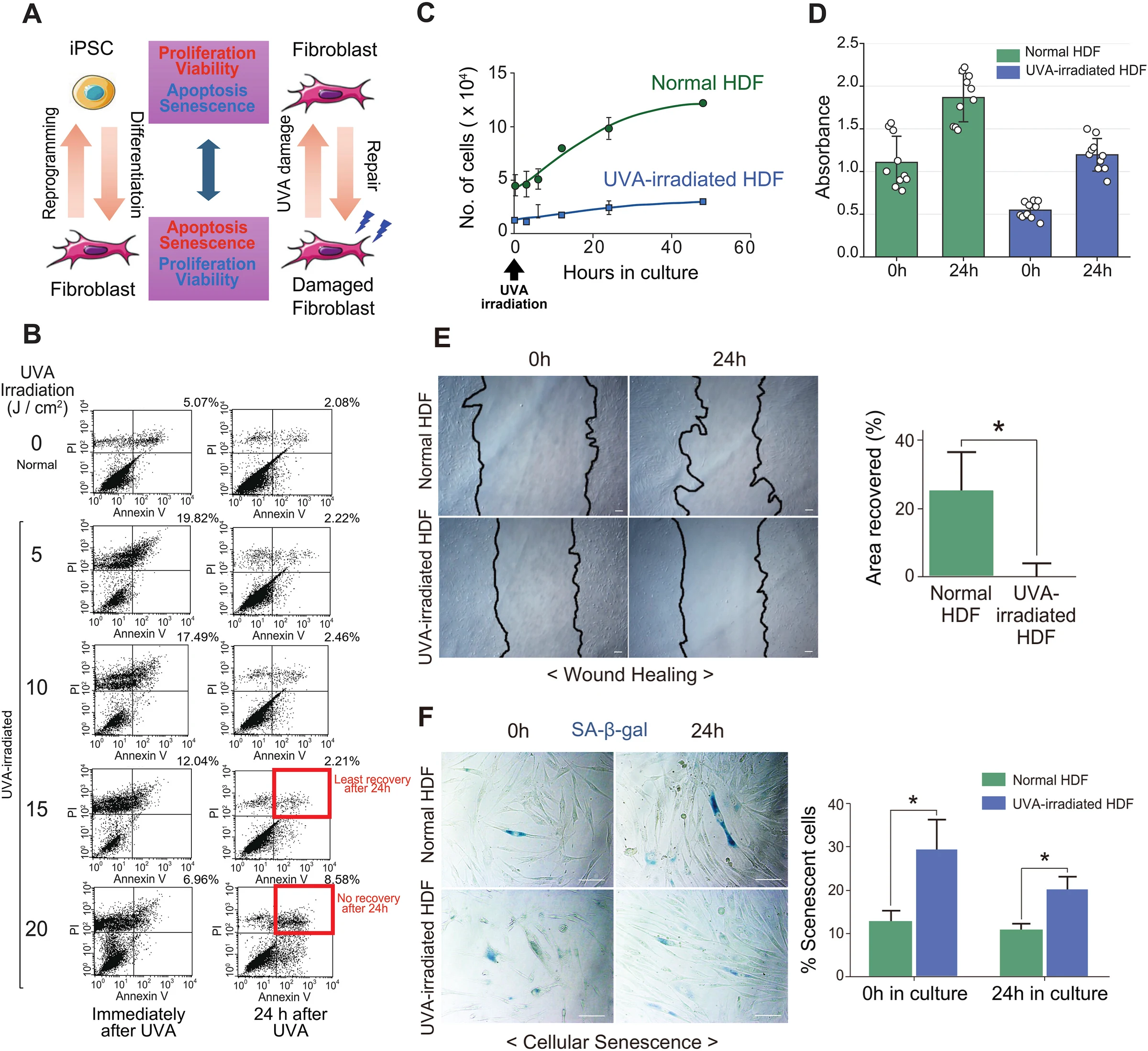
In separate experiments, human dermal fibroblasts—cells that support skin—damaged by ultraviolet A light survived better and closed a scratch gap faster with this fluid than with fluid from the original cells or established stem cells. Fewer cells underwent programmed cell death. The fluid also prolonged lifespan in wild-type Caenorhabditis elegans worms.
Why it matters
For aging research, the work explores whether cell reprogramming can yield secretions that support stress resistance and functional recovery. The authors propose the fluid as a candidate cell-free approach to skin wound healing.
Caveats
The wound-healing results came from surgically created wounds in mice; they do not show whether the fluid would help wounds in people.
The paper
Seoul National University
Journal of Tissue Engineering, Nov 20, 2026, Open access, CC BY-NC-ND


Comments
Be the first to comment.