Activity’s link to lower coronary disease risk varies by sex
The highest activity category had a pooled hazard ratio of 0.47 versus the lowest, a measure of relative coronary artery disease risk over follow-up.
Our read
Populations- Studied:
- Cohort study of 120,369 people without coronary artery disease
- What changed:
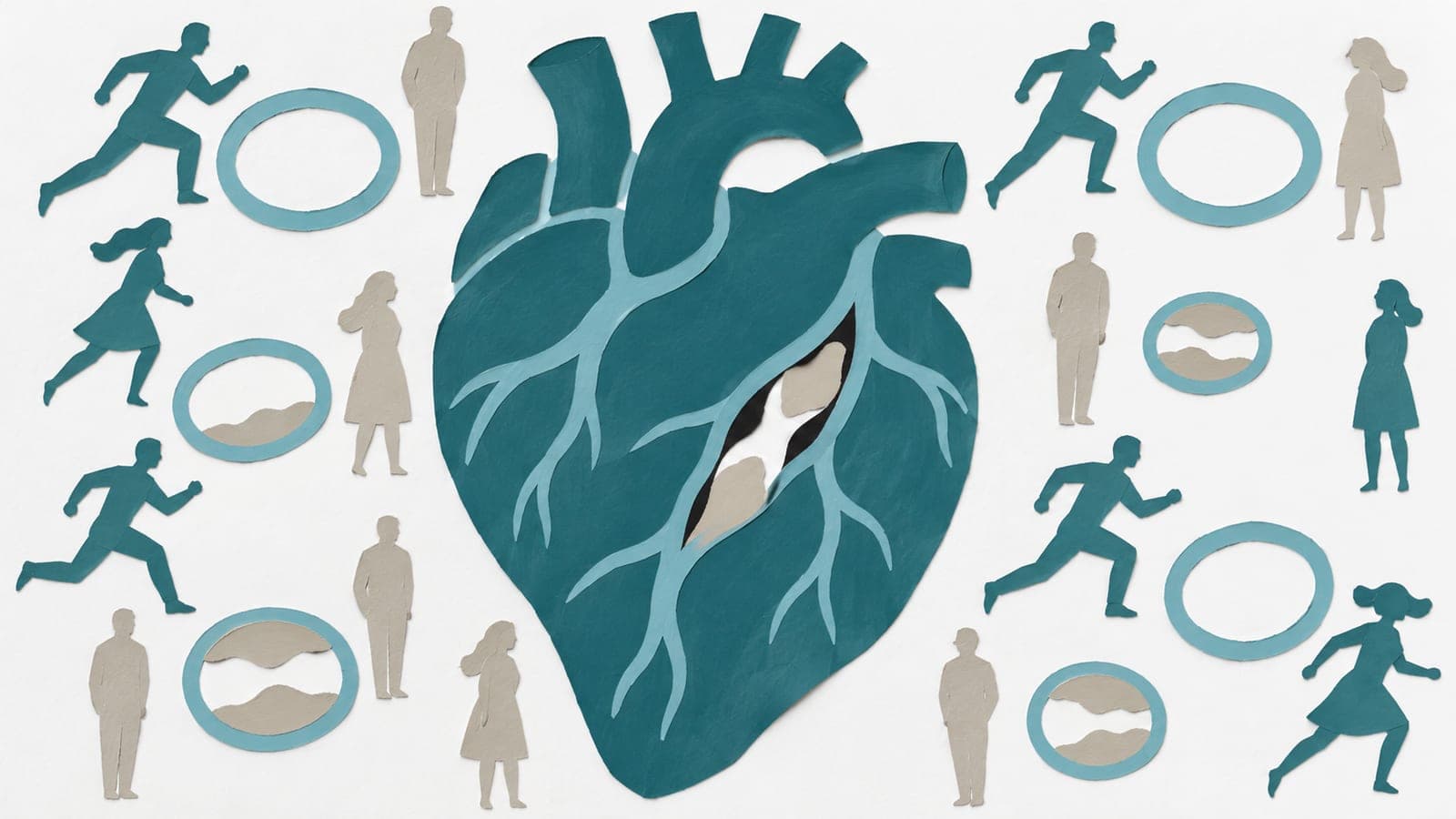
- At ≥3000 MET-minutes/week, coronary artery disease risk reduction plateaued in men but continued to decline in women
- The catch:
- More active participants may have had better underlying health or other uncaptured habits
- In the record:
- The 3,208th paper on physical activity with results in people; 6,813 on record in all.
Editor of record: Boris Djordjevic · AgingResearch.News
Among 120,369 people without coronary artery disease in the UK Biobank and All of Us Research Program, an observational analysis linked higher moderate-to-vigorous physical activity to lower risk of developing the disease. Coronary artery disease affects the arteries supplying the heart. Wrist monitors and Fitbit devices measured activity, and electronic health records identified 8,174 new cases.
Researchers combined results from both cohorts after accounting for demographic factors and risk factors related to heart and metabolic health. The highest activity category had a hazard ratio of 0.47 compared with the lowest. This measures relative disease risk over follow-up, not an absolute difference in cases. At very high activity levels, the association with lower risk leveled off in men but continued to strengthen in women.
Why it matters
Coronary artery disease is an age-related health concern. These results bear on whether physical activity’s association with its risk continues at very high activity levels in both sexes.
Caveats
More active participants may also have had better underlying health or other habits not fully captured by the adjustments. These conference-abstract findings concern people without coronary artery disease at enrollment.
The paper
Sex-Specific Associations Between High-Volume Physical Activity and Coronary Artery Disease Risk
Case Western Reserve Univ Sch of Medicine; Beth Israel Deaconess Med Cente
AHA Scientific Sessions 2026 Abstract, Nov 2, 2026
Presented at AHA Scientific Sessions 2026, abstract 7262



Comments
Be the first to comment.