Diabetes drug combination linked to fewer limb complications
Combined use was linked to a lower rate of major limb complications over time than use of neither class, with a hazard ratio of 0.50.
Our read
Populations- Studied:
- Study in people
- Why it’s aging research:
- It studies an intervention with evidence of extending healthy life.
Editor of record: Boris Djordjevic · AgingResearch.News
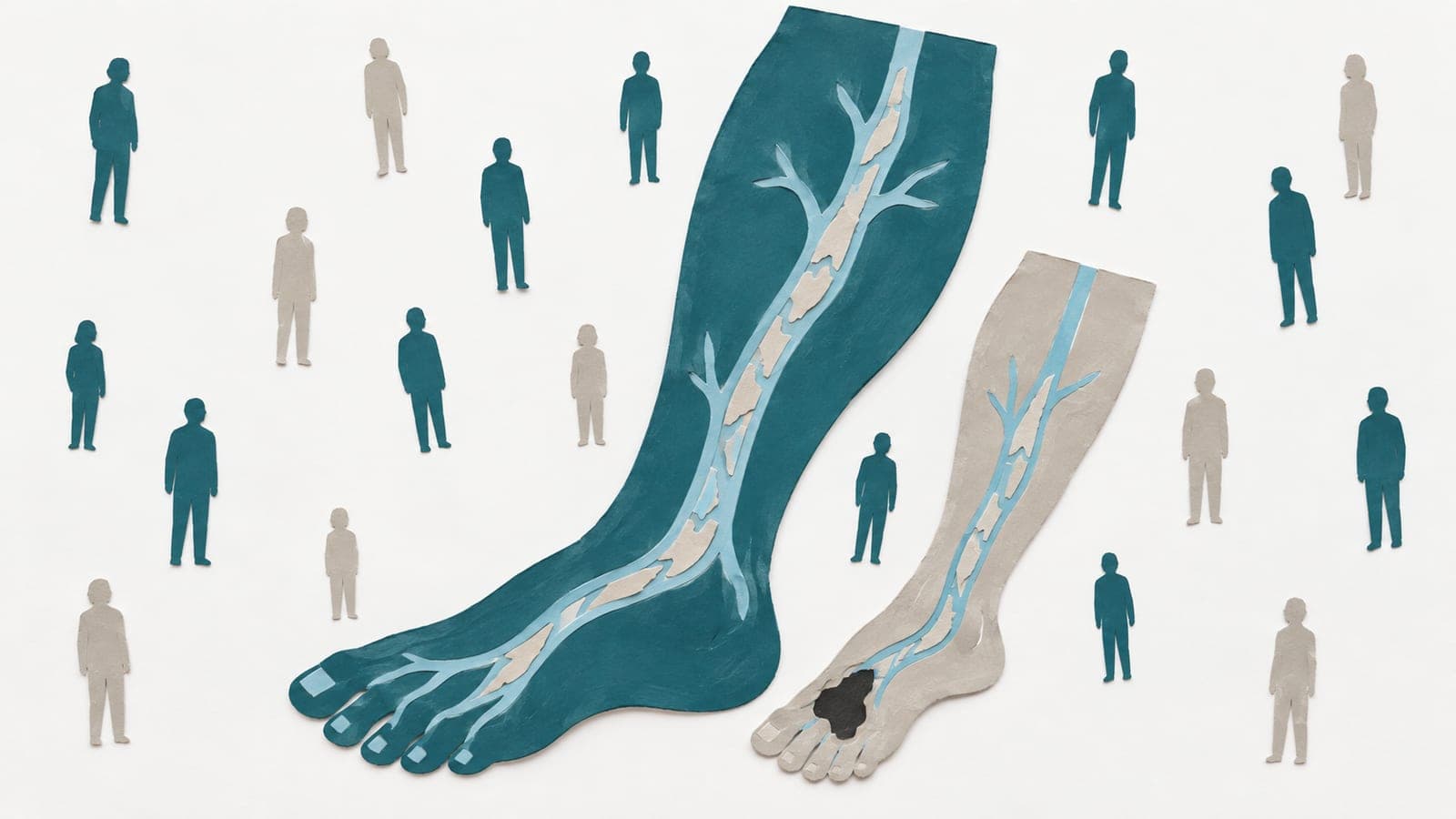
Health records for 13,471 people with type 2 diabetes and peripheral artery disease, which narrows arteries supplying the limbs, were analyzed in a retrospective observational cohort study. Patients entered the cohort from 2015 onward. The researchers compared two diabetes drug classes—glucagon-like peptide-1 receptor agonists and sodium-glucose cotransporter-2 inhibitors—used alone, together or neither.
After adjusting for measured differences between groups, combined use was associated with lower rates over time of major limb complications (hazard ratio 0.50), major amputation (0.30) and death from any cause (0.23), compared with neither class. Median follow-up was 5.75 years for major limb complications and 4.42 years for mortality. Sodium-glucose cotransporter-2 inhibitors alone were also linked to better limb and survival outcomes. Glucagon-like peptide-1 receptor agonists alone were linked to lower mortality only.
Why it matters
Peripheral artery disease and diabetes put patients at high risk of amputation and death. Comparing drug strategies for these outcomes addresses threats to health and lifespan.
Caveats
Differences in health or care between people prescribed the drugs and those using neither class could have contributed to the associations despite statistical adjustment. The conference abstract reported relative hazards, not absolute event rates.
The paper
Palestinian Clinical Rsch Cntr; Heart Cntr
AHA Scientific Sessions 2026 Abstract, Nov 2, 2026
Presented at AHA Scientific Sessions 2026, abstract 14627
Comments
Be the first to comment.