Blood protein linked to heart rhythm disorder and dementia
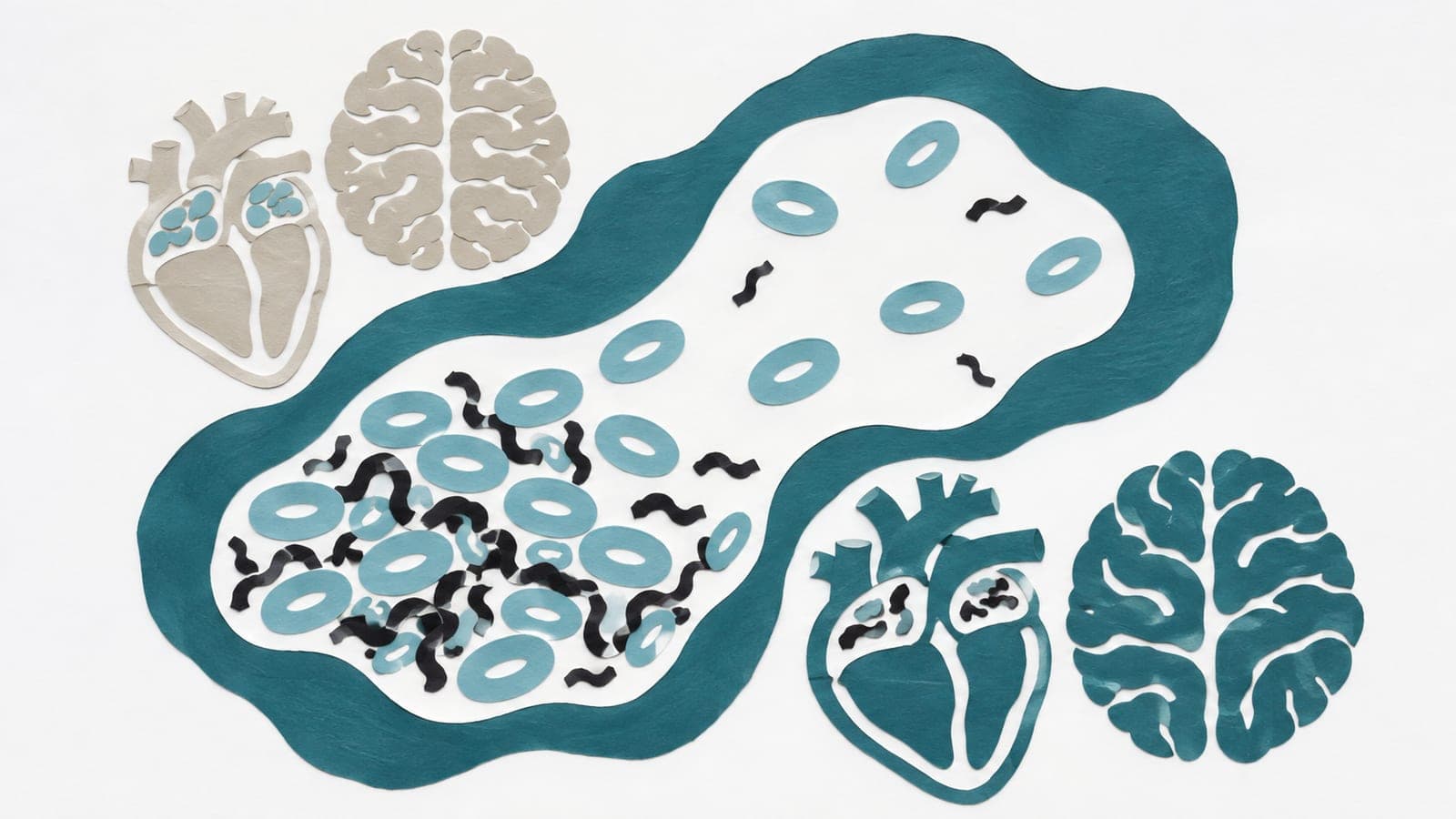
Each doubling of the blood protein osteopontin was linked to hazard ratios of 1.16 for atrial fibrillation and 1.30 for dementia.
Our read
Biomarkers- Studied:
- Cohort study of participants
- What changed:
- Risk was higher with each doubling of osteopontin: hazard ratios of 1.16 for atrial fibrillation and 1.30 for dementia
- The catch:
- Cardiovascular illness and inflammation could still confound associations despite statistical adjustment
- In the record:
- The 12th paper on osteopontin with results in people; 93 on record in all.
- Why it’s aging research:
- It measures an outcome that worsens with age.
Editor of record: Boris Djordjevic · AgingResearch.News
Participants in the Atherosclerosis Risk in Communities study included 3,964 people assessed for atrial fibrillation, an irregular heartbeat, and 4,075 assessed for dementia. The prospective observational study measured osteopontin, a blood protein, in samples collected in 2011–2013. Researchers recorded 801 new atrial fibrillation cases through 2023 and 982 dementia cases through 2022.
Higher osteopontin levels remained associated with both outcomes after adjustment for inflammation, cardiovascular conditions and other measured risk factors. The hazard ratios compare how often diagnoses occurred over time between people whose protein levels differed by a doubling. The dementia association was stronger in people younger than 75 than in those aged 75 or older.
Why it matters
Dementia and atrial fibrillation affect health in later life. The findings support investigating whether osteopontin contributes to these conditions or serves as a marker of risk.
Caveats
Cardiovascular illness and inflammation could still have influenced both protein levels and later diagnoses despite statistical adjustment. The findings were reported in a conference abstract.
The paper
Plasma Osteopontin (SPP1) and Incident Atrial Fibrillation and Dementia in the ARIC Study
Lillehei Heart Institute and Cardiovascular Div; 1Lillehei Heart Institute and Cardiovascular Div
AHA Scientific Sessions 2026 Abstract, Nov 2, 2026
Presented at AHA Scientific Sessions 2026, abstract 11164

Comments
Be the first to comment.